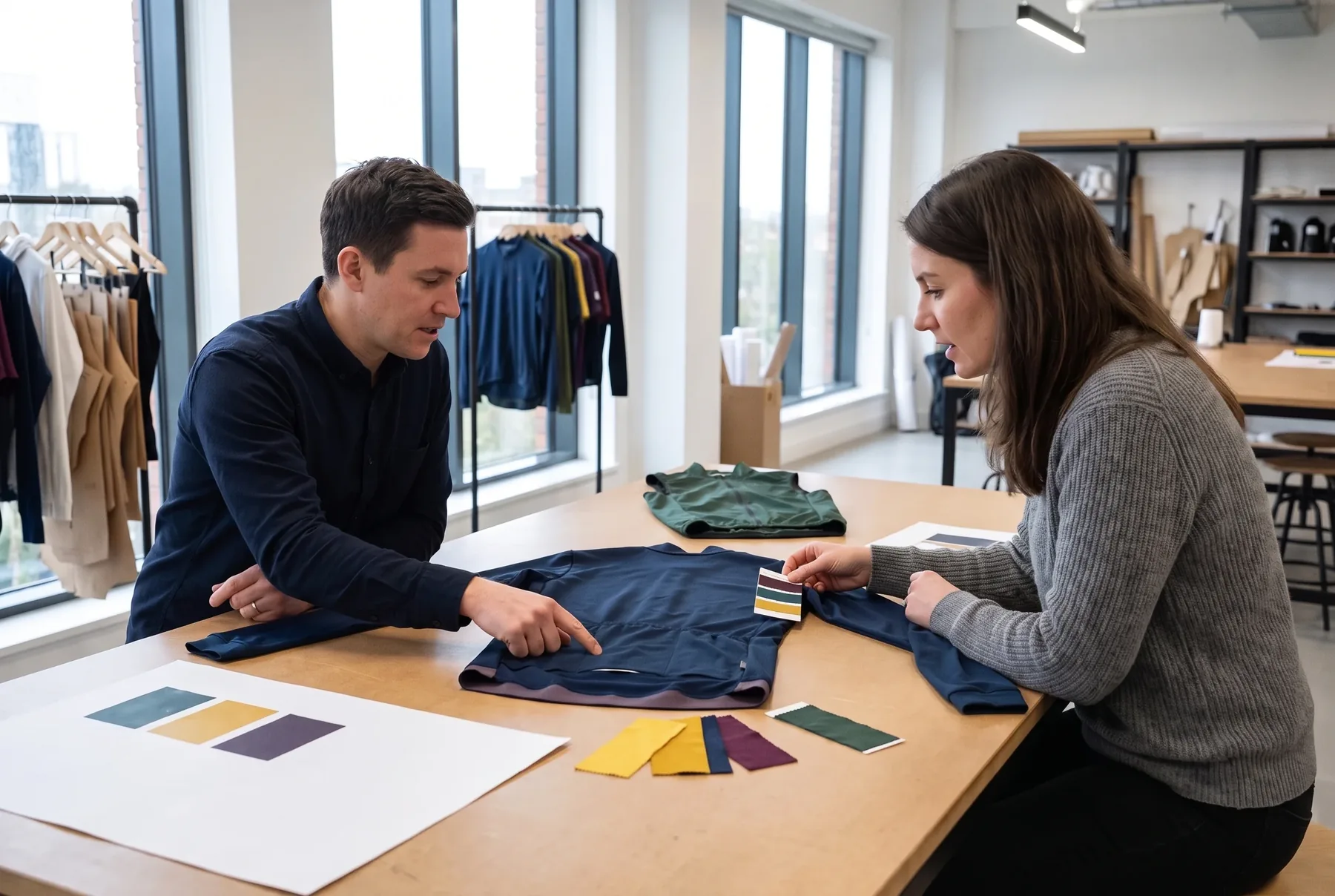
Cycling apparel development studio with the pattern table, sample bench and colour viewing station in one room

About Pro Cycling Apparel: The Cycling Apparel Development Team Behind Your Race Kit

Pro Cycling Apparel is the cycling apparel development team that cycling brands, federations and race teams work with when they need a race kit developed, sampled and documented.

A development team for race upper body and outer layers, from race-fit jerseys and gilets to thermal jackets, warmers and caps.

Facts you can check from the first project

  • Every sample arrives with a measurement report carrying two signatures, one for fit and one for measurements.
  • Every base fabric in your kit gets its own signed physical colour card.
  • Project files are used for your project only, with an NDA signed before development if you ask for one.
  • ISO 9001:2015 quality management system, OEKO-TEX® STANDARD 100 fabrics and a BSCI social compliance audit.
  • The spec pack, colour parameters and revision log are handed to you in full.

Pro Cycling Apparel Develops the Race Kit; Two Sister Sites Handle Bulk Production and Team Ordering

Pro Cycling Apparel is one of three doors into the same factory, and each door handles one stage of a cycling apparel programme.

Pro Cycling Apparel, this site
development, sampling and the spec pack for race upper body and outer layers.
cyclingapparelfactory.com
bulk production.
teamcyclingkits.com
team kit ordering for clubs and teams.

Keeping development on its own door means the people you work with here spend their time on pattern, fabric, colour and sample sign-off.

The development manager is your contact for the whole project, and the pattern maker, sample technician and colour and print technician work on your garments at their own workstations.

When development closes, you choose where bulk runs. The signed spec pack can go to your own production line, or, with your approval, to cyclingapparelfactory.com. If your clubs later need a team ordering service, teamcyclingkits.com is the door for that.

For a buyer doing background checks, this structure answers two questions early: which team develops your kit, and where the files go afterwards.

The development files are written so that a production line can run from them directly.

Three Workstations in the Development Studio and the Role at Each

Our cycling apparel development studio is laid out by process into three workstations. A garment moves through them in a fixed order, and each workstation has a named role that signs off before the garment moves on.

Pattern maker drafting a race jersey block in the riding position at the pattern table

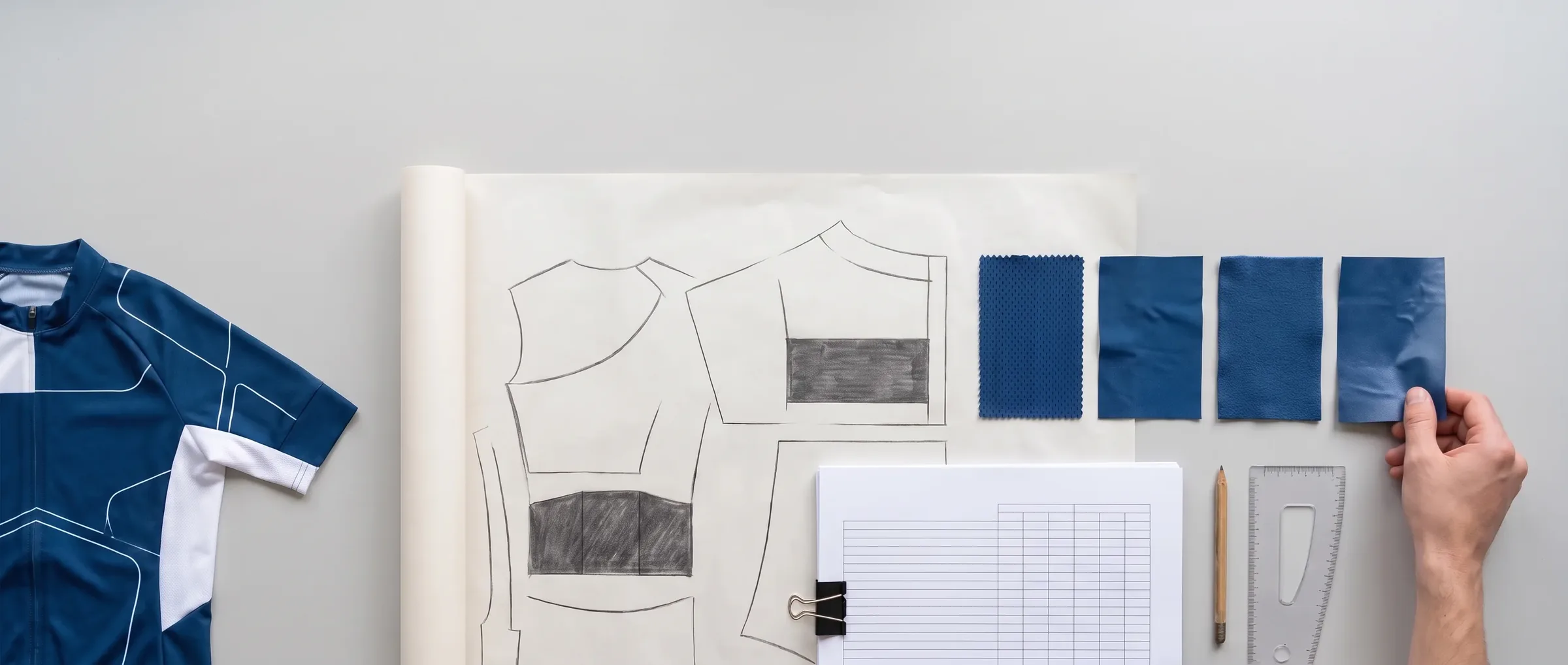
The pattern table belongs to the pattern maker.

This is where the base block is drafted in the riding position, where grading across your size range is done and where the cutting diagrams are drawn. Fit decisions are made here, and the pattern maker signs them.

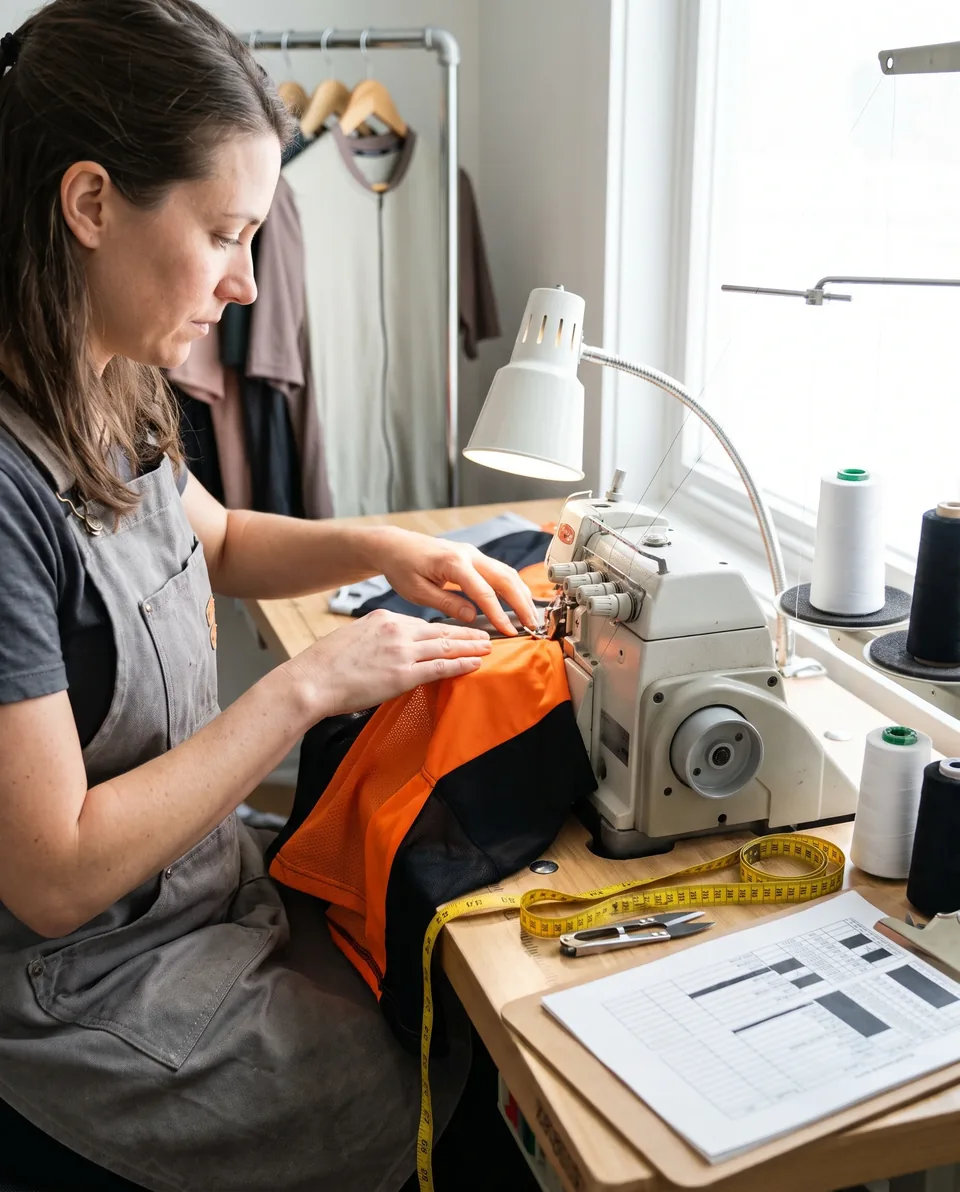
Sample technician sewing a sample jersey seam on a flatlock machine at the sample bench

The sample bench belongs to the sample technician.

Samples are sewn here and then measured point by point against your size chart. The measurement report is written and signed at this bench, before any sample is packed.

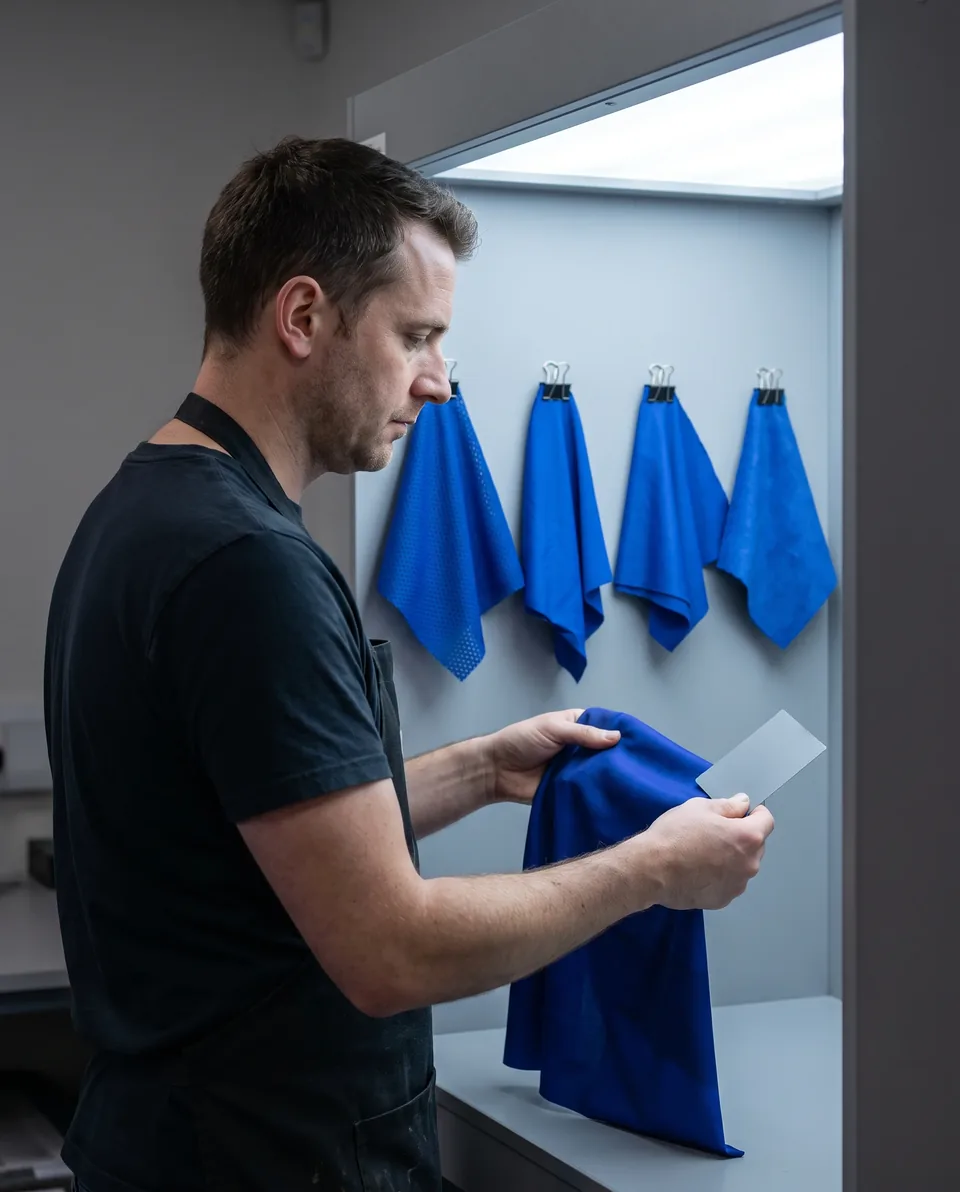
Colour and print technician comparing a fabric strike-off with a colour standard in a D65 viewing booth

The D65 colour station belongs to the colour and print technician.

Strike-offs on each base fabric are viewed here under D65 light against your colour standard, and the colour card for each fabric is signed here.

The development manager does not own a workstation.

That role carries your brief into the studio, carries questions and disagreements back to you, sets the sampling schedule and issues the spec pack at sign-off.

For a QA lead reviewing the team, every document you receive can be traced to one workstation and one role.

  • Panel map, graded patterns and cutting diagramspattern table, pattern maker.
  • Sample and measurement reportsample bench, sample technician, with the pattern maker's fit signature.
  • Colour cards and colour parametersD65 colour station, colour and print technician.
  • Feasibility review, revision log and spec packdevelopment manager.

Two Points Where the Race Kit Pattern and Sampling Team Stops a Sample

Two rules stop a sample inside the studio. Both are held by the roles at the workstations, and both apply on every project.

The first stop sits before sewing.

Until every base fabric in the kit has a signed colour card, the sample bench does not start the sample.

If one card is still open, the colour and print technician keeps it at the D65 colour station, and the development manager tells you which fabric is waiting and what is needed to close it.

The second stop sits before shipping.

The measurement report carries two signature positions: the sample technician signs for measurements, and the pattern maker signs for fit. If the measurement report does not pass, the sample does not ship.

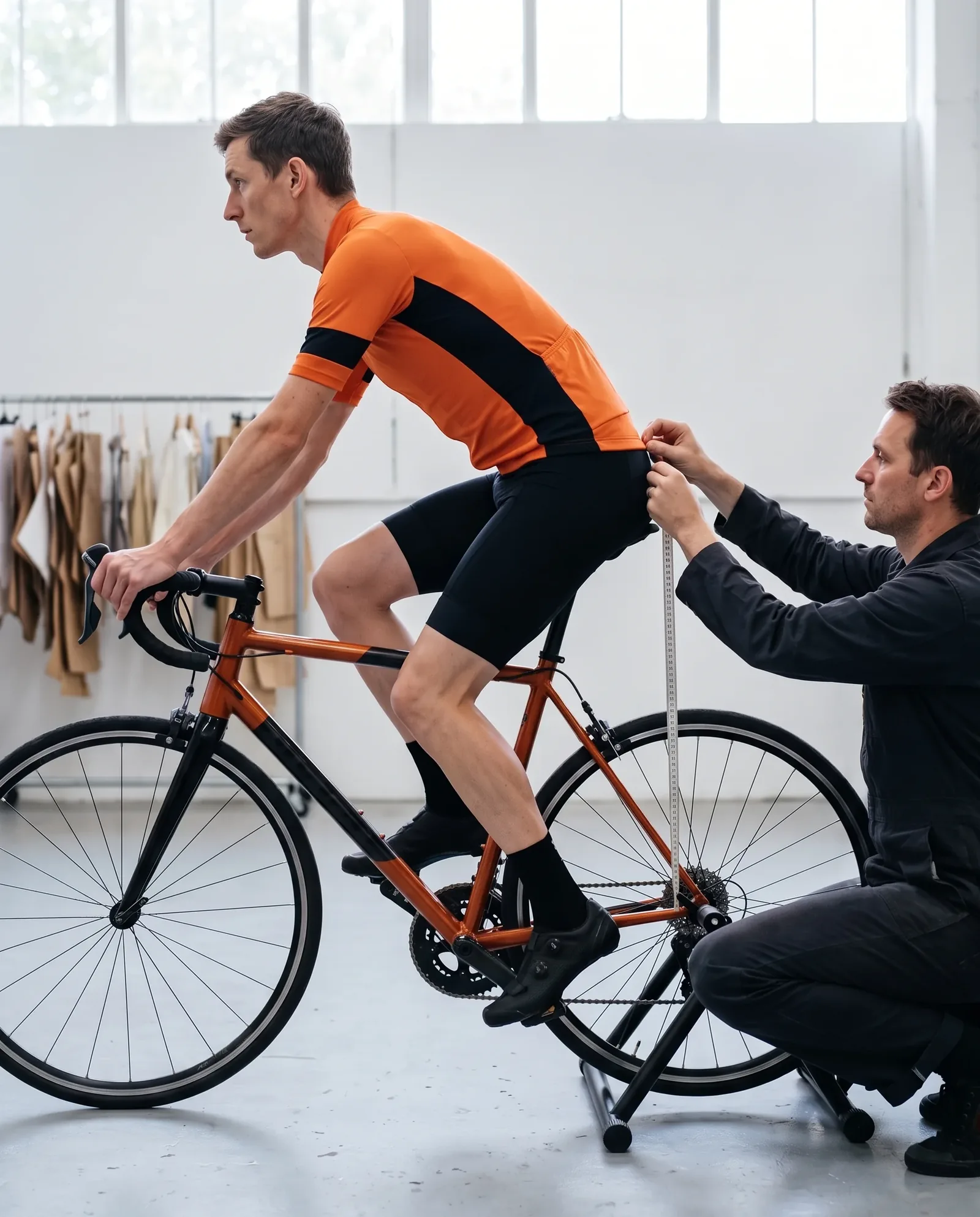
Pattern maker checking the fit of a sample jersey on a fit model while the sample technician records measurements

When a sample is stopped at this point, the order of work is fixed:

  1. The sample goes back from the sample bench to the pattern table.
  2. The pattern maker works from the report lines marked for revision and corrects the pattern.
  3. The development manager tells you the sample has been held, which lines were marked and the new sampling date.
  4. The corrected sample is sewn, measured again and signed again before it leaves.

A sample without both signatures stays in the studio, and the development manager reschedules around the stop.

What you can check yourself

  1. Every sample you receive carries both signatures on its measurement report.
  2. Each signature names its role, so you know who signed fit and who signed measurements.
  3. You can re-measure any point with a tape measure and compare it with the reading on the report.

Common practice in sample rooms is to ship the sample with a covering note and leave measurement to the buyer.

With us, the two signatures are the release condition, and a sample without both does not leave the studio.

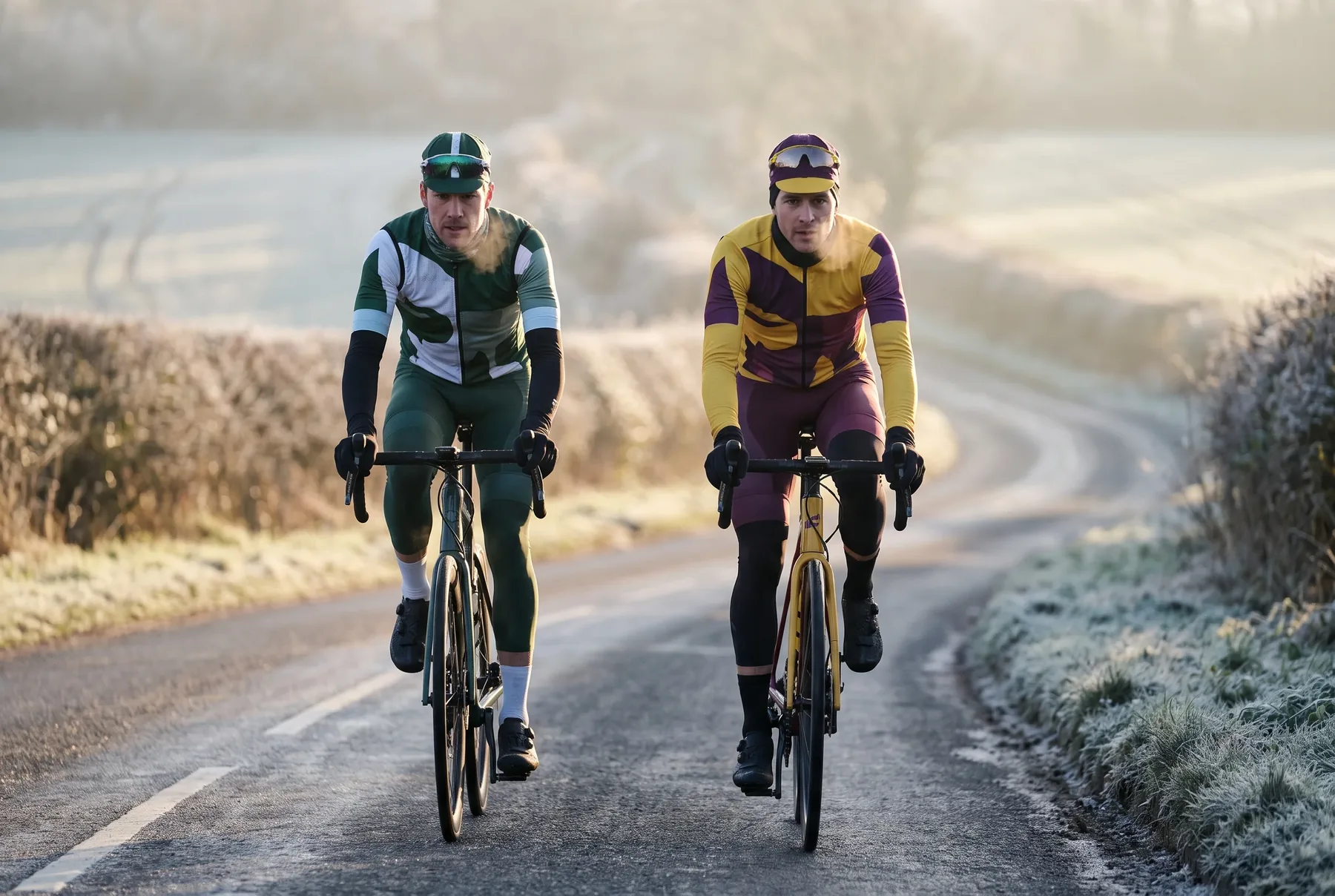
Two riders in long-sleeve race jerseys, gilets and arm warmers on a cold morning road

Brands, Federations and Race Teams in the United States, Europe and Australia

We develop for three types of client.

  • Performance cycling brands

    product leads adding a race line or a layering range to an existing cycling apparel business.

  • National and regional cycling federations

    technical directors preparing kit for several squads or race formats in one season.

  • Competitive race teams and club race squads

    technical leads setting the race-day kit for the season.

Our main markets are the United States, Europe (the United Kingdom, Germany, France, the Netherlands and the Nordic countries) and Australia.

Development Scope: Race Upper Body and Outer Layers in One Spec Pack, With Bib Pieces Developed to Your Pad Supplier's Specification

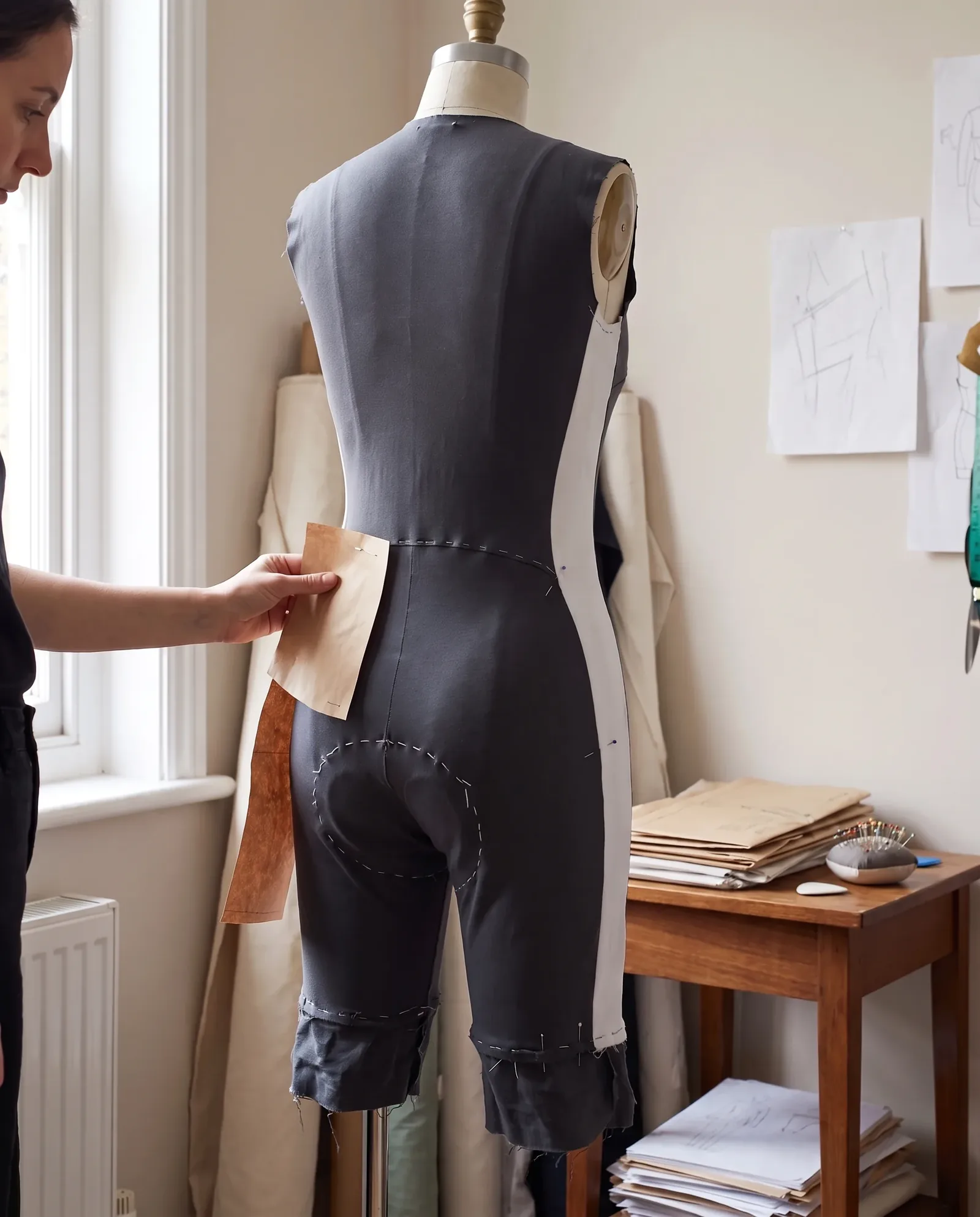
Development sample of a skinsuit on a dress form with paper patterns pinned beside it

We develop race upper body and outer layers:

  • race-fit jerseys in short and long sleeve
  • gilets and vests
  • thermal and windproof jackets
  • arm and leg warmers
  • cycling caps
  • and coordinated race kits built from any of them.

This is the layer where our development judgement is concentrated. Pattern in the riding position, fabric assigned panel by panel and colour matched across several base fabrics are the three decisions that shape these garments, and the same four roles make them for every piece in the kit.

Because the whole upper-body kit sits in one layer, one spec pack can cover it.

A federation preparing a jersey, gilet and thermal jacket for a season receives the patterns, fabric specifications and colour parameters for all three in a single set of documents, built on one pattern logic and one colour standard.

Bib shorts, bib tights, skinsuits and tri suits are built around the chamois pad, and the pad comes from the pad supplier you specify.

For these pieces we develop and sample to that supplier's specification.

The finished garment and the pad certification sit with you and your pad supplier.

This scope gives a clear answer at the first message. If your programme is a race upper-body kit, we develop all of it. If it includes bib pieces, the feasibility review states which parts we develop and sample, and which stay with your pad supplier.


Binary Nylon-Spandex Only, So One Colour Standard Holds Across Every Base Fabric

Every garment we develop uses binary nylon-spandex in one of three blends: 88/12, 90/10 or 91/9.

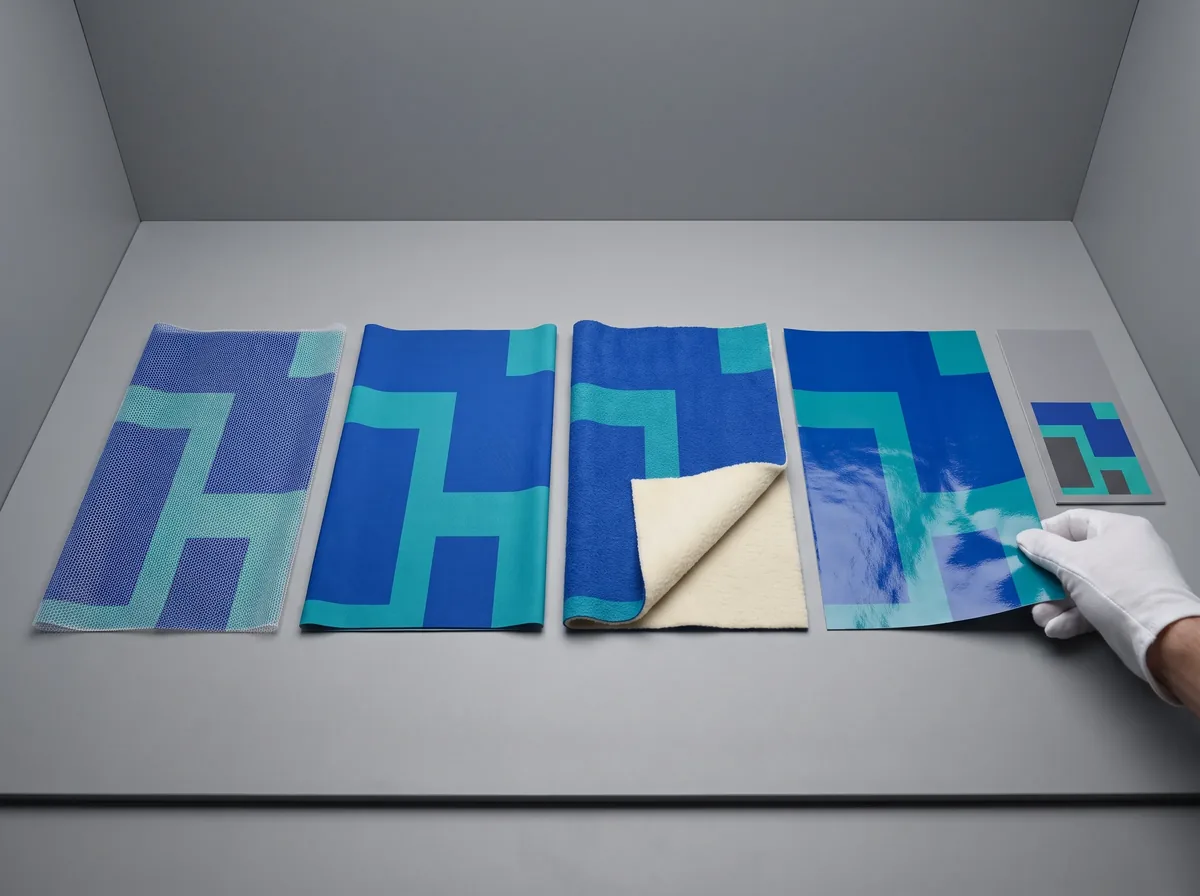
Four fabric strike-offs printed with the same colours laid beside a colour standard under even booth light

Those blends are made up in four fabric types:

  • a lightweight mesh for summer
  • a mid-weight stretch fabric for the main body
  • a brushed-back thermal version of that main body
  • and a windproof laminate.

The brushed-back thermal is a finishing variant of the same binary blend.

We chose one fibre family for a colour reason. In sublimation, the same fibre family takes up dye and recovers its stretch in the same way, so one colour standard can be matched on every base fabric in the kit.

A race kit that combines mesh, main body, brushed thermal and laminate stays on one colour standard because the four fabrics share one fibre system.

The colour and print technician turns that into documents at the D65 colour station:

  1. A strike-off of your artwork is printed on each base fabric in the kit.
  2. Every strike-off is viewed against your colour standard under the same D65 light.
  3. One physical colour card is signed for each base fabric, naming the fabric, its blend and its finish.
  4. The colour parameters for each fabric are recorded separately and written into the spec pack.

What you hold

a set of signed colour cards, one per base fabric, and a separate set of colour parameters for each fabric inside the spec pack.

How you can check it

  1. Count the base fabrics in your kit, then count the colour cards. The two numbers match.
  2. Hold any card against the panel it belongs to on the sample, under D65 light.
  3. Open the spec pack and confirm that each base fabric has its own colour parameters.

Common practice is to match colour on the main fabric and let the other fabrics follow.

With us, every base fabric carries its own signed card and its own parameters, so the gilet front, jersey back and jacket body are each matched to your standard.

Development documents laid out with colour cards and a folded sample jersey

Feasibility Review Request

Send your garment list, size range and race conditions to the development manager, and receive a feasibility review within 48 hours of a complete spec.

Decision Rights: Fit by the Pattern Maker, Size by Your Chart, Colour by Your Signed Standard

When views differ during development, each type of question has a fixed decision-maker and a fixed reference.

Fit
the pattern maker decides, from the fit check on the sample.
Size
your confirmed size chart is the reference, and the measurement report is read against it.
Colour
your signed colour standard is the reference, and each colour card is matched to it.
Pattern maker checking the back hem of a sample jersey on a rider in race position

The development manager brings each disagreement back to you with the reference it was judged against, schedules the next round and keeps the record. The development manager does not change a specification you have confirmed. Your confirmed size chart and signed colour standard stay fixed until you change them.

Every revision round is written into the revision log. Each entry records:

  • Which panel was changed.
  • What was changed.
  • Why it was changed.

The log travels with each revised sample, so you see the entry for a round when the sample for that round arrives. The first 2 revision rounds carry no extra sampling fee.

When you change a specification you have already confirmed, a new sampling cycle starts, and the change goes into the revision log in the same way.

What you hold

your confirmed size chart, your signed colour standard and a revision log that grows by one entry for each change.

How you can check it

  1. Lay the revision log beside your confirmed size chart and signed colour standard.
  2. Every difference between the sample in hand and your confirmed specification should match one entry in the log, with its panel and its reason.
  3. A change with no entry in the log is a deviation, and you can raise it with the development manager against the record.

Common practice is to agree revisions in email or chat threads, with no line-by-line log tied back to the confirmed spec.

With us, the log entries and your signed references give QA a written trail from the first sample to sign-off.

Certificates: ISO 9001:2015 for QA Review, OEKO-TEX® and BSCI for Compliance Review

Three certificates are available with your first message, and each one covers a different layer.

For QA review

  • ISO 9001:2015 quality management system certification. The feasibility review, sampling, measurement, colour sign-off and spec pack issue described on this page run under this system, with the roles and signatures set out above.
  • A QA lead can place the certificate next to a sample's signed measurement report and revision log, so the file shows both the management system and the records it produces on a real project.

For compliance and sustainability review

  • OEKO-TEX® STANDARD 100 certification at fabric level, covering the fabrics used in your kit.
  • BSCI social compliance audit, covering the social compliance side of the same factory.
Development file folder with colour cards and measurement sheets on a desk

Each certificate can go straight into an approval file. Ask for the set when you send your brief, and the development manager sends them with the first reply.

After Sign-Off: Your Spec Pack Runs on Your Own Line or at cyclingapparelfactory.com, and Next Season Starts From It

At sign-off, the development manager hands over the complete spec pack in eight parts:

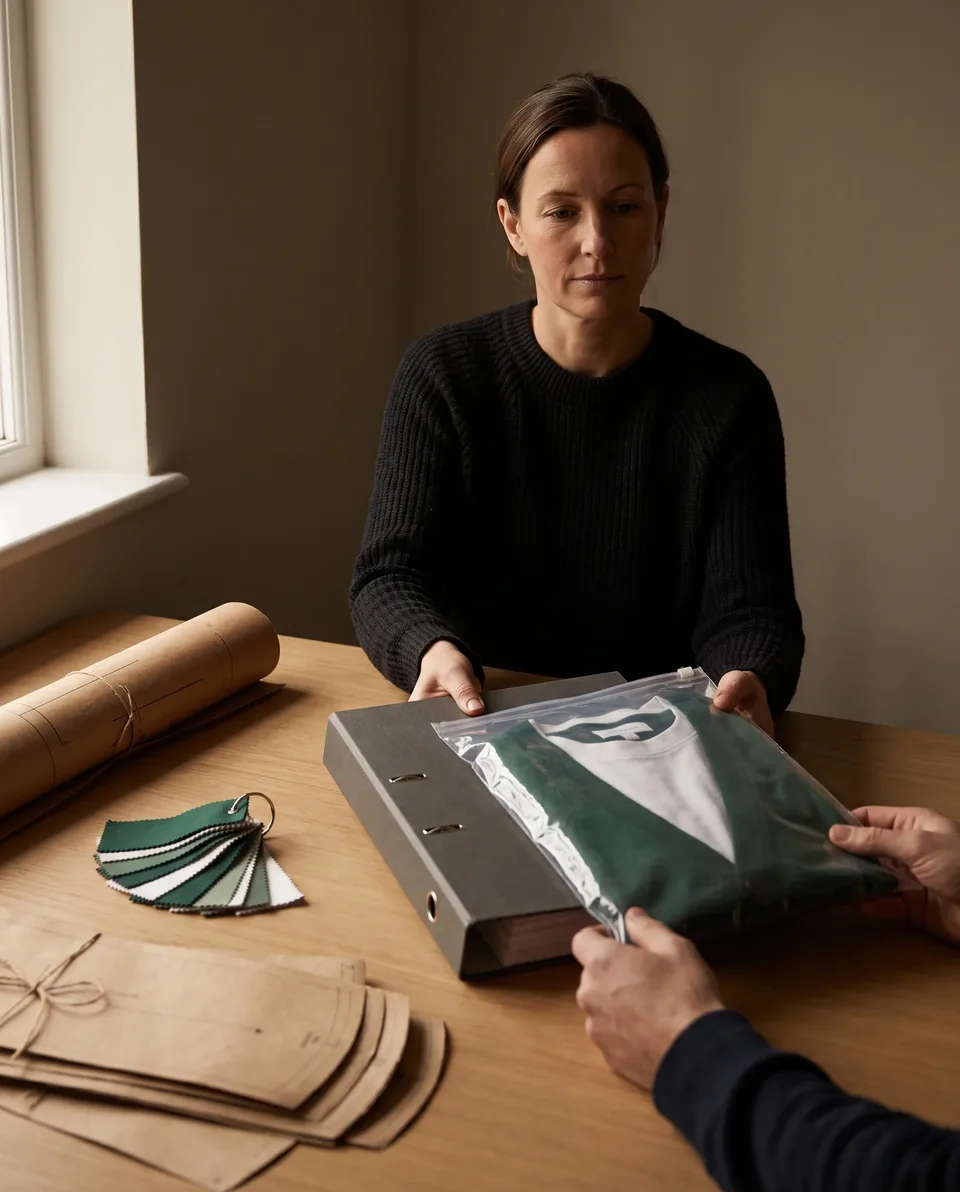
Development manager handing over a spec pack folder and a sample pack across the development table
  1. Cutting diagrams.
  2. Graded pattern files across your size range.
  3. Fabric specification for each panel.
  4. Colour card and colour parameters for each base fabric.
  5. Decoration placement drawing.
  6. Size chart.
  7. Seam construction notes, with flatlock seams on contact zones and four-thread overlock on main-body joins.
  8. Sample pack.

The full revision log is handed over with it. The files and the record of every change belong to you.

You choose one of two production routes:

  • Your own production line cuts, prints and sews directly from the spec pack.
  • With your approval, the development manager passes the spec pack to cyclingapparelfactory.com for bulk production.

Whichever route you take, bulk printing works from the per-fabric colour parameters in the pack. Bulk is checked against the signed colour cards and measurement report, which remain in your hands.

We also keep the project on file. For next season or a repeat order, development starts from the same spec pack and the same colour parameters, and any change you make is added to the revision log in the usual way.

What you hold

all eight parts, the revision log and the signed references.

How you can check it at handover

  1. Tick the eight parts against the list above, and confirm that the graded pattern files are in your hands.
  2. Give the spec pack to your own production line and confirm that they can start cutting from it.

Common practice is for patterns to stay with the supplier, with development run mainly to win the bulk order.

With us, development is a separate door and the files leave with you.

Confidential Project Files and an NDA Before Development Starts

The patterns, cutting diagrams, spec pack and colour parameters from your project are used for your project only. They are not reused on other clients' projects and are not shown on this site. The same rule holds whether or not you sign an NDA: your files stay with your project, and the spec pack and revision log handed to you at sign-off are yours to keep. If your team needs a signed confidentiality agreement, we sign an NDA with you before development starts. Ask for it with your brief.

Starting a Project: What We Need From You and the Three Cases We Send Back for Discussion

A project starts with your first message to the development manager. To write a feasibility review, we need:

Development manager and a product lead reviewing a sample jersey and colour cards
  • Your garment list.
  • The size range.
  • The target race conditions: the race format, the temperature band, or both.
  • Your artwork and colour standard, if you have them already.

Expect a first reply inside 24 hours on working days. Once the spec is complete, the feasibility review reaches you inside 48 hours. It states, garment by garment, whether development to spec is possible, which pattern and fabric direction we propose, and the sampling plan with its dates. The first sample follows in 5–7 days.

There are three cases in which the development manager sends a brief back for discussion before any development starts:

  • No size range is given.
  • No target race conditions are given, either the race format or the temperature band.
  • The request is outside development scope: finished bib garments, bulk scheduling or team ordering.

In each case the reply states what is missing, or which door handles the request: cyclingapparelfactory.com for bulk, teamcyclingkits.com for team ordering.

Development manager on a video call holding up a sample sleeve to the camera

Send Your Brief to the Development Manager

Send your garment list, size range and target race conditions, and add your artwork and colour standard if you have them.

The development manager replies within 24 hours on working days, and the feasibility review follows within 48 hours of a complete spec. Ask for the certificates or an NDA in the same message.

Please enter your name.
Please enter a valid email address.
Please list the garments and size range.