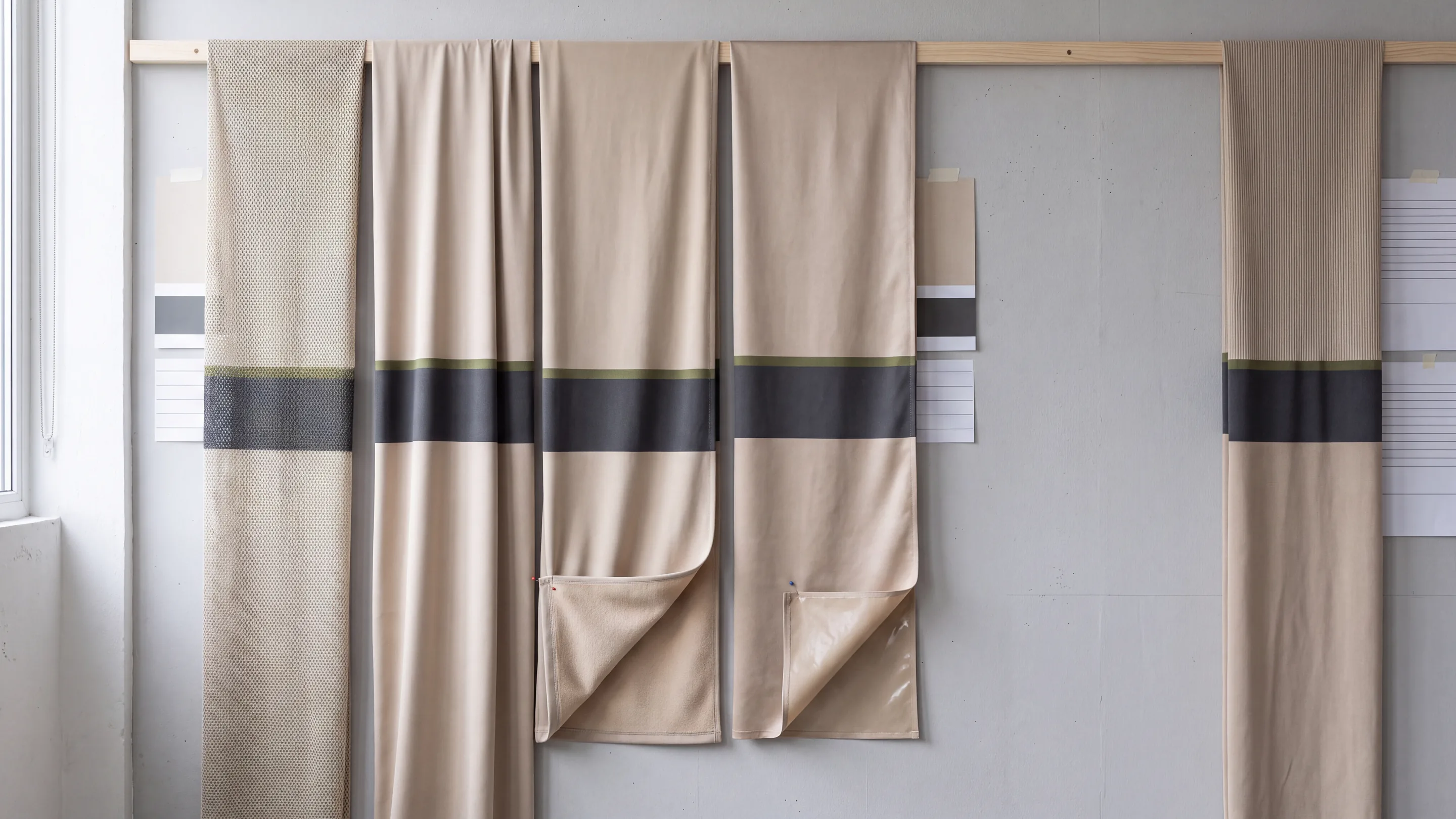
Race Cycling Jersey Fabrics: Five Base Fabrics Assigned Panel by Panel
We develop race cycling jerseys and outer layers with the fabric chosen panel by panel. Our pattern maker proposes one of five base fabrics for every panel, and you confirm the choice in a fabric-by-panel sheet.
Our buyers are product leads at performance cycling brands, technical leads at race teams and club race squads, and technical directors at national or regional cycling federations and race events.
The five fabrics cover the race jersey, aero jersey, thermal jersey, gilet, windproof jacket, arm, knee and leg warmers and the cap, for races from above 22 °C down to 5–10 °C.
Send your garment list, size chart and race format. Within 48 hours of a complete brief, the development manager replies on whether the garments can be developed to your brief, the fabric direction by panel, and the sampling plan.
Facts behind every fabric choice we make with you:
- Binary nylon-spandex in three blends: 88/12, 90/10 or 91/9.
- One D65 strike-off and one signed colour card for each base fabric in your set.
- The fabric-by-panel sheet is one of eight spec pack files, handed to you.
- Fabrics certified to OEKO-TEX® STANDARD 100.
- First sample in 5–7 days.
One Fibre System: Three Blends, Three Base Tiers, Two Variants
Every base fabric we develop with is binary nylon-spandex, in one of three blends: 88/12, 90/10 or 91/9.
The fabrics come in three base tiers:
- Lightweight summer mesh.
- Mid-weight stretch main body.
- Windproof laminate, whose base fabric is the same binary blend.
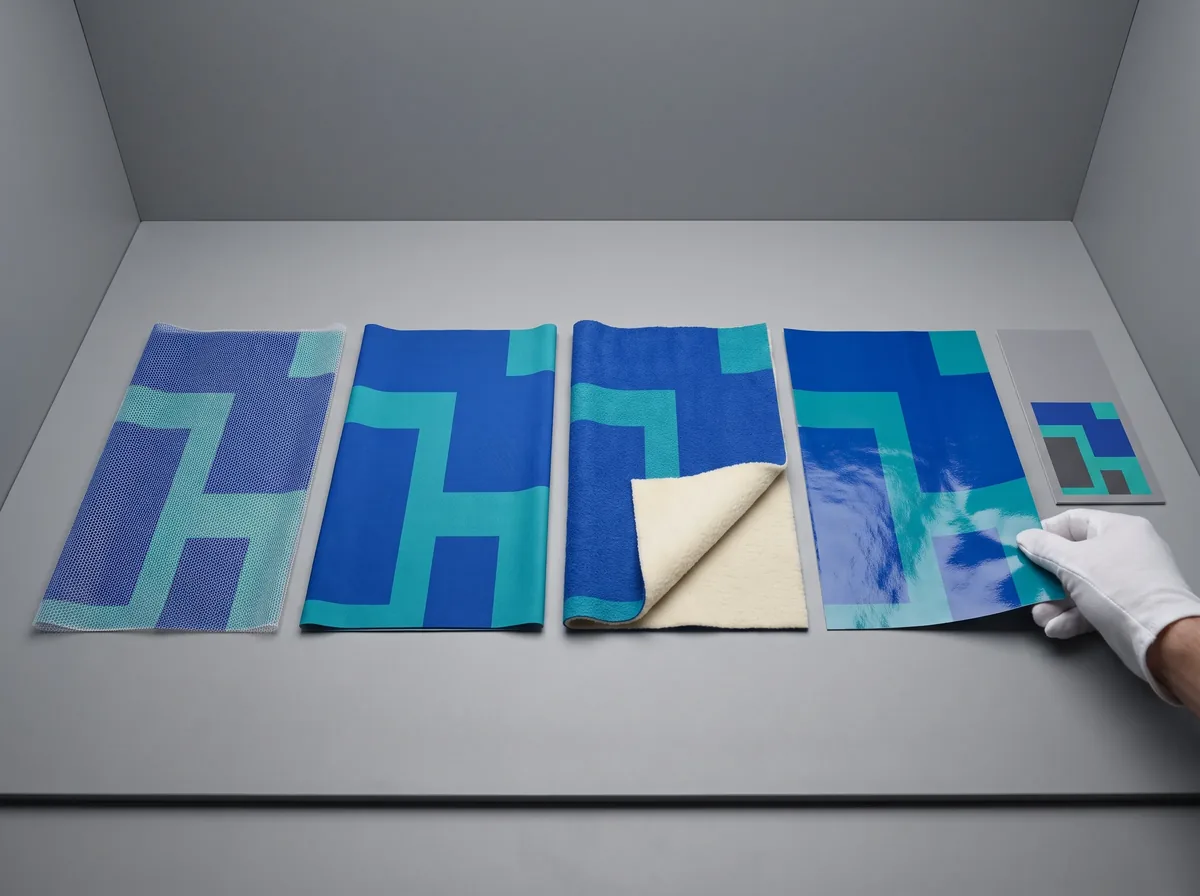
Two variants sit on top of these tiers:
- Brushed-back thermal main body, a finishing variant of the main body fabric.
- Textured-surface knit, a knit variant used on aero jerseys.
Neither variant is a new blend. Three tiers and two variants make the five base fabrics you choose from.
We keep to one fibre system so a kit stays on one colour standard.
The same fibre takes sublimation ink the same way, so one colour standard can be matched on mesh, main body, brushed-back, textured knit and laminate in the same set.
Our fabrics are certified to OEKO-TEX® STANDARD 100 at fabric level, covering every base fabric used in your kit. Development runs under our ISO 9001:2015 quality management system.
Five Base Fabrics, From Lightest to Heaviest
We give fabric weight as an order, from lightest to heaviest. Each fabric is described by how it is built.
| Base fabric | How it is built | Weight order |
|---|---|---|
| Lightweight summer mesh | Open-hole knit | 1, lightest |
| Mid-weight stretch main body | Stretch knit with a smooth face | 2 |
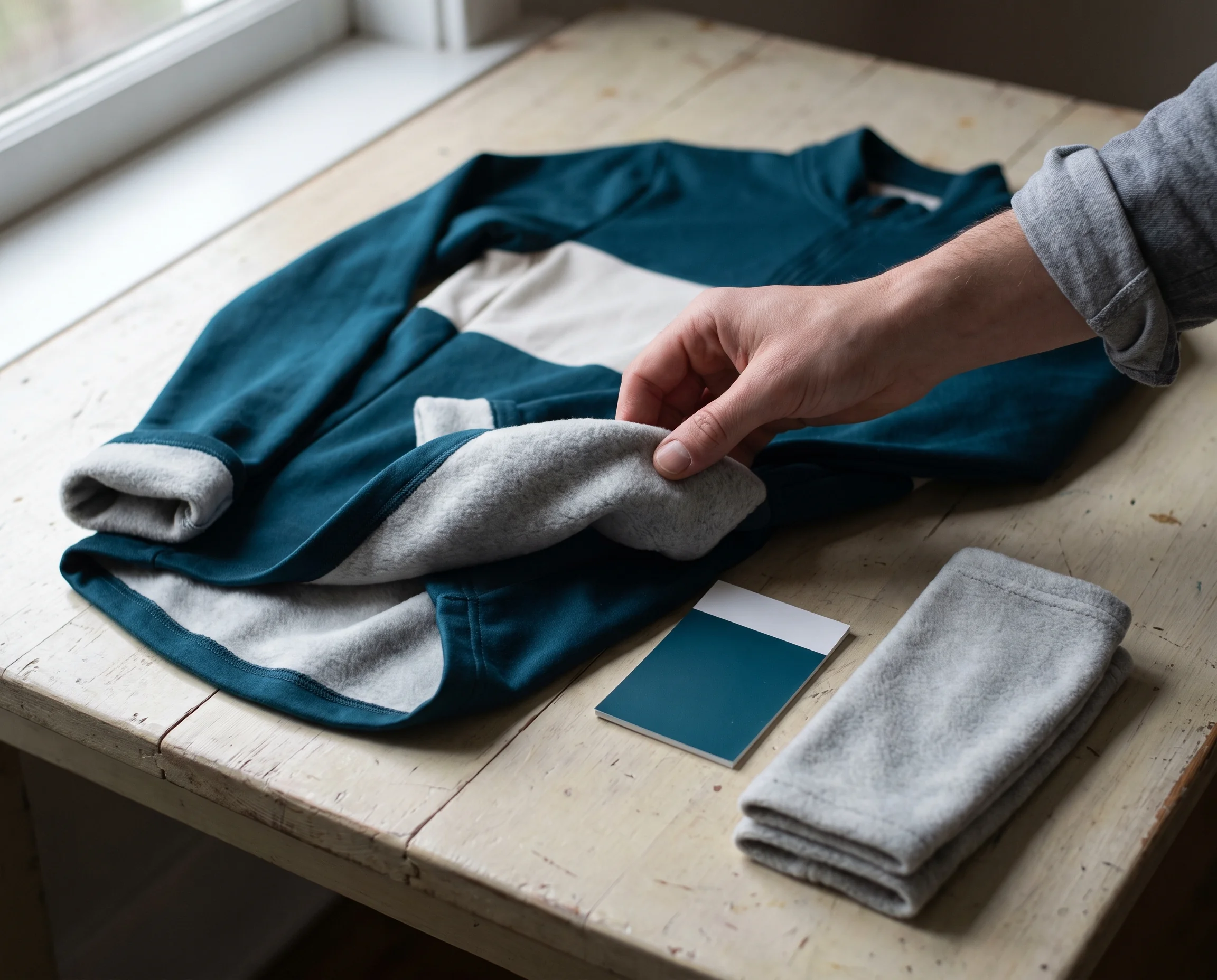
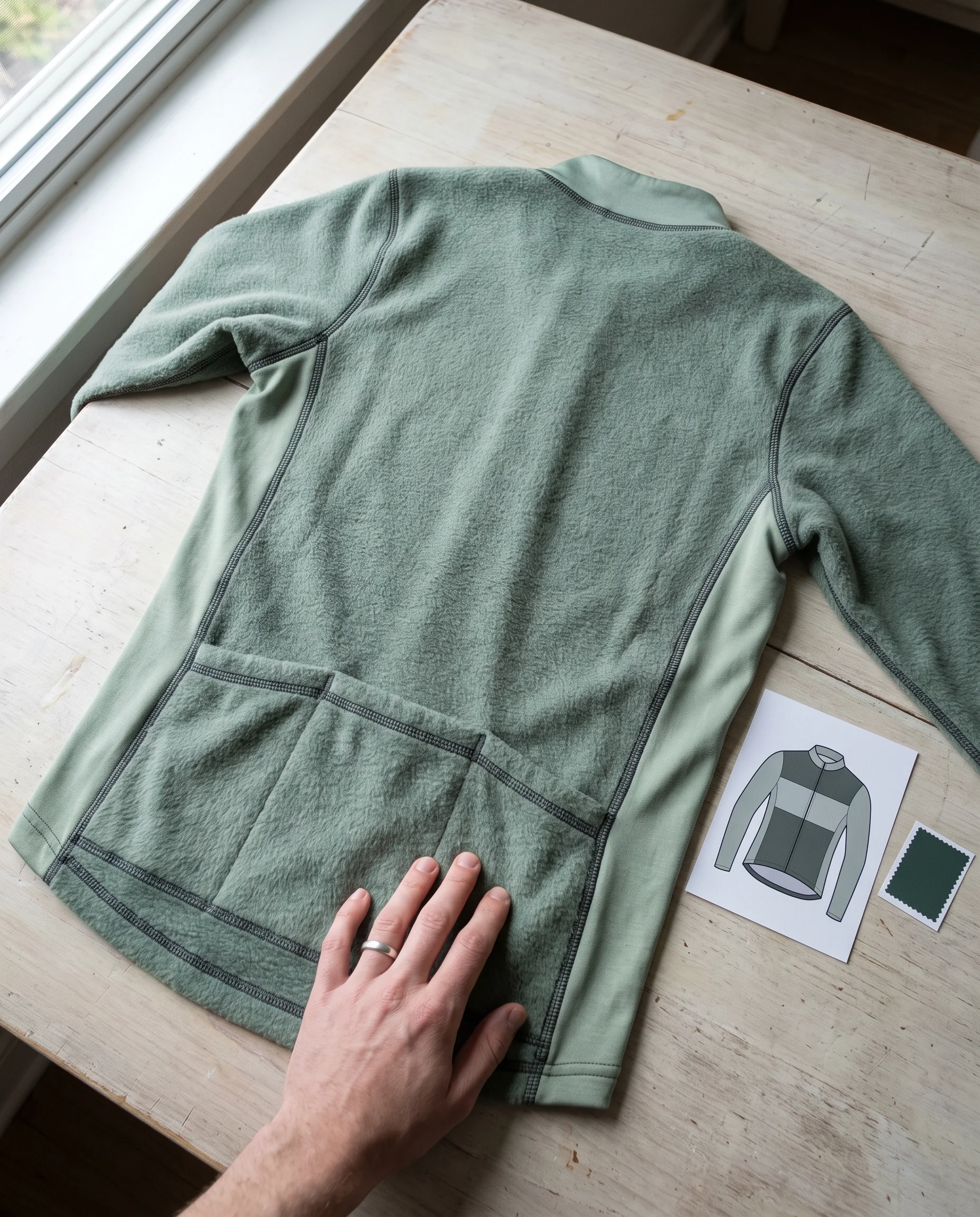
| Brushed-back thermal main body | Main body fabric brushed on the back; the face stays as it is and takes sublimation as normal | 3 |
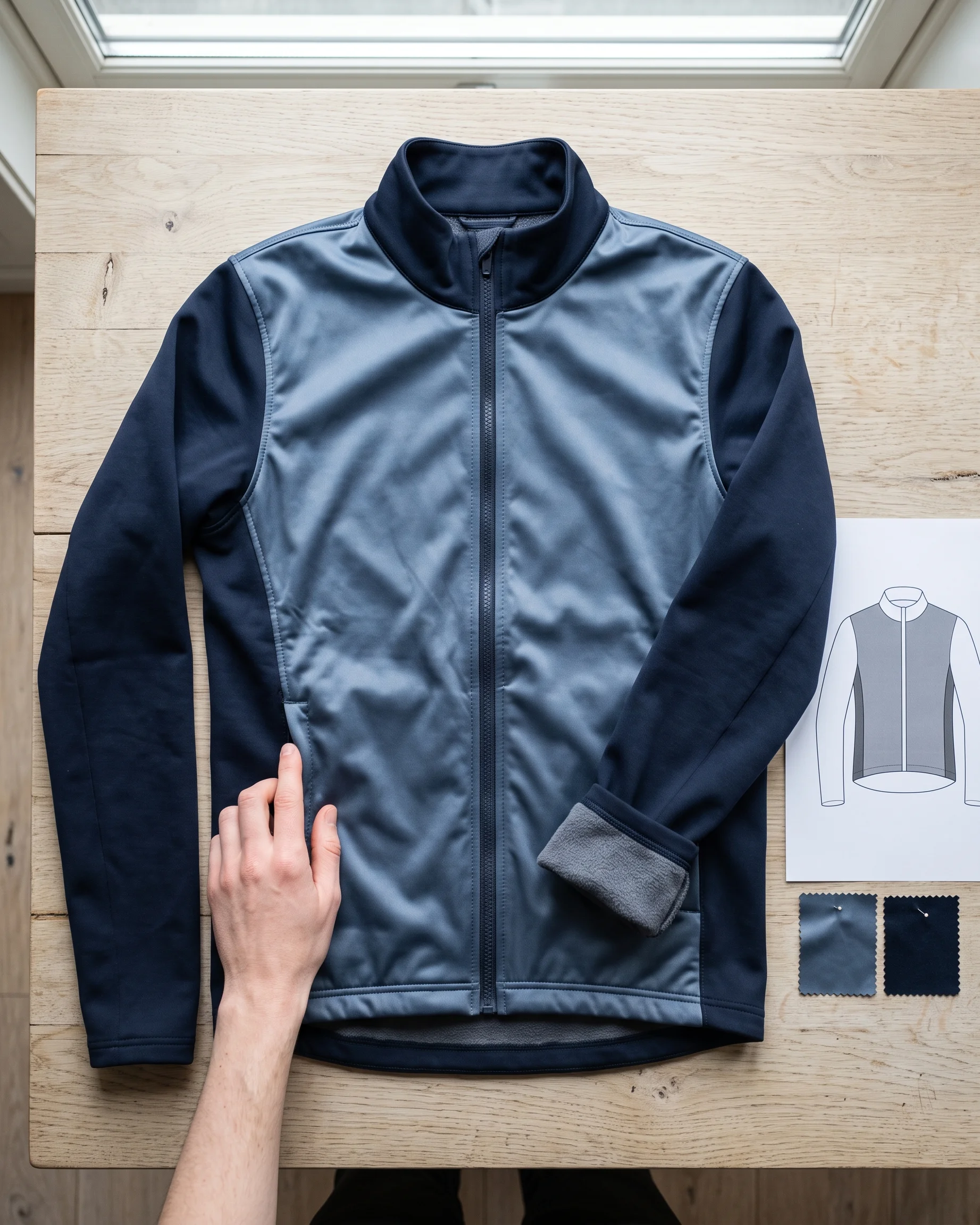
| Windproof laminate | Binary base fabric with a windproof film bonded to the back; print goes on the face of the base fabric | 4, heaviest once the film is bonded |
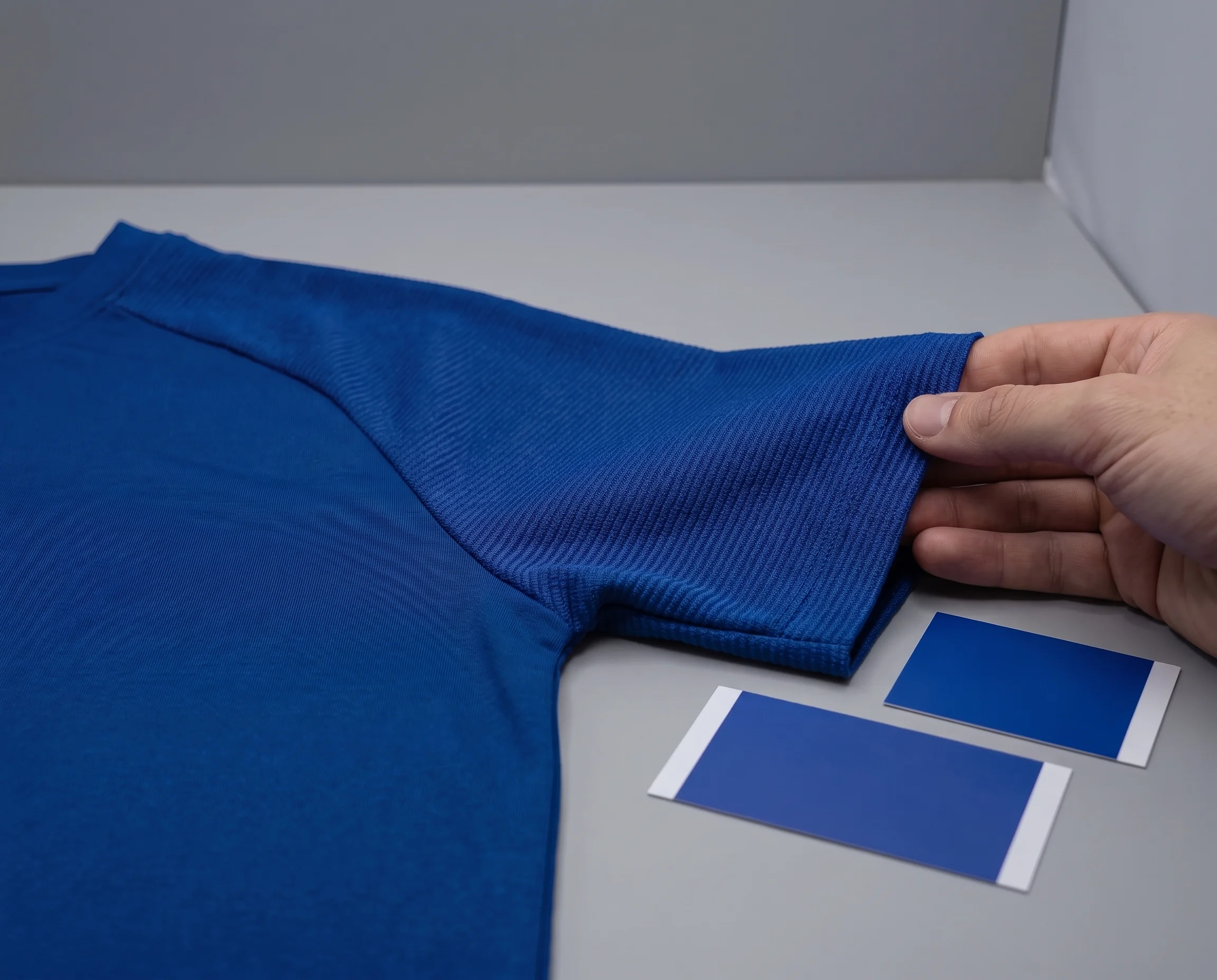
| Textured-surface knit | Knit with a raised texture on the face | Not placed in the order; a knit variant for aero sleeves and shoulders |
When your brief gives a target weight in gsm, that target is written on the fabric-by-panel sheet next to the base fabric we propose. The row is set out in the sheet section below.
Best Fabric for Cycling Jersey Panels, Proposed Garment by Garment
For each garment, the pattern maker starts from a proposal that names a base fabric for every panel. The proposal follows your brief, and the panels can change before you confirm the sheet.
-
Short sleeve race fit jersey
Starting proposal by panelMain body on the front and sleeves; mesh on the back and side panels
Race fit jersey -
Hot weather jersey, above 22 °C
Starting proposal by panelMain body on the front; mesh on the back, side panels and sleeves; all-mesh as an option
Hot weather jersey -
Aero short sleeve jersey
Starting proposal by panelMain body, with textured-surface knit on the sleeve and shoulder panels
Aero jersey -
Long sleeve race fit jersey
Starting proposal by panelMid-weight stretch main body
Race fit jersey -
Thermal jersey
Starting proposal by panelBrushed-back thermal on the panels the pattern maker proposes, main body on the rest
Thermal jersey -
Gilet
Starting proposal by panelLaminate on the left and right fronts; mesh on the back, with main body as the alternative
Cycling gilet -
Windproof jacket
Starting proposal by panelLaminate on the front panels; brushed-back thermal on the back, side panels and sleeves
Windproof jacket -
Arm, knee and leg warmers
Starting proposal by panelBrushed-back thermal or main body, chosen garment by garment
Warmers -
Cycling cap
Starting proposal by panelMesh or main body for each crown panel; a sweatband in one of the five base fabrics
Race cycling apparel range
Each proposal is a starting point. The fabric each panel is finally cut in is the one on the sheet you confirm.
For the temperature band each garment is built for, see our race cycling apparel range.
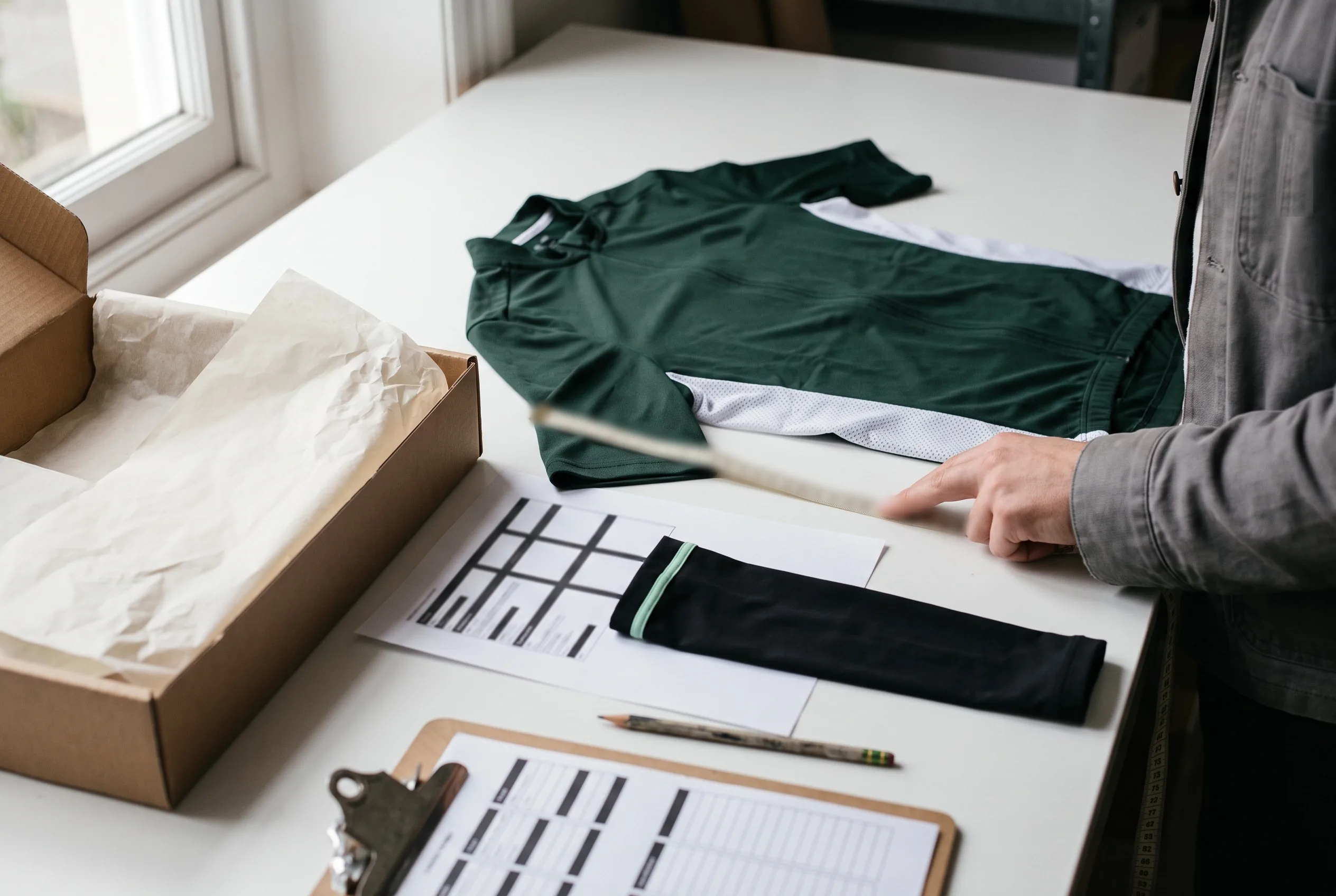
Send a Reference Jersey or Your Current Fabric List
Send photos of the jersey you race in now, or the fabric list you work to. The pattern maker replies with a base fabric proposed for each of its panels.
Request a fabric proposalMesh Fabric for Cycling Jerseys: Front, Pocket and All-Mesh Rules
Lightweight summer mesh is the open-hole knit in our range. Three placement rules go with it on a race jersey.
-
The front stays in main body in the starting proposal. The front panel carries the chest print and the zip seam, so the pattern maker keeps it in mid-weight stretch main body.
-
Pocket bags are cut in main body, because mesh under load lets the pocket opening stretch out of shape.When you want the pocket in mesh anyway, we cut it that way, and that row of the sheet records that the pocket may be returned at the fit check.
-
A jersey in mesh on every panel, front included, is available when your brief calls for it. The front then carries its print on mesh, so every panel goes through the two mesh print checks below.
The full hot weather build is on our hot weather cycling jersey page.
Laminate, Brushed-Back and Textured Knit: Rules by Panel
Windproof laminate.
Brushed-back thermal main body.
Textured-surface knit.
Mid-weight stretch main body.
Cycling Jersey Fabric by Panel: The Sheet, Row by Row
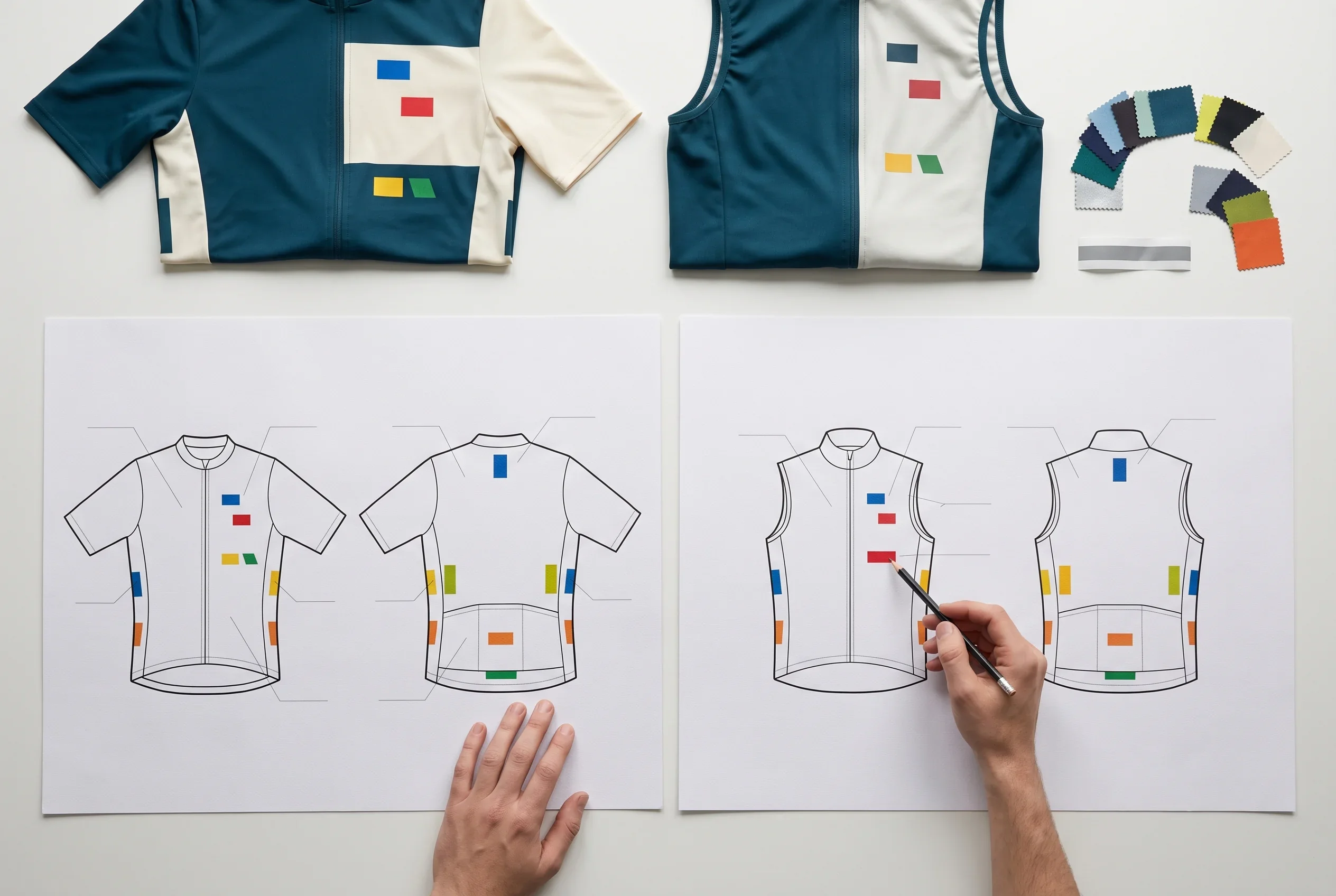
The fabric-by-panel sheet is item three of the eight files in your spec pack. It lists every panel of every garment in the set, one row per panel. Each row carries four entries:
- Panel name,matching the cutting diagram.
- Base fabric,one of the five.
- Blend:88/12, 90/10 or 91/9.
- Colour card,naming the signed card that panel is printed to.
- A fifth entry is added to any row where your brief gives a target of its own. That entry is described in the next section.
How a sheet is built:
- The pattern maker reads your brief: garment list, race format or temperature band, size chart and artwork.
- Panel by panel, the pattern maker proposes a base fabric, starting from the proposals set out above.
- The development manager sends you the proposed sheet with the cutting diagram it refers to.
- You confirm the sheet, or ask for changes row by row.
- Only the confirmed sheet goes into the spec pack.
The sheet covers the panels that are easy to miss. The pocket bag, the cap sweatband and each warmer have their own row, with their own base fabric.
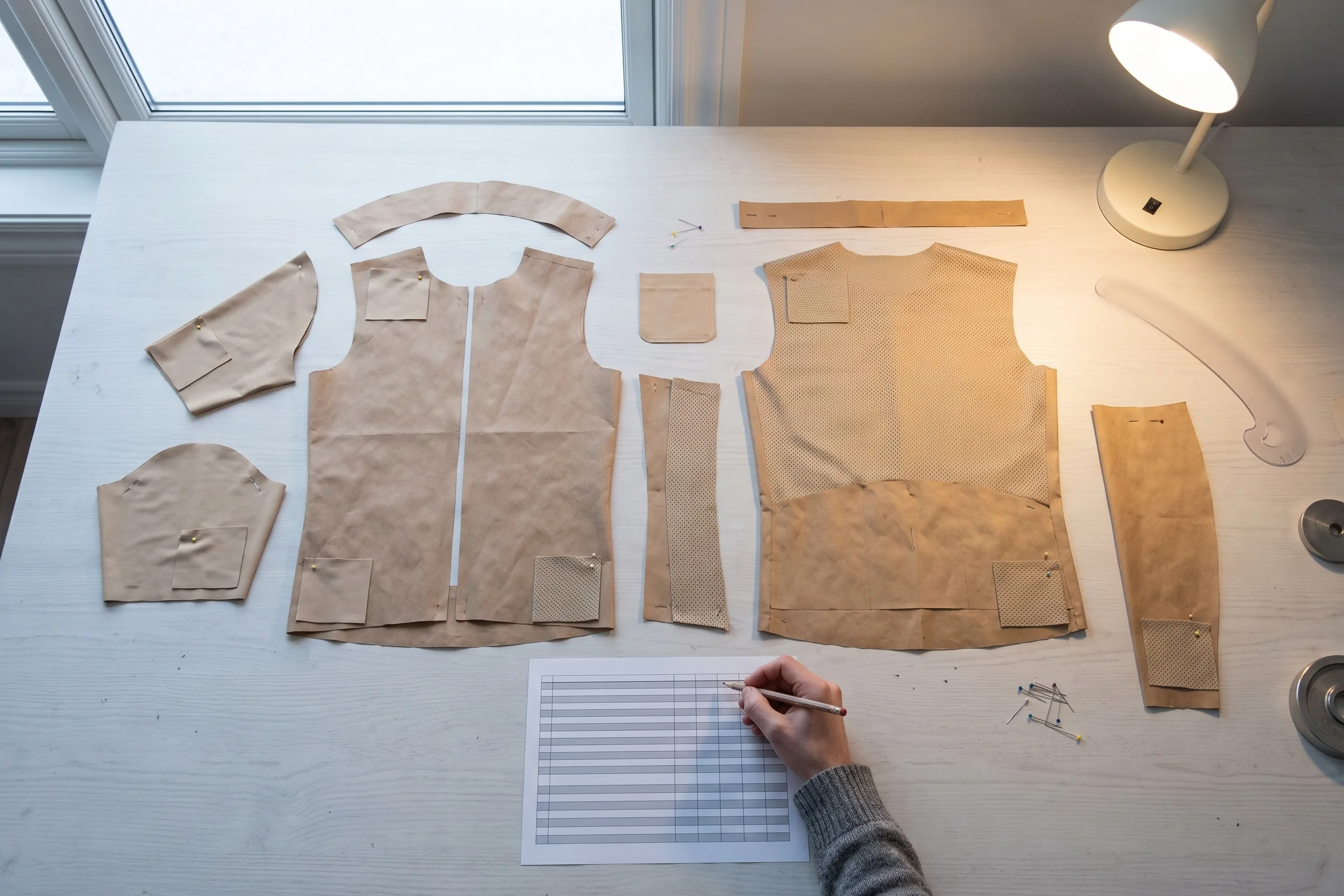
The sheet is read by more than one person on your side:
- Your product lead confirms the fabric choice panel by panel.
- Your designer sees which base fabric, and so which colour card, each panel of the artwork is printed on.
- Your buyer gets a fabric list by panel, by name and blend, for the production line.
What the sheet settles: which panel is cut in which fabric is written down in one file you hold. It does not rest on a sample, an email thread or a call.
When a fabric changes after you confirm the sheet, the row changes and the change is logged. That process has its own section below.
- Lightweight summer mesh
- Mid-weight stretch main body
- Brushed-back thermal main body
- Windproof laminate
- Textured-surface knit
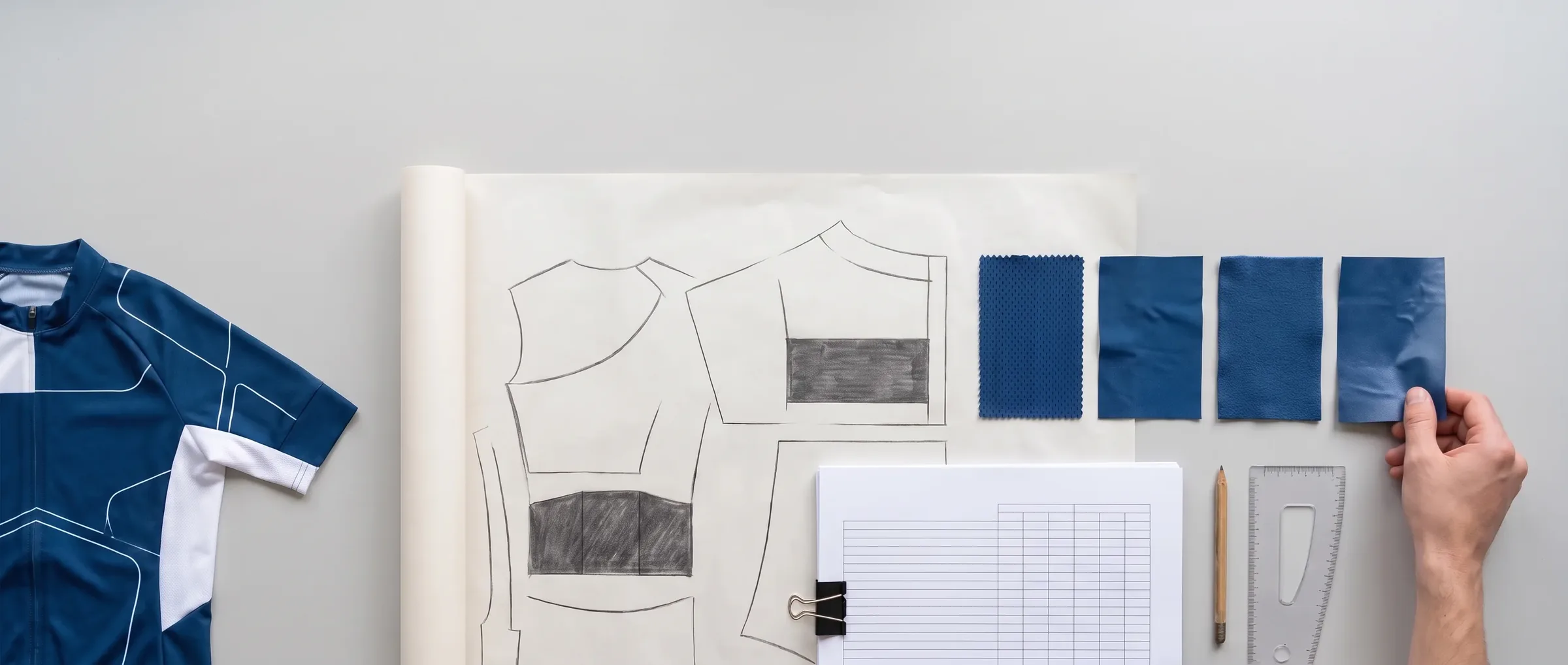
Your Target Weight in gsm, Swatch or Reference Jersey
Many briefs arrive with a fabric already in mind. We take three kinds of starting point.
A target fabric specification.
When your brief names a target for a panel, such as a weight in gsm, we write it on that panel's row as your target, exactly as given.
A fabric swatch.
When you send a swatch, we record it on the row the same way, as your target.
On either kind of row, the pattern maker proposes the closest of our five base fabrics and notes it beside your target. You confirm the proposal, or ask for another of the five. Development runs in the five base fabrics.
A reference jersey from another maker.
Send the jersey to our development studio, or send photos and its current specification first. The jersey is the starting point. We do not alter it.
From your size chart and the reference jersey, the pattern maker drafts a riding-position base block and proposes a fabric for every panel of it. The new sheet lists your reference fabric as the target wherever you give one.
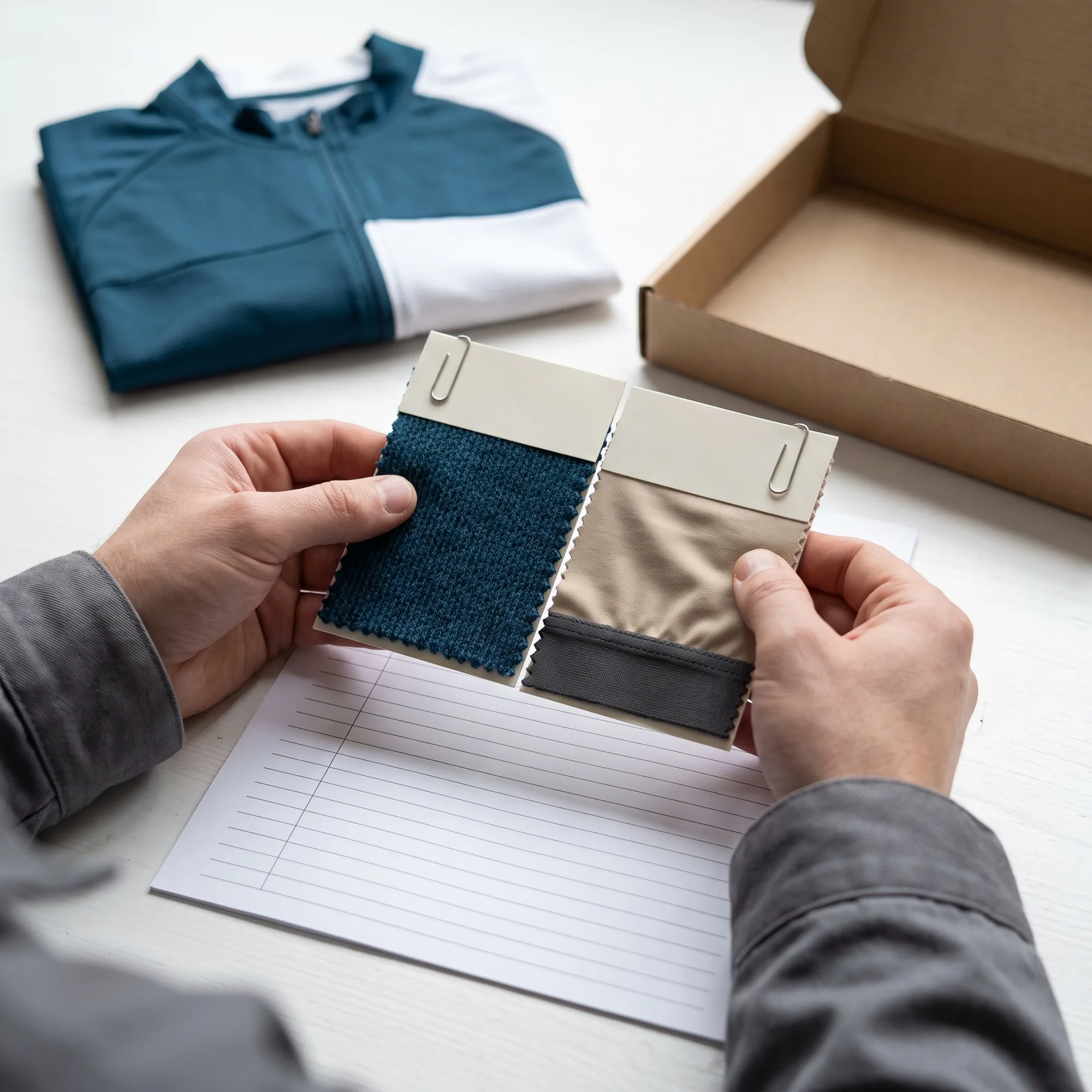
Your target and our proposal sit side by side on the same row. Anyone reading the sheet later can see what was asked for and what was chosen.
A Print Trial and a Signed Colour Card for Each Base Fabric
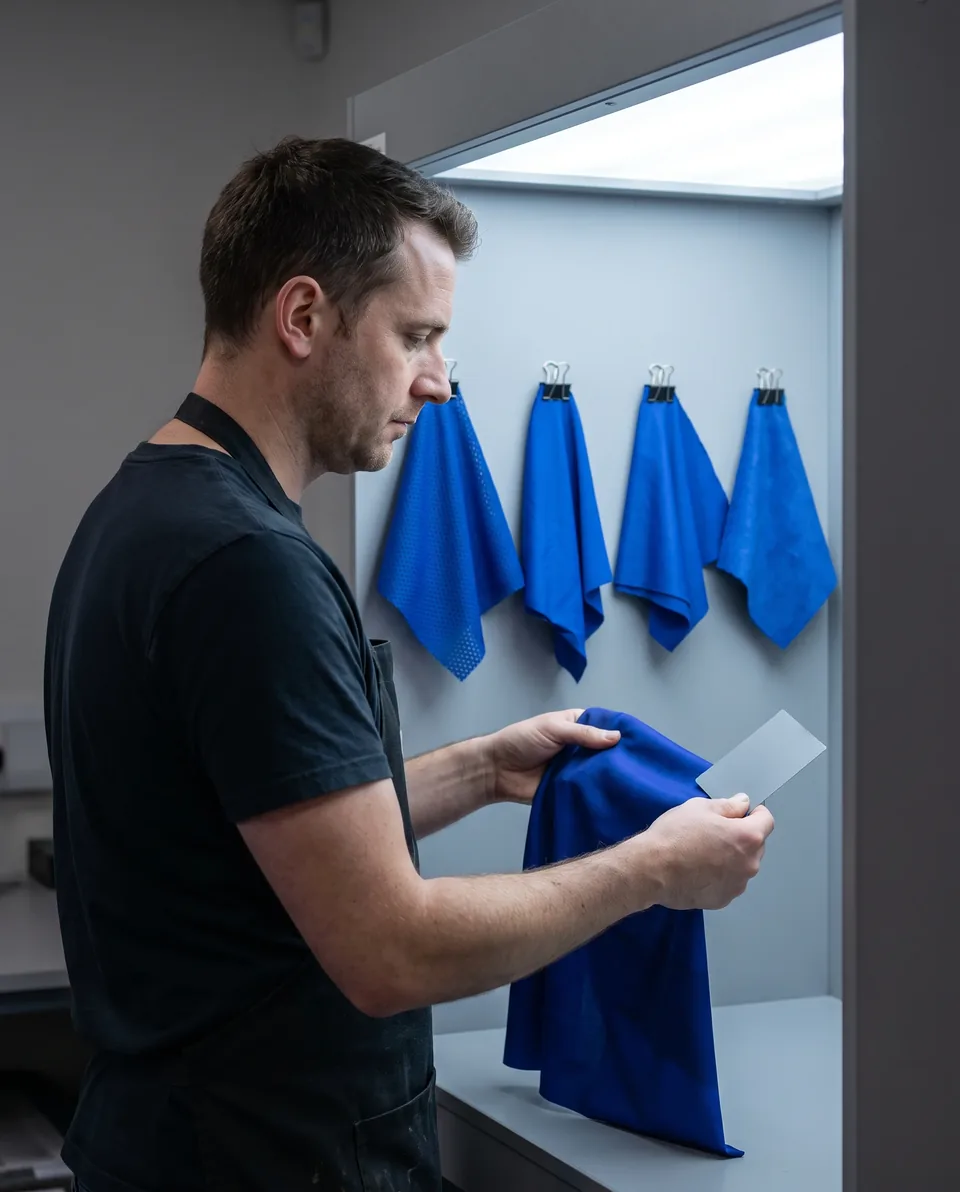
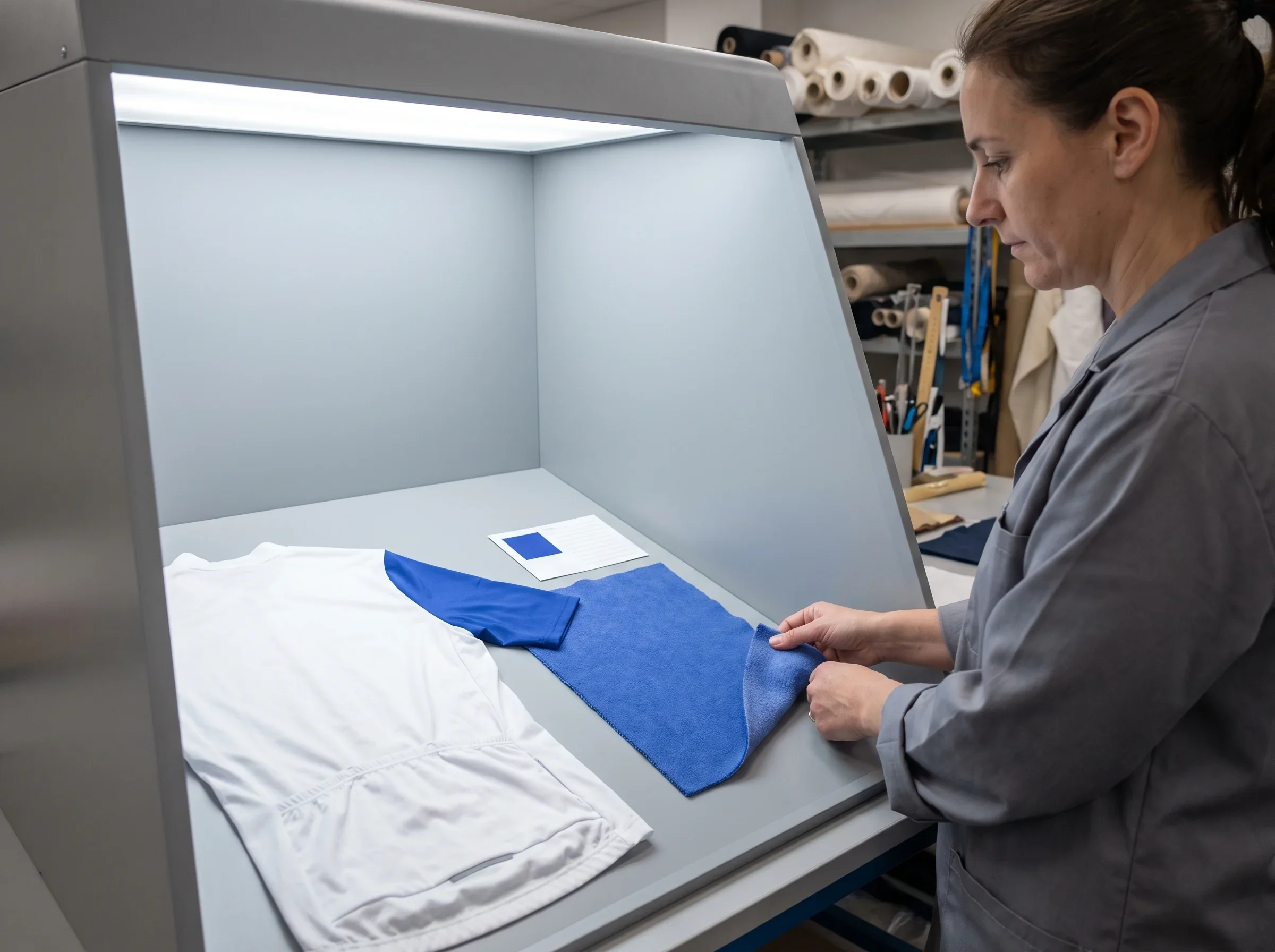
Every base fabric in your set is printed and matched on its own. The colour and print technician runs the work in our D65 colour-matching area.
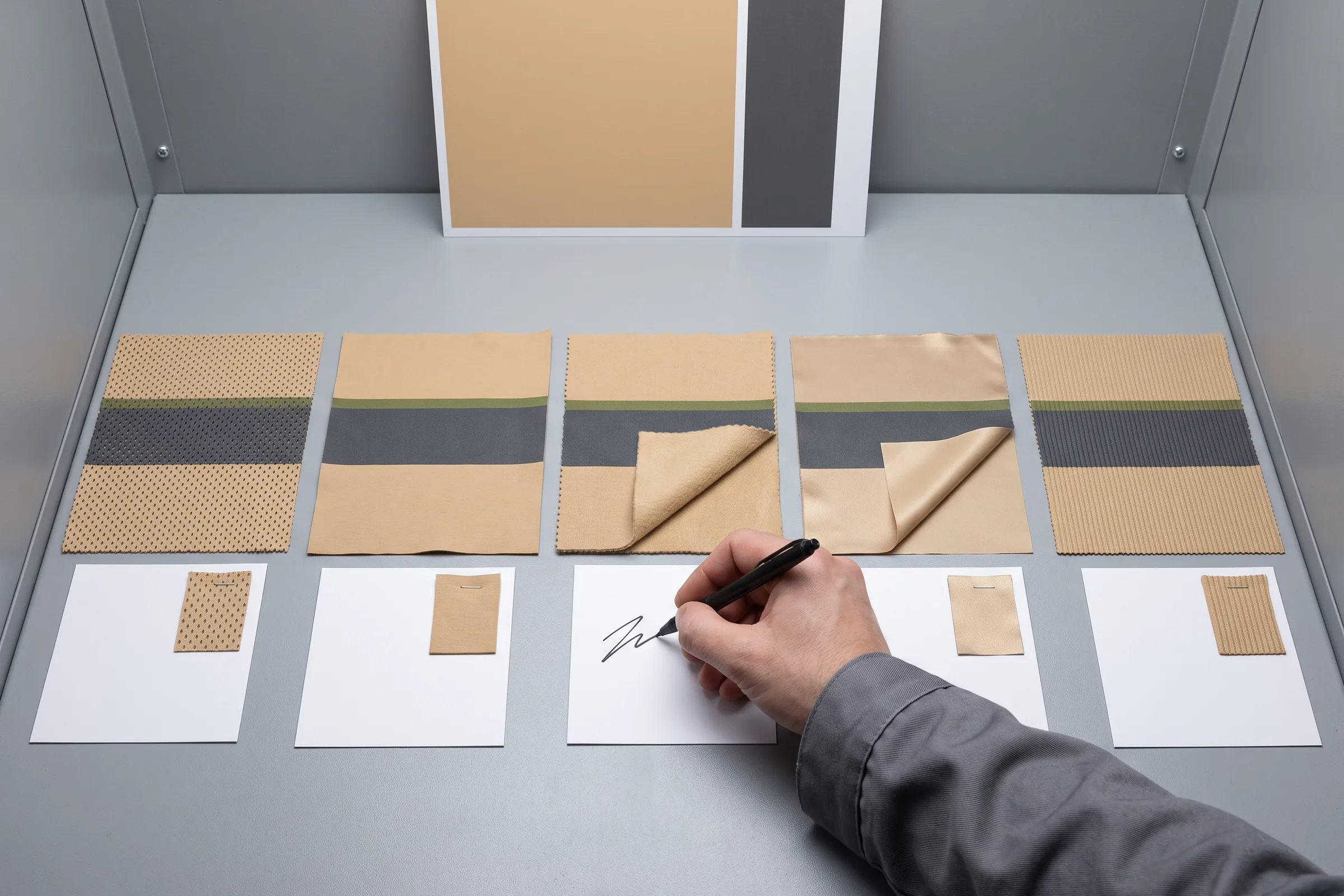
How each base fabric is matched:
- You send your colour standard and artwork.
- The technician prints a strike-off on every base fabric listed on your sheet.
- Each strike-off is compared under D65 light against the one colour standard.
- The technician adjusts the print until each fabric matches the standard.
- Each base fabric gets one physical colour card, signed by the technician.
- The colour parameters for each fabric are written into the spec pack.
How each fabric is handled in the trial:
- Main body:printed on its smooth face.
- Brushed-back thermal:printed on its face, which is left unbrushed.
- Windproof laminate:printed on the face of the base fabric, with the film on the back.
- Textured-surface knit:printed and carded as its own base fabric.
- Mesh:printed and carded on its own, with two extra checks before signing.
Colour is set by the standard you sign. Where a strike-off and your standard differ, the standard wins, and the technician reworks the strike-off.
A card is signed before any sample is cut in that fabric. An unsigned card means no sampling for the panels it covers.
What you hold: one signed physical card for each base fabric, and the colour parameters for each in your spec pack.
Extra Checks on Mesh and at Fabric Junctions
Three checks are added on top of the strike-off for every fabric.
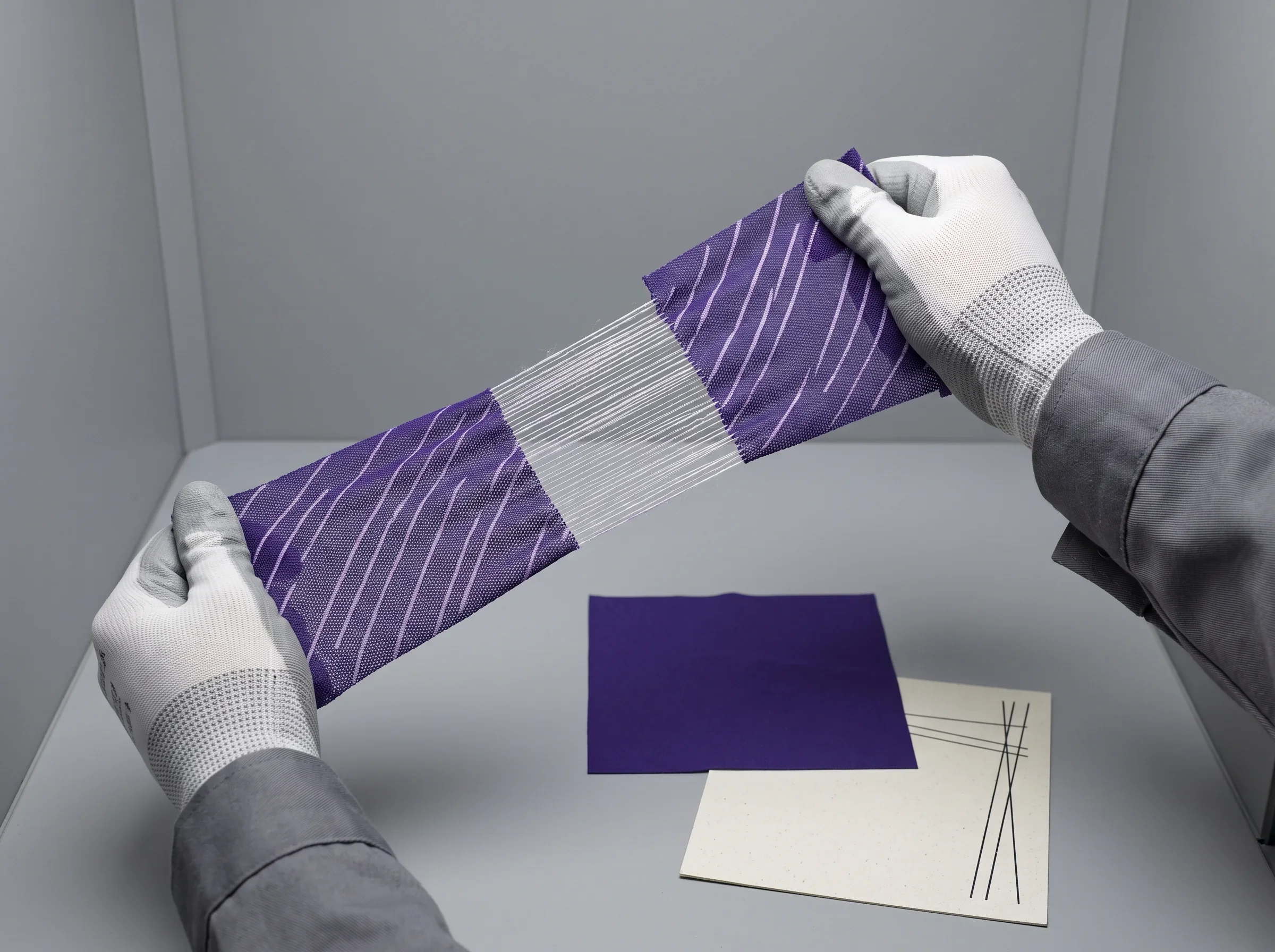
Stretch check on mesh.
The mesh strike-off is pulled open by hand along the race-position stretch directions, under D65, to see whether white ground shows through the print. This happens before the mesh card is signed.
Where white ground shows, the technician puts forward a fix for you to confirm:
- A deeper ground colour in that area.
- Moving fine detail away from the high-stretch area.
- Cutting that panel in main body.
The last fix changes the sheet, and you confirm it again.
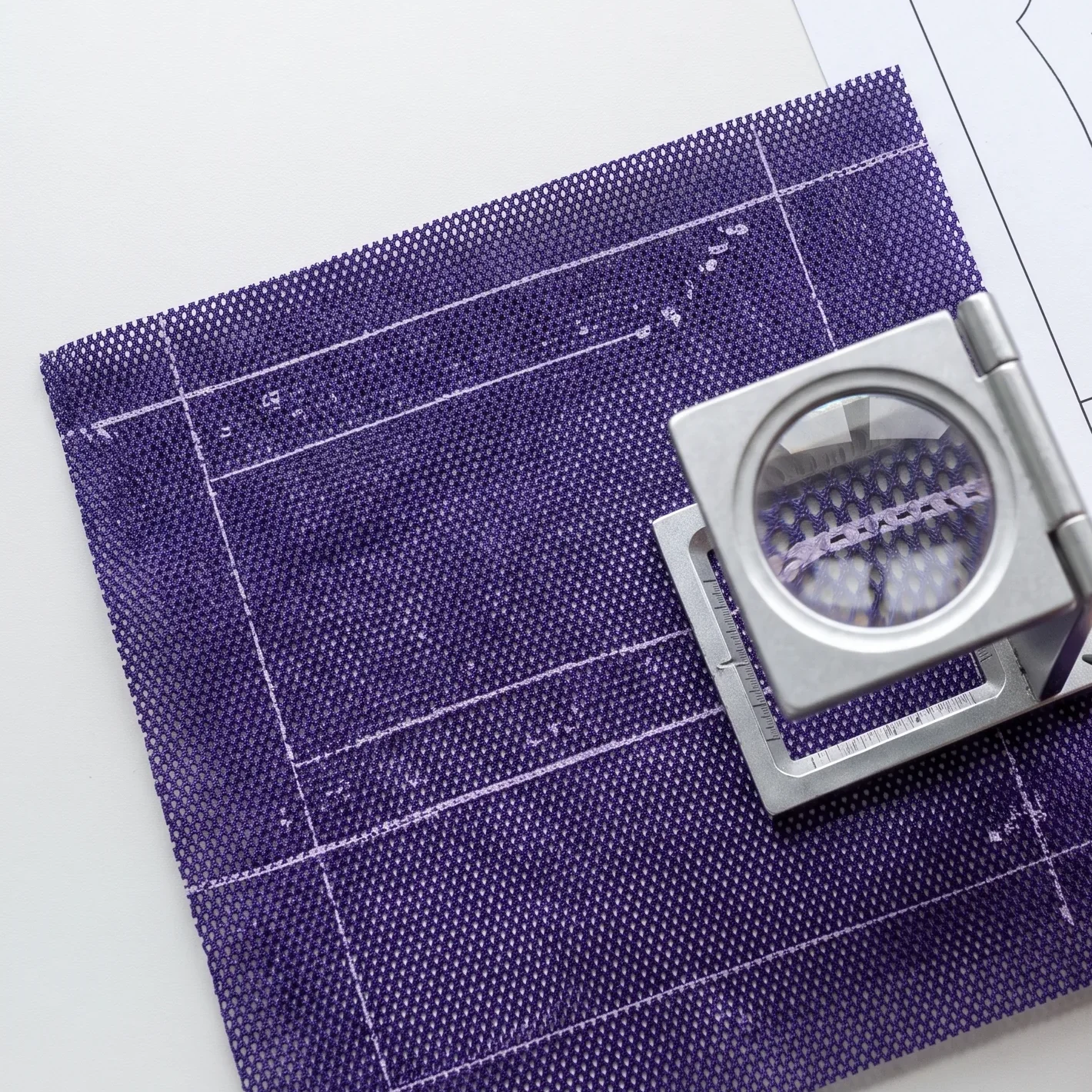
Fine-line check on mesh.
Artwork detail finer than the mesh holes prints broken. Each fine line, small letter and sponsor detail is checked on the mesh strike-off, then thickened or moved to a main body panel.
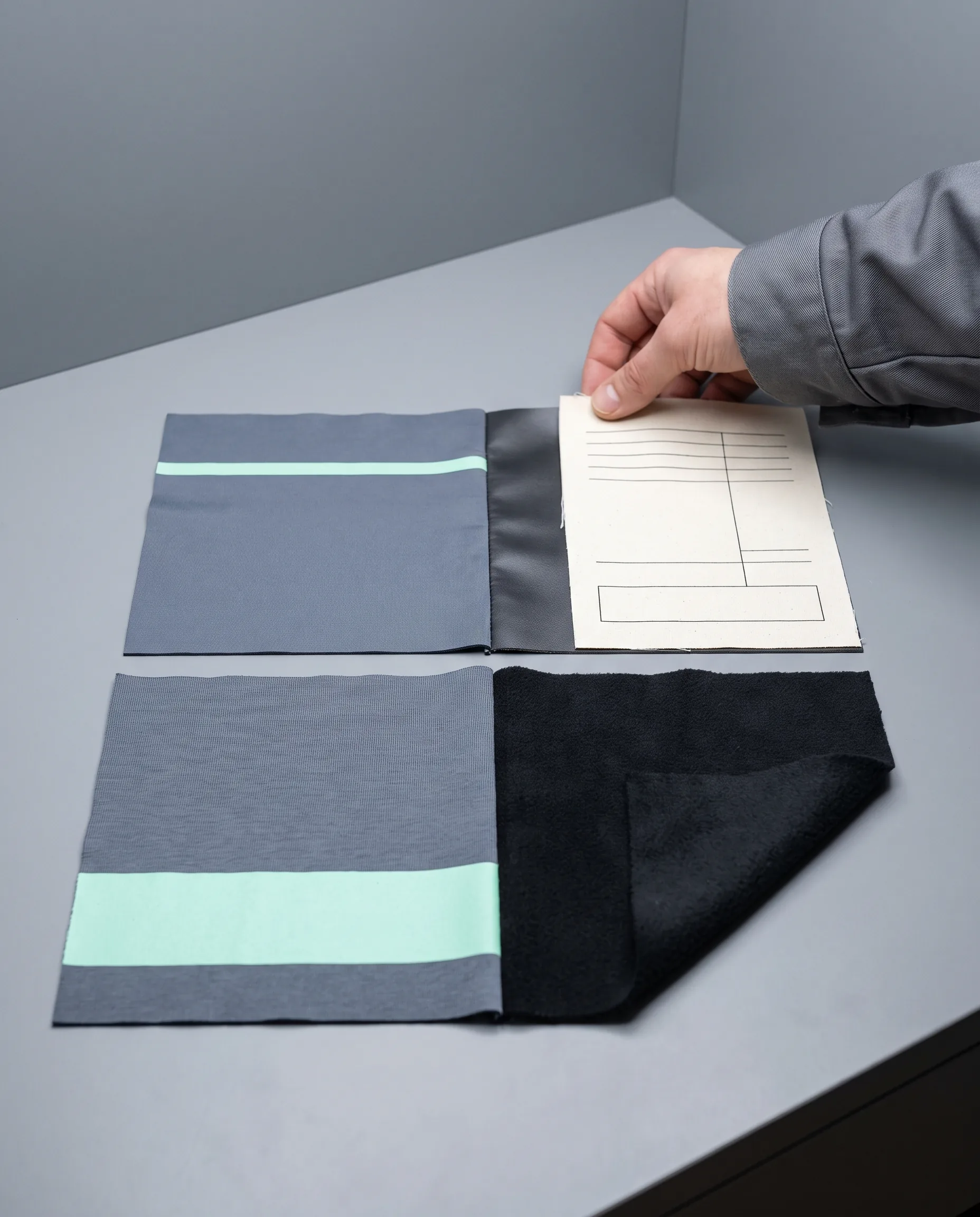
Junction check.
Where two base fabrics meet across garments, such as a jersey collar and a laminate gilet front, both strike-offs are compared side by side under D65 before each card is signed.
The full mesh checks are on our hot weather cycling jersey page.
The junction order between garments is on our cycling layering system page.
Changing a Panel's Fabric After You Confirm the Sheet
A confirmed sheet can still change. A change can come from your side or from our checks:
- A mesh panel moved to main body after a stretch check.
- A gilet back moved from mesh to main body after a fit check returns it.
- A pocket bag moved to mesh at your request.
- A change after your own wind-tunnel or track testing of an aero sample.
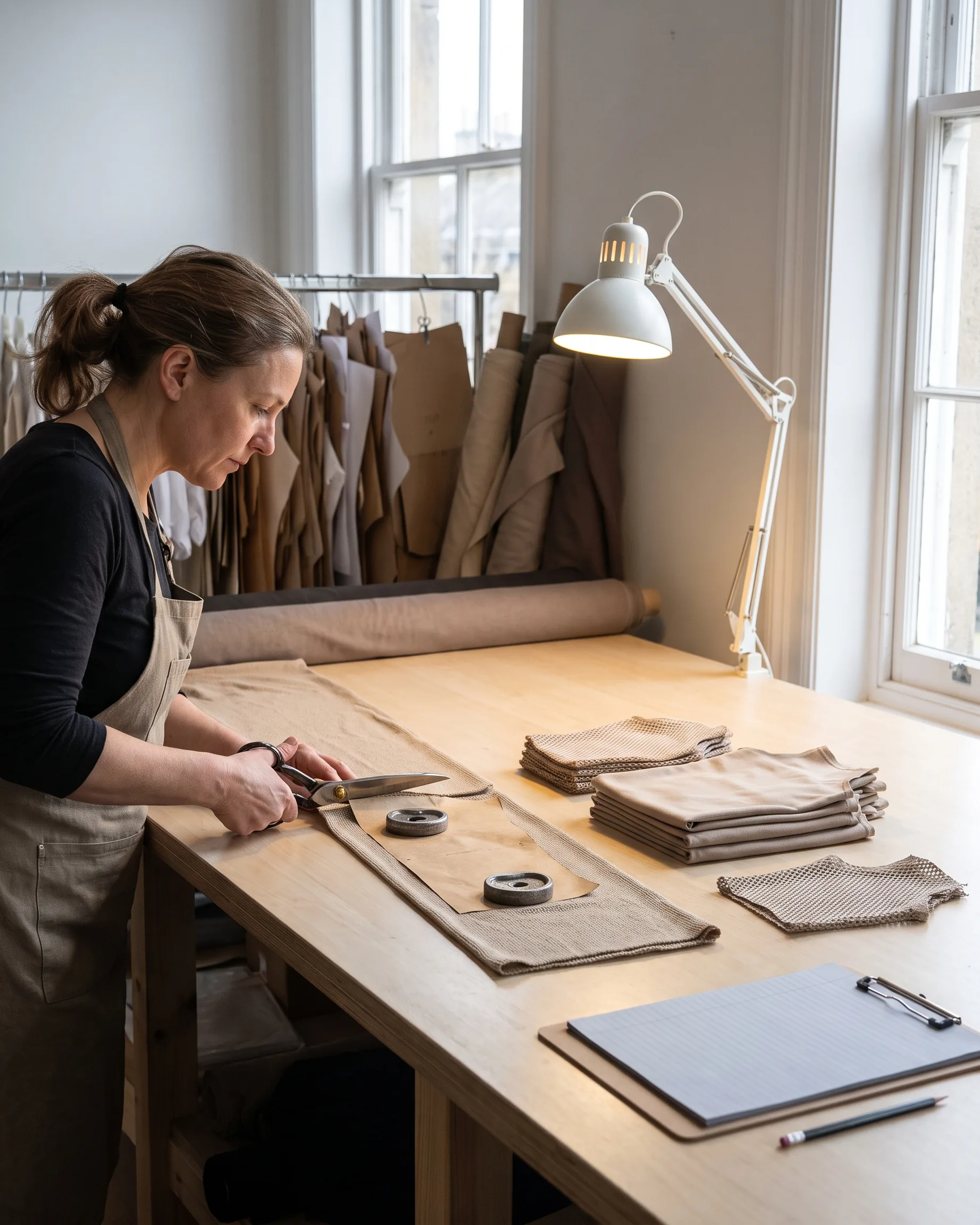
When a panel's fabric changes, that panel is sampled again in the new fabric. The rest of the confirmed sheet stays as it was.
Each change goes into the revision log as one entry:
- Which garment.
- Which panel.
- The base fabric it moved from and the one it moved to.
- Why it moved.
The entry travels with the revised sample, and the updated sheet goes to you to confirm.
Changing a confirmed sheet at your request starts a new sampling round, with its own log entry. No extra sampling fee applies to the first 2 revision rounds.
A garment version with a different fabric map gets its own fit proof.
The hot weather jersey and the thermal jersey are drawn on the same riding-position block as your summer jersey. Because their fabrics by panel differ, each is sampled on its own and checked on the bike on its own.
For each of these versions, the pattern maker signs fit and the sample technician signs the measurement report. A fit signature on one version never covers another.
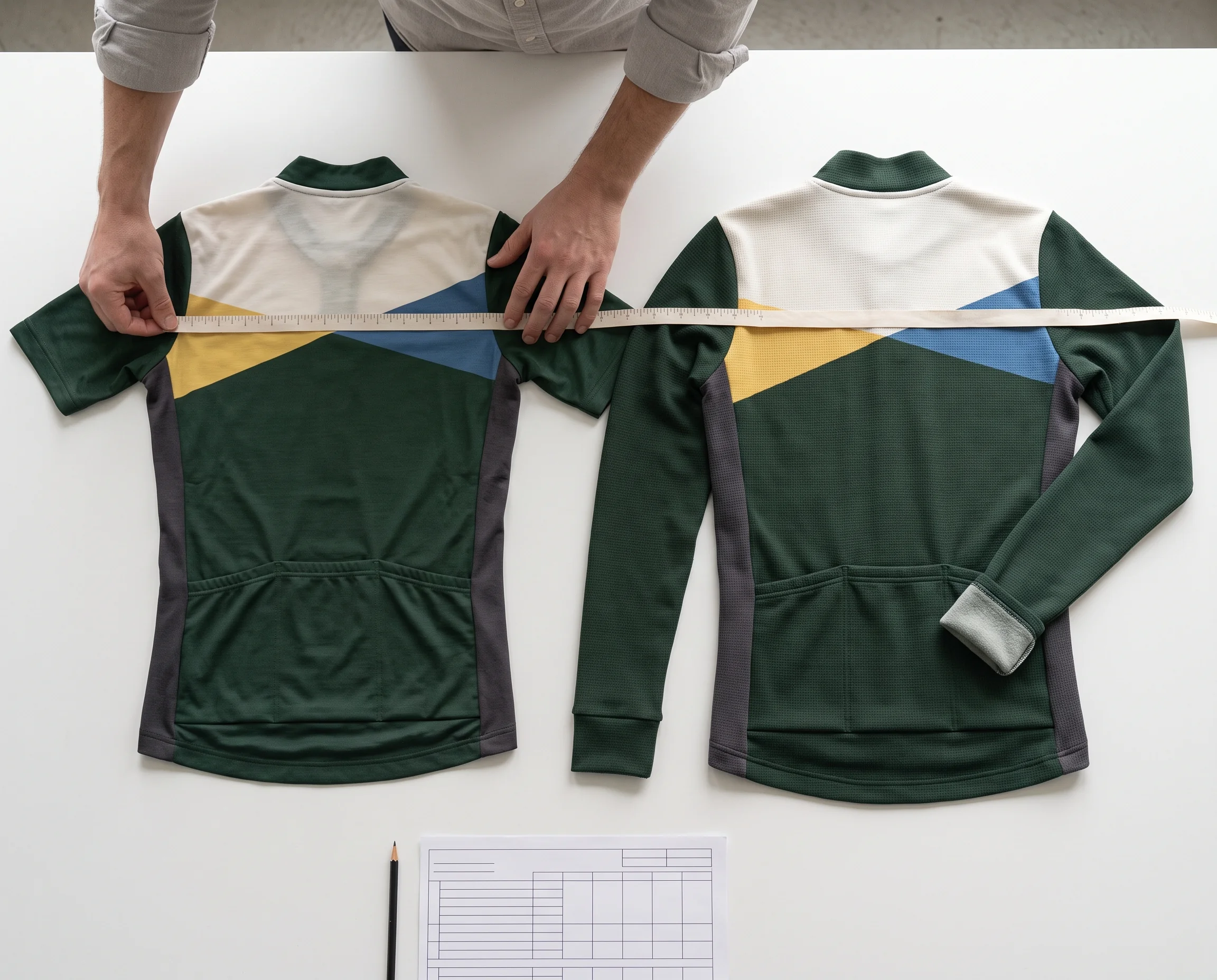
If the change brings in a base fabric your set does not have yet, it needs its own strike-off and card. The card count is covered in the next section.
Adding a Garment: Colour Cards Counted by Base Fabric
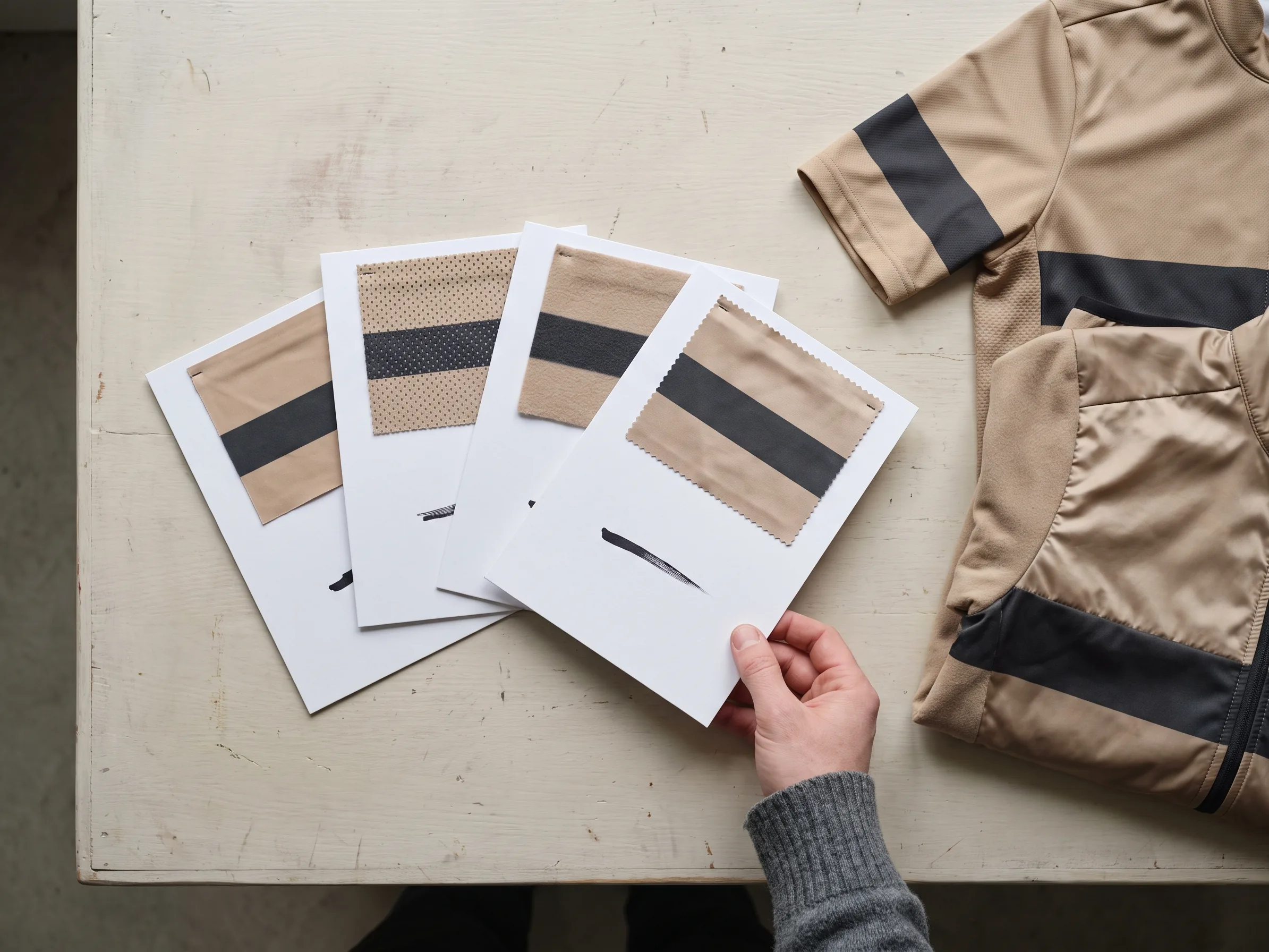
Colour cards are counted by base fabric, not by garment. A garment added to your set brings a new card only when it uses a base fabric the set does not have yet.
Each added garment also brings its own fabric-by-panel sheet into the spec pack, with its panels printed to the cards already signed.
When you plan a new garment, the development manager can tell you from your current sheet whether it needs a new card before any work starts.
Send the Fabric You Work to Now
Send your current fabric list or a swatch, with the garment you want to add or rework. We reply with the panels it touches and any new card it needs. Send your fabric list .
The Sheet Goes to Production With Your Spec Pack
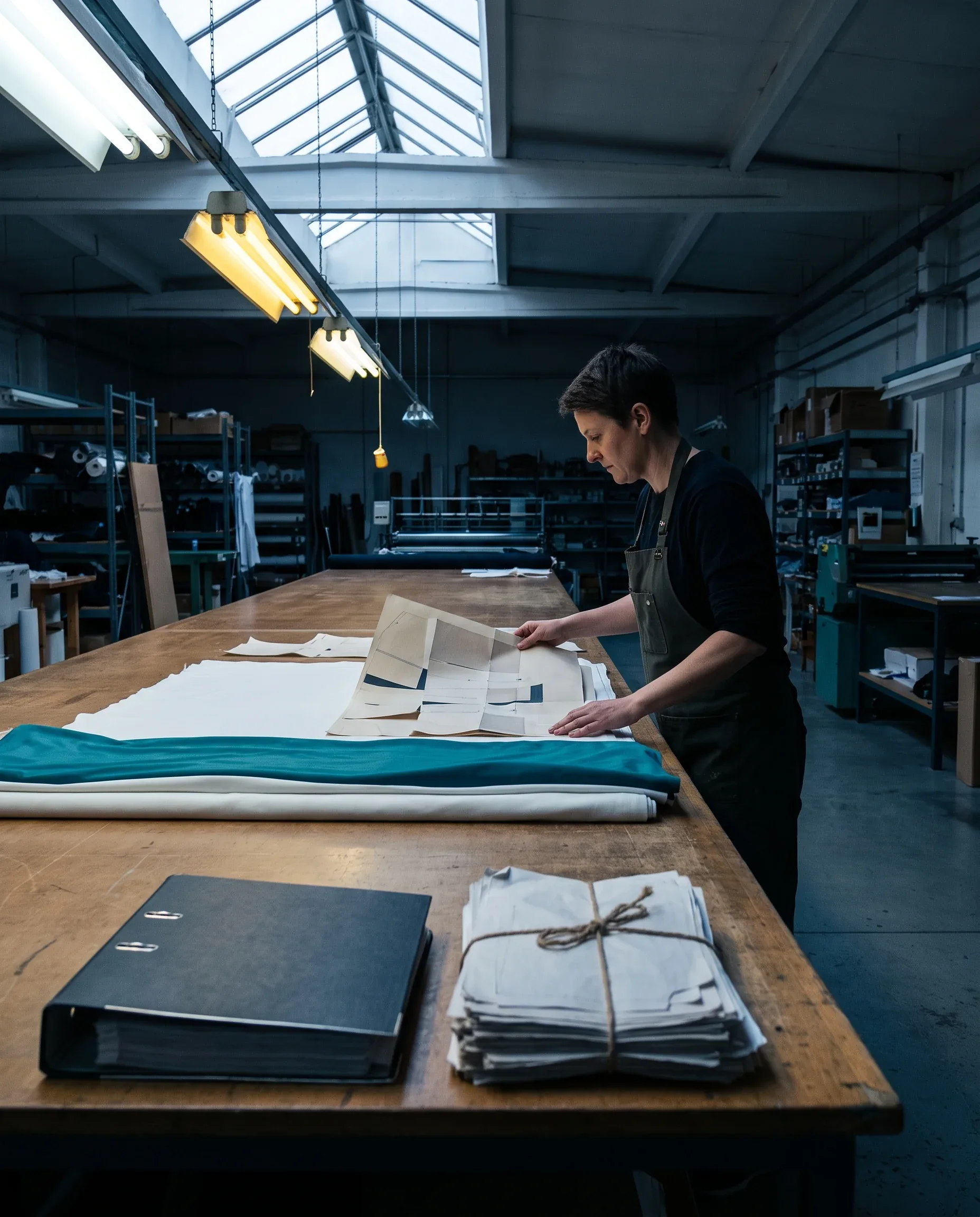
At handoff, the fabric-by-panel sheet goes to you with the other seven spec pack files. Your production line cuts from the confirmed sheet.
What the sheet gives a production line, panel by panel:
- The base fabric, by name.
- The blend.
- The colour card and its colour parameters.
Production runs where you choose: on your own line, or at cyclingapparelfactory.com, the bulk production site of the same factory, where the development manager hands the pack over for you.
Sheets and Colour Parameters Archived by Project and Kept Confidential
Every sheet, colour parameter and revision log entry is yours at handoff. A copy stays on file with us, filed under your project.
When you come back next season, a new garment or a reworked panel starts from the same sheet and the same colour parameters. A base fabric already carded keeps its card.
Your fabric choices, target specifications and colour parameters are used only for your project. They are not reused for other buyers or shown on this site.
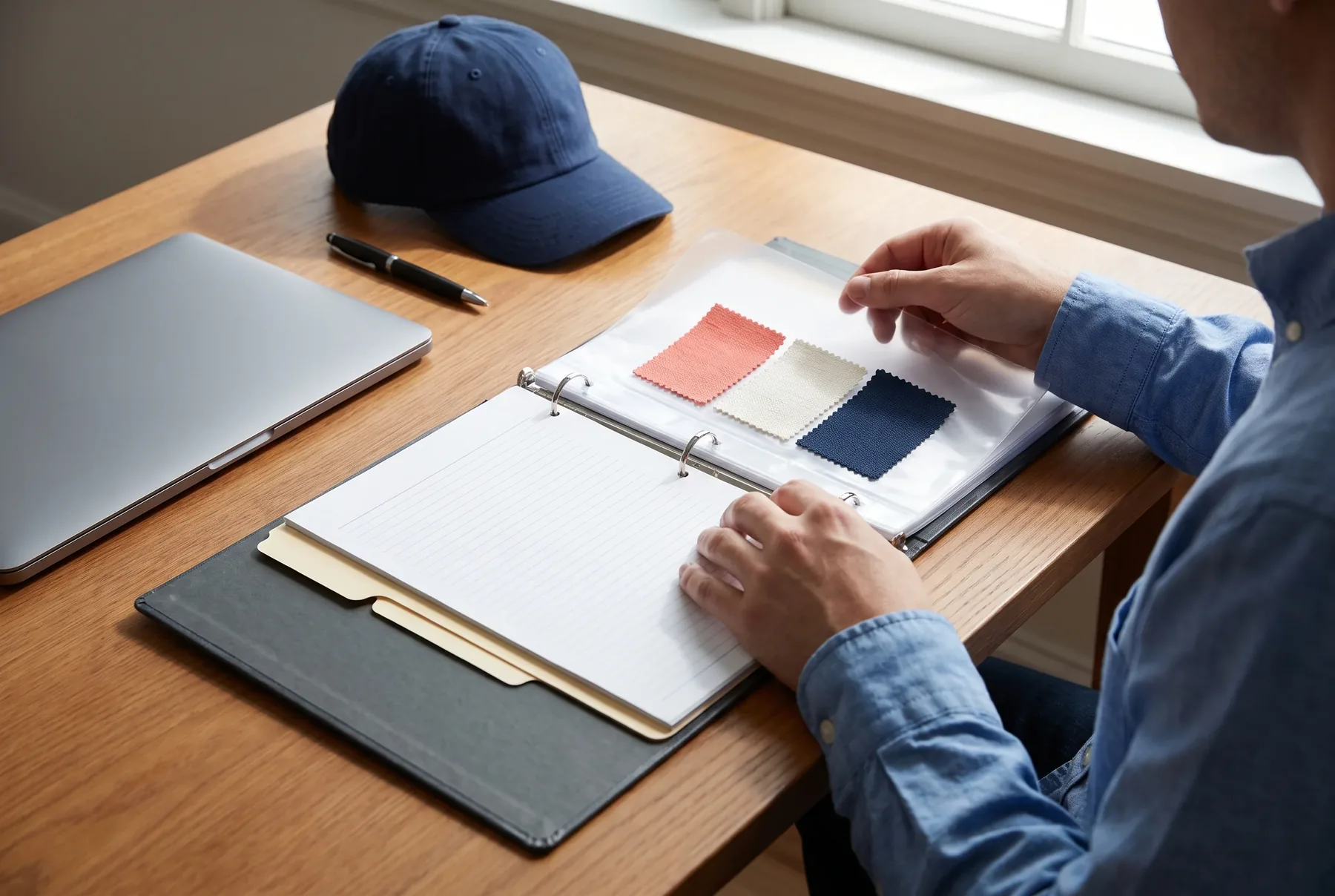
You can ask us to sign a non-disclosure agreement before development starts.
Brief Items to Send for a Fabric Feasibility Review
Three items start the 48-hour clock from the moment you submit:
Garment list.
Size chart and size range.
Race format or temperature band.
The development manager answers within 24 hours on working days. If a starting item is missing, that answer lists every missing item at once.
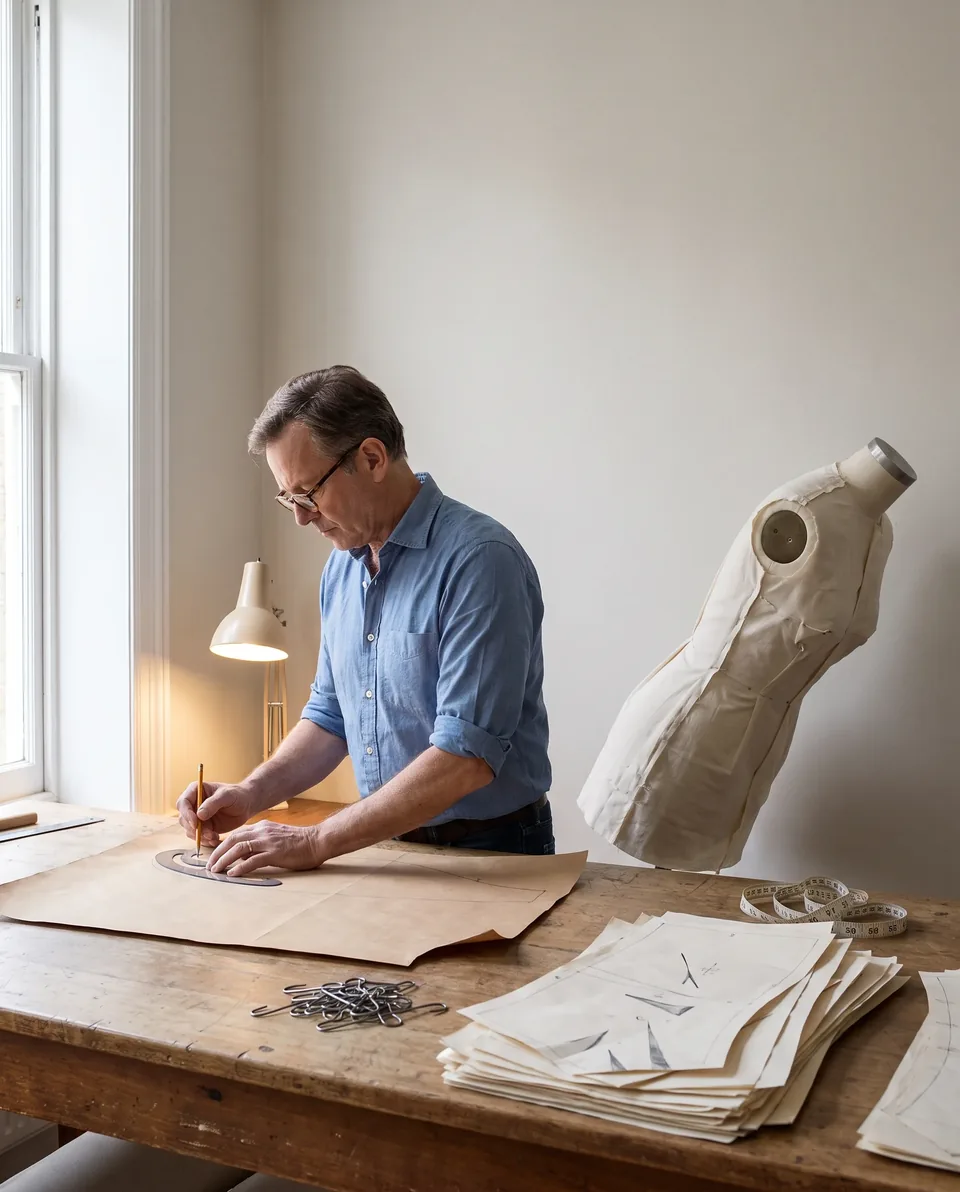
Add whatever you already have:
- A reference jersey, or photos and its current specification.
- Fabric swatches, or a target fabric specification for any panel, weight included.
- Your current fabric list by panel, if you have one.
- Your colour standard and artwork.
- The spec pack, if we developed the garments before.
Send the Swatch or Target Your Brief Works To
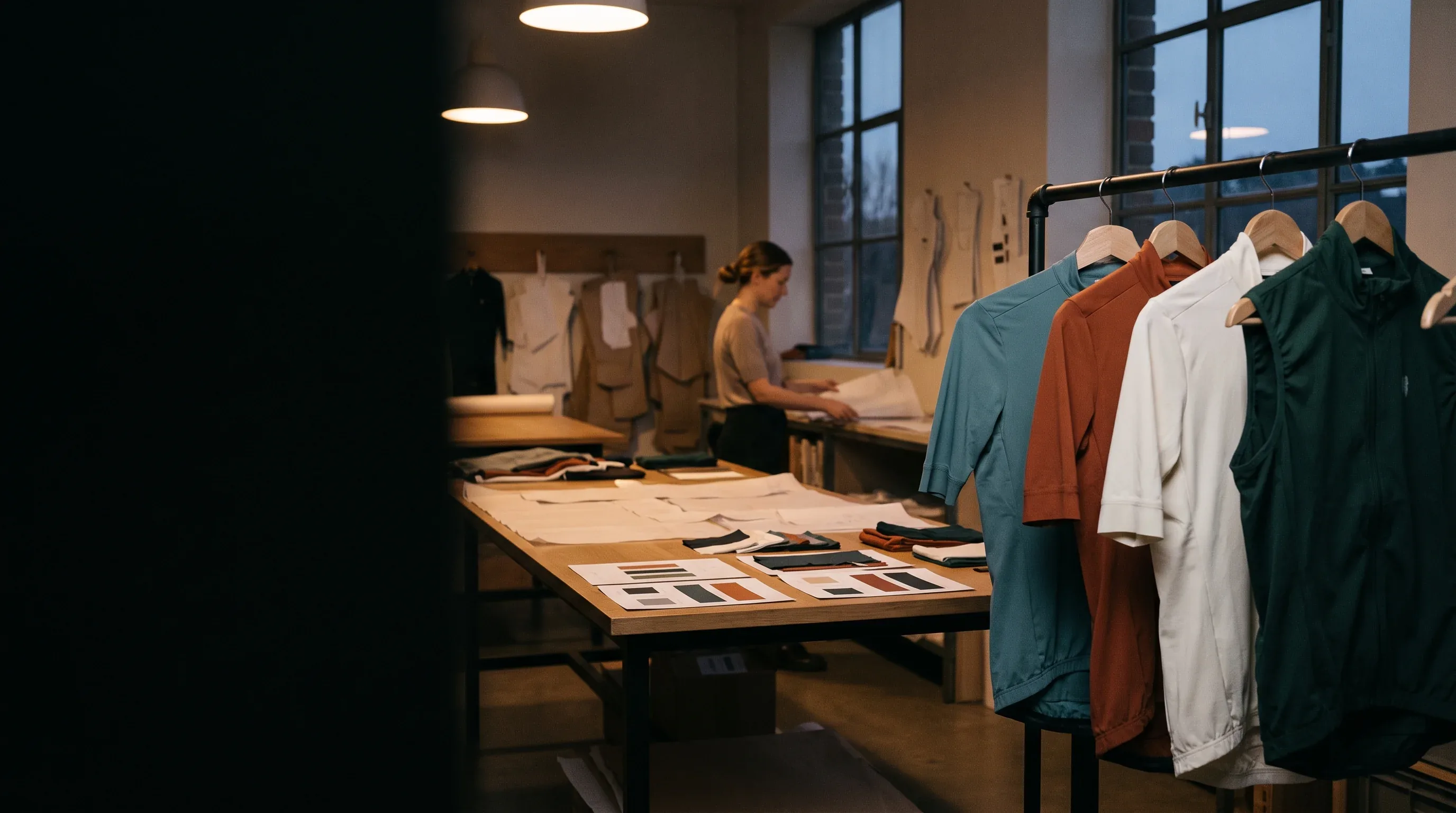
Send the garment list with any swatch or fabric target you have. The pattern maker's proposal names the base fabric for every panel, with your target beside it. Request a feasibility review.