Back
- Base fabric proposed
- Lightweight summer mesh
- Reason
- The fabric our bands set for races above 22 °C
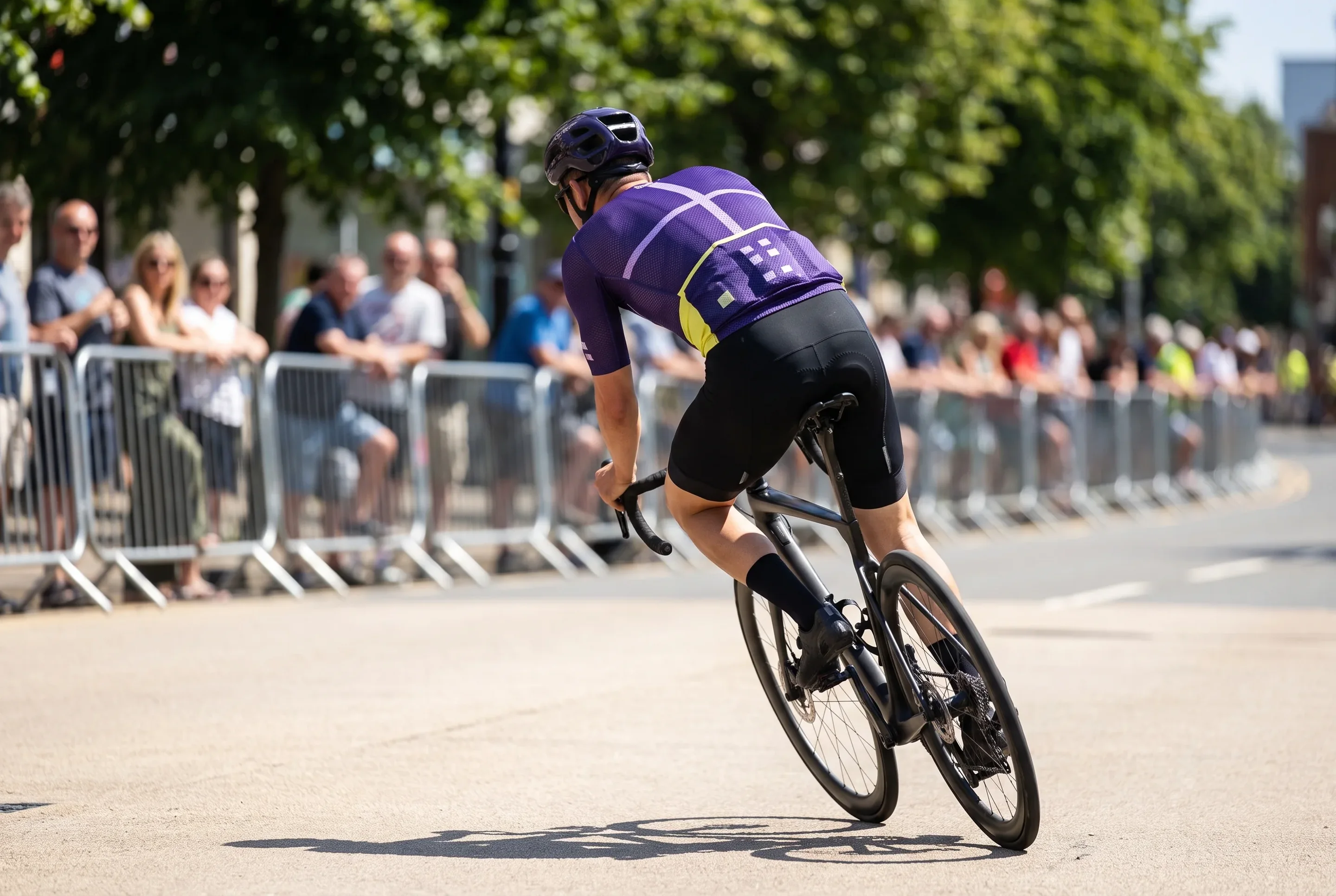
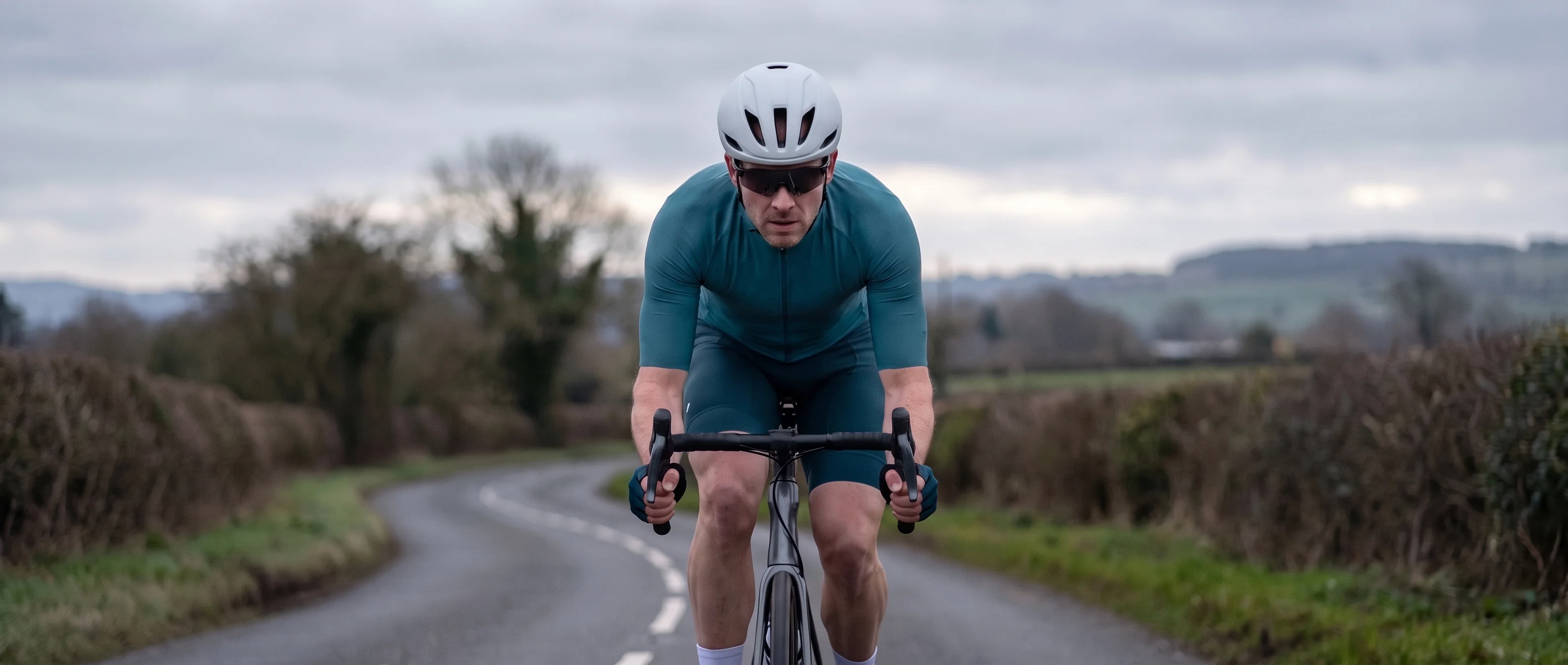
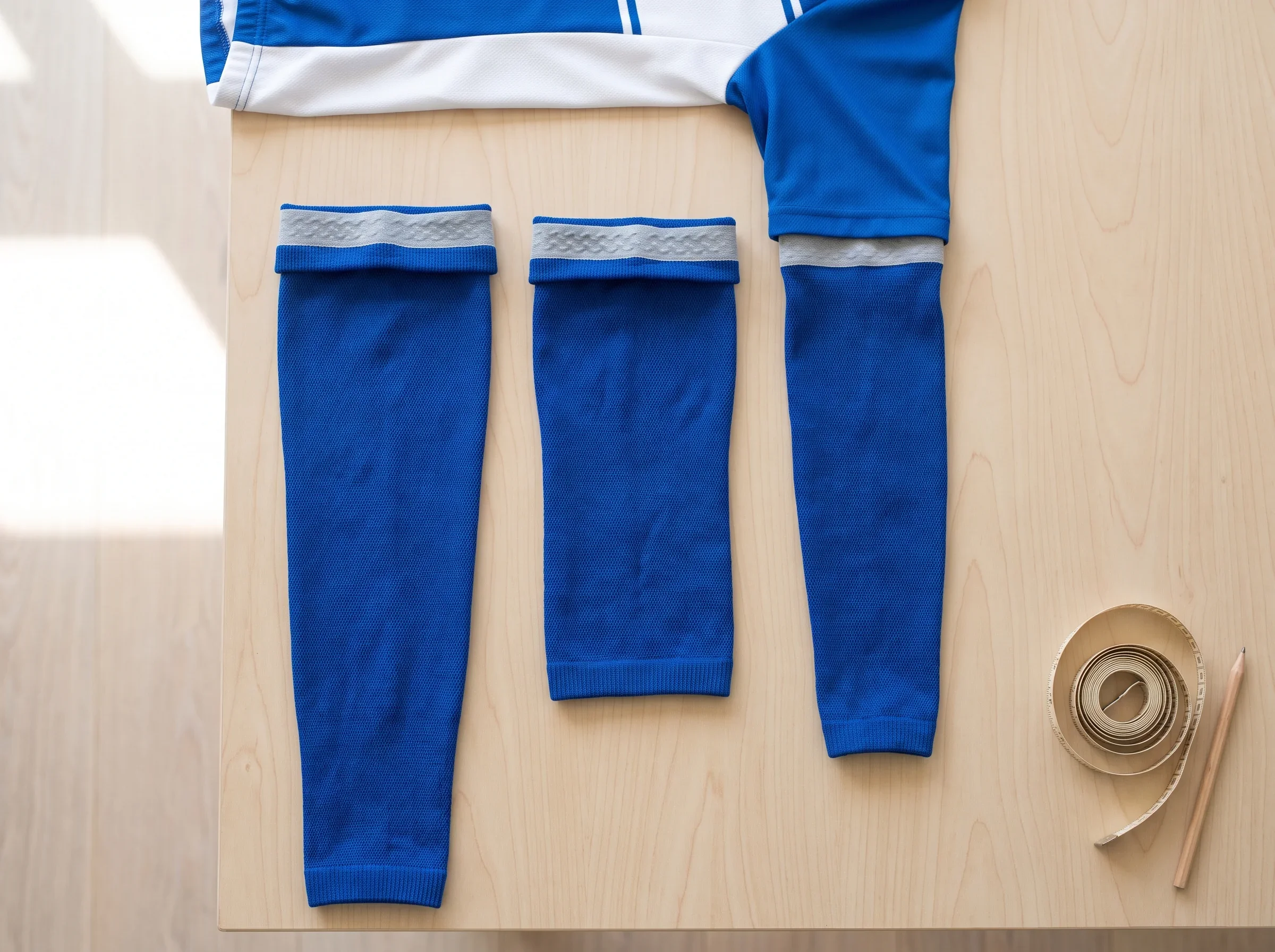
We develop hot weather cycling jerseys for races above 22 °C: a short sleeve race jersey drafted on the riding-position block of your project, with the back, side panels and sleeves proposed in lightweight summer mesh and the front in mid-weight stretch main body. A cycling cap in the same band can be developed alongside it.
Our buyers here are brand product leads who already carry a main-body race jersey and want its hot weather version, and the technical leads of federations, race teams and club race squads kitting out riders for summer criteriums and road races.
The mesh version is sampled and fit-signed on its own. Every strike-off is hand-stretched along the riding directions before the colour card is signed, and fine sponsor lines and small text are checked item by item on the mesh.
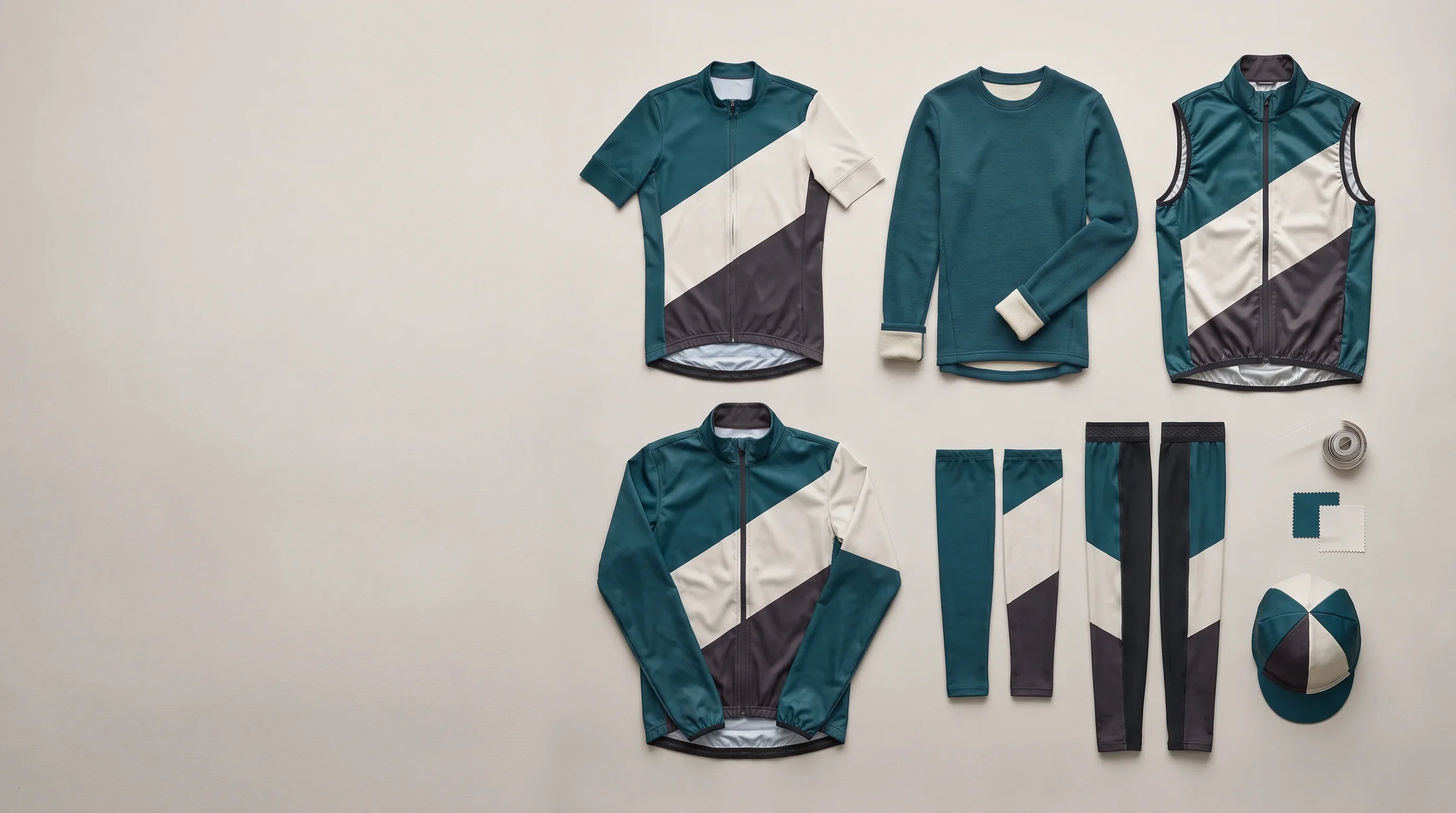
The hot weather jersey is the summer cycling jersey of our range: the short sleeve race jersey for the band above 22 °C. The cap sits in the same band, so a squad racing in that band wears two garments from us, the jersey and the cap.
Name the race formats and bands in your calendar, and the feasibility review sets out the hot weather jersey and cap for the races above 22 °C.
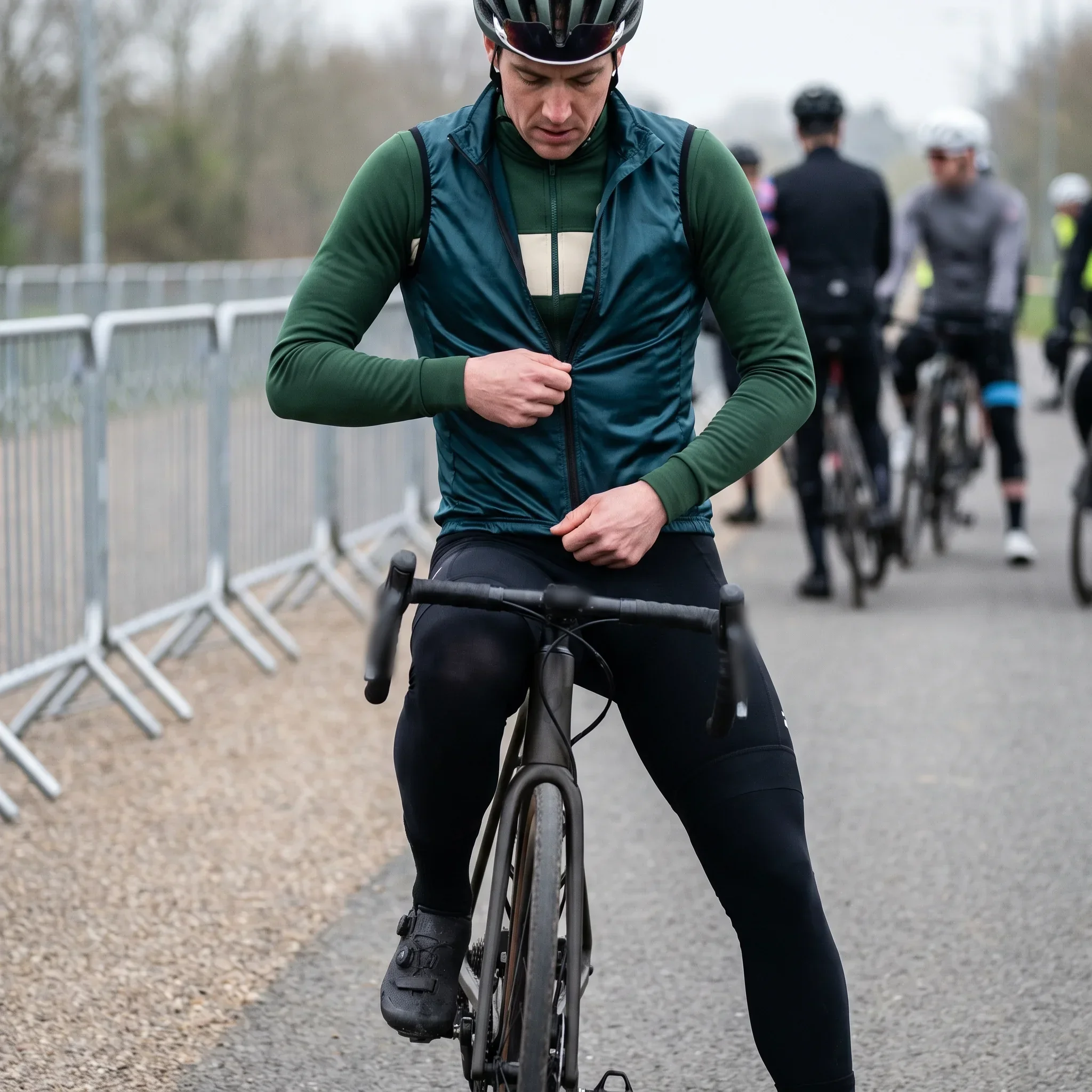
The garments for every band, from this jersey to the windproof jacket, are on our race cycling apparel range page.
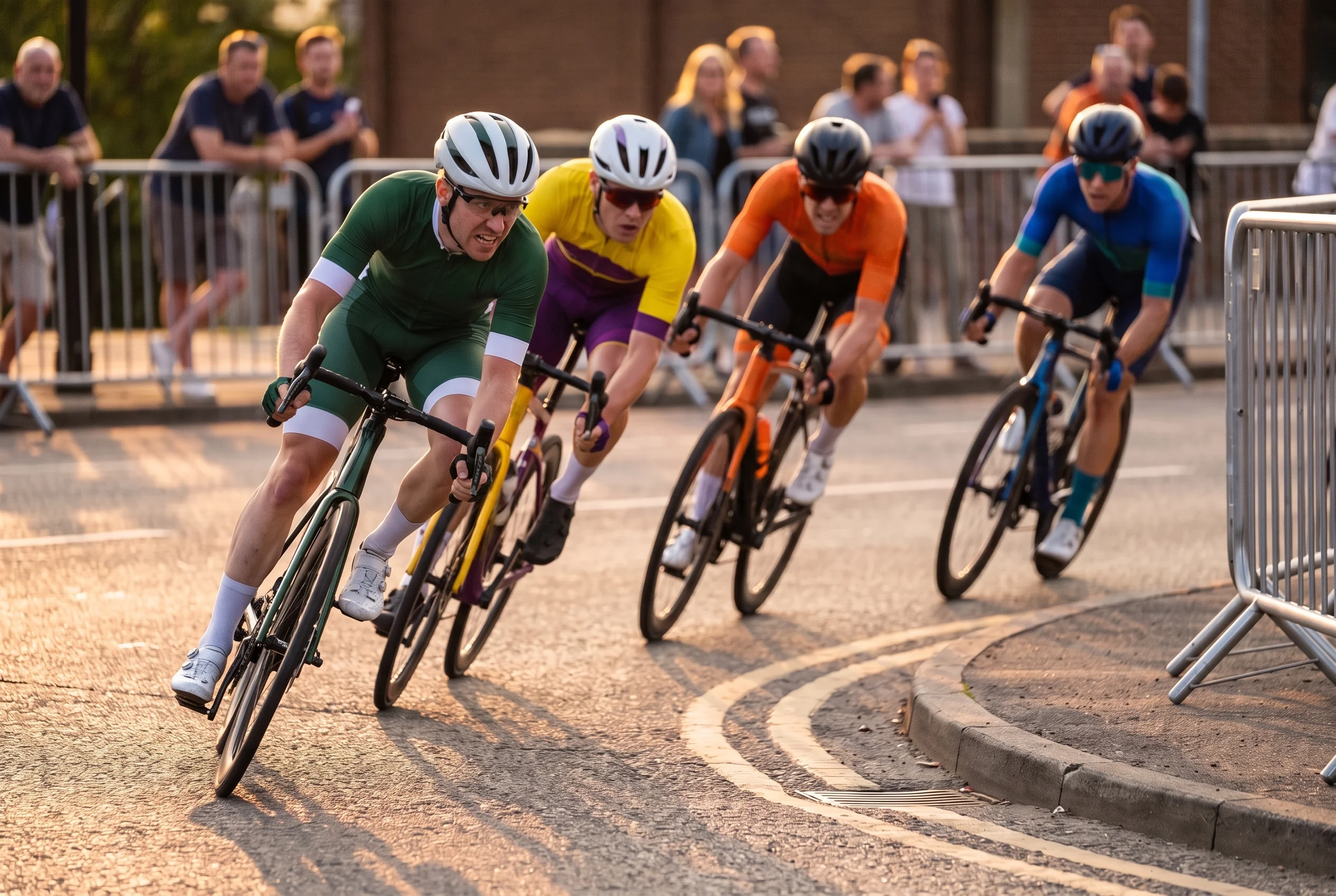
The pattern maker reads your brief and names a base fabric for each panel of the hot weather jersey. That proposal goes into the fabric-by-panel sheet, and it becomes the specification once you confirm it.
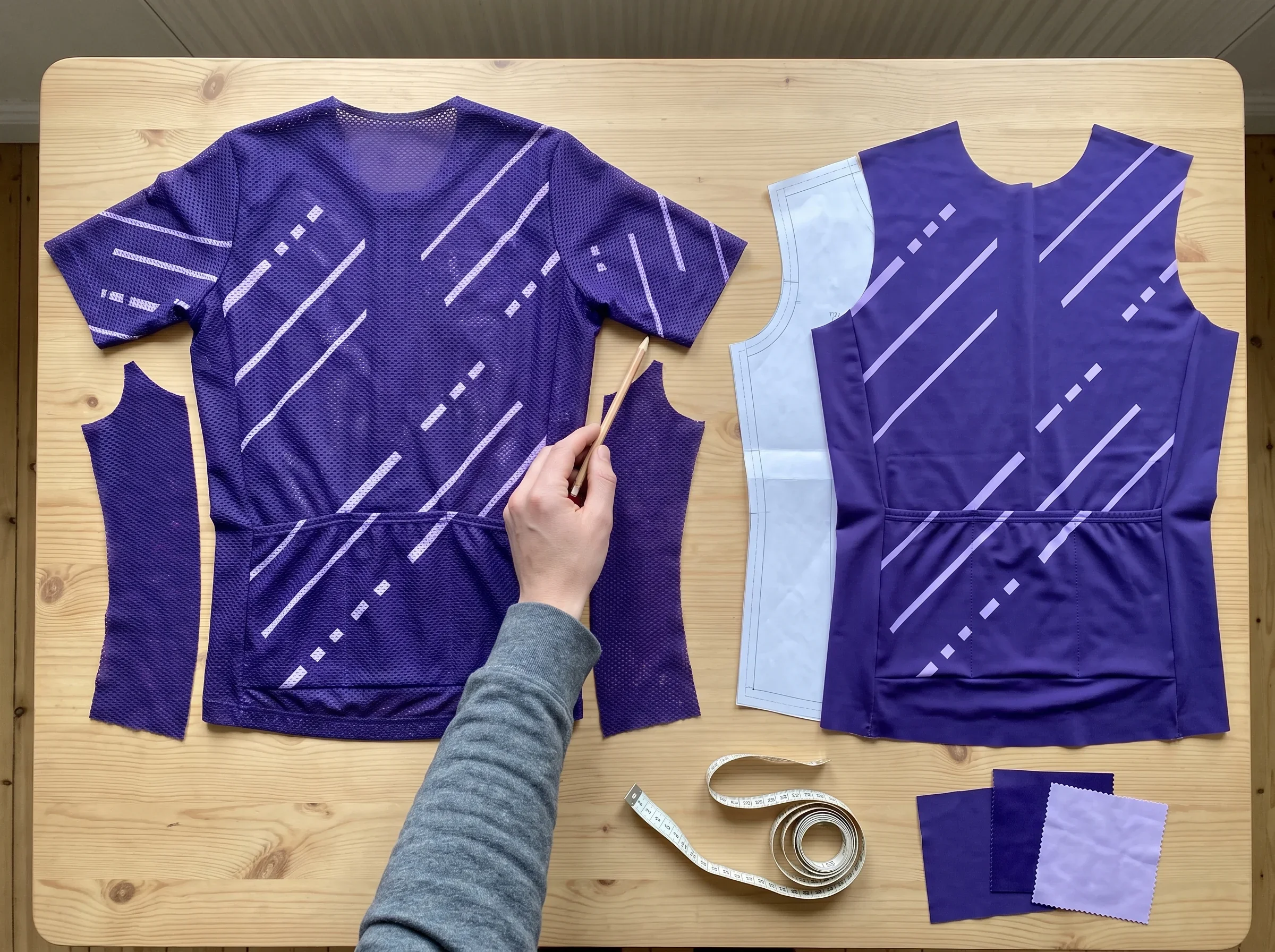
This lightweight mesh cycling jersey proposal differs from the starting proposal on our main-body race jersey, where the front and sleeves are in main body and only the back and sides are in mesh. Above 22 °C the sleeves move to mesh as well, and the front stays in main body.
The base fabrics are binary nylon-spandex in 88/12, 90/10 or 91/9. The lightweight summer mesh and the mid-weight stretch main body are two weights of the same binary blends.
All three short sleeve jerseys start from the riding-position block of your project. They differ in fabric by panel, sleeves, checks and colour cards.
| Hot weather jersey | Main-body short sleeve jersey | Aero short sleeve jersey | |
|---|---|---|---|
| Fabric by panel, starting proposal | Mesh back, sides and sleeves; main-body front | Main-body front and sleeves; mesh back and sides | Panel seams run front to back, front kept as whole as possible; textured-surface knit on sleeves and shoulders on the fabric tier |
| Sleeves | Mesh | Main body | Longer, ending above the elbow, with a flat cuff finish |
| Fit check | Its own sample: four race fit points and one-hand pocket reach | Four race fit points and one-hand pocket reach | Race fit check plus aero items in your race position |
| Colour cards | Mesh card and main-body card | Main-body card and mesh card | Adds a textured-knit card on the fabric tier |
For a hot climate race jersey in the band above 22 °C, the hot weather jersey is the version we develop. Between 16 and 22 °C the brief moves to the main-body short sleeve jersey. The patterns and on-bike check of that jersey are on our race fit cycling jersey page. Seam placement and the aero tiers are on our aero cycling jersey development page.
The hot weather jersey uses the same riding-position block as the main-body summer jersey in your project. The pattern maker drafts no new pattern for it. The front length, back length, collar line and pocket line stay where the block puts them.
Its fabric by panel is different, so its fit is proven again on its own sample, cut and sewn in the mesh and main-body panels you confirmed.
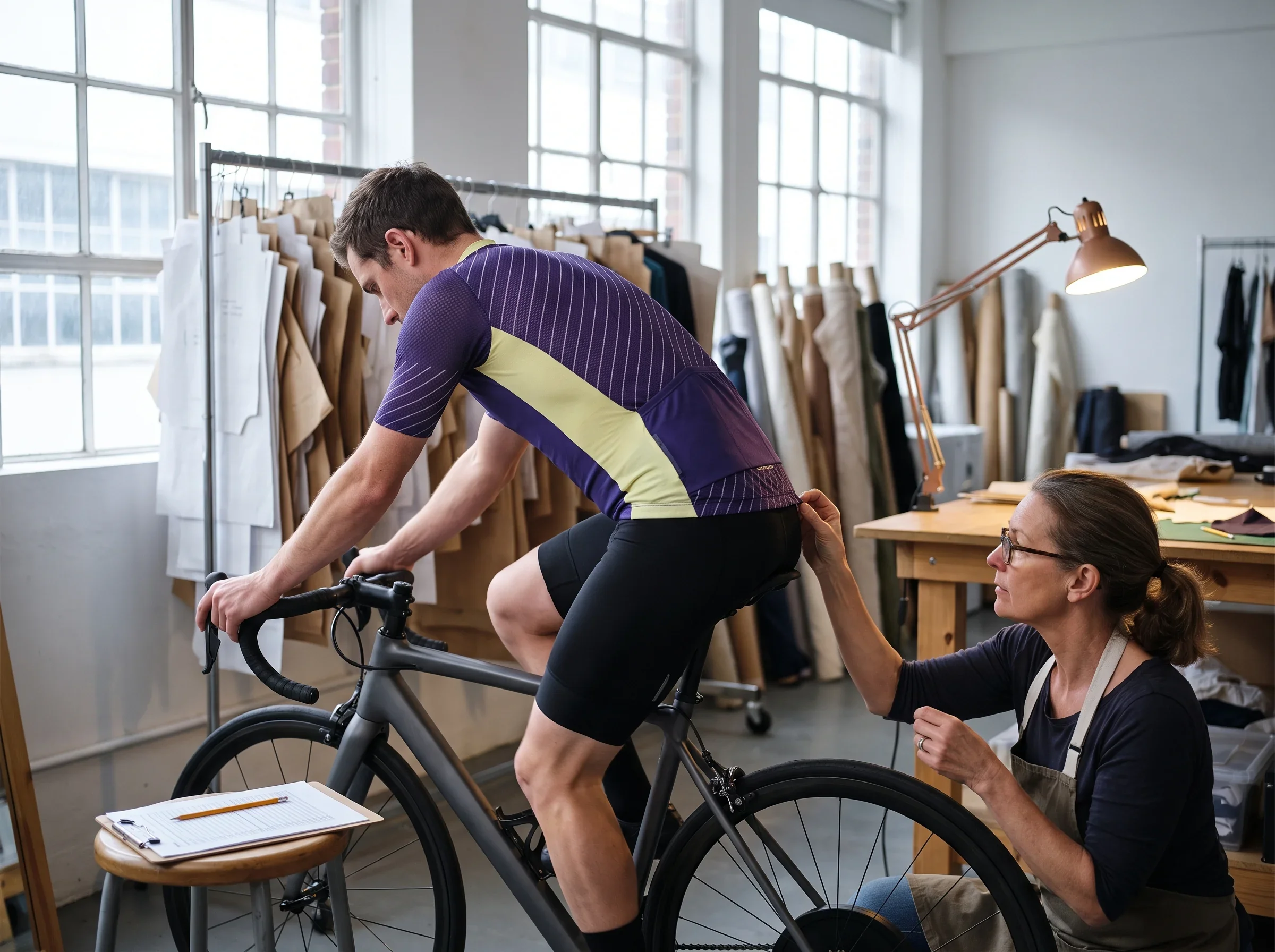
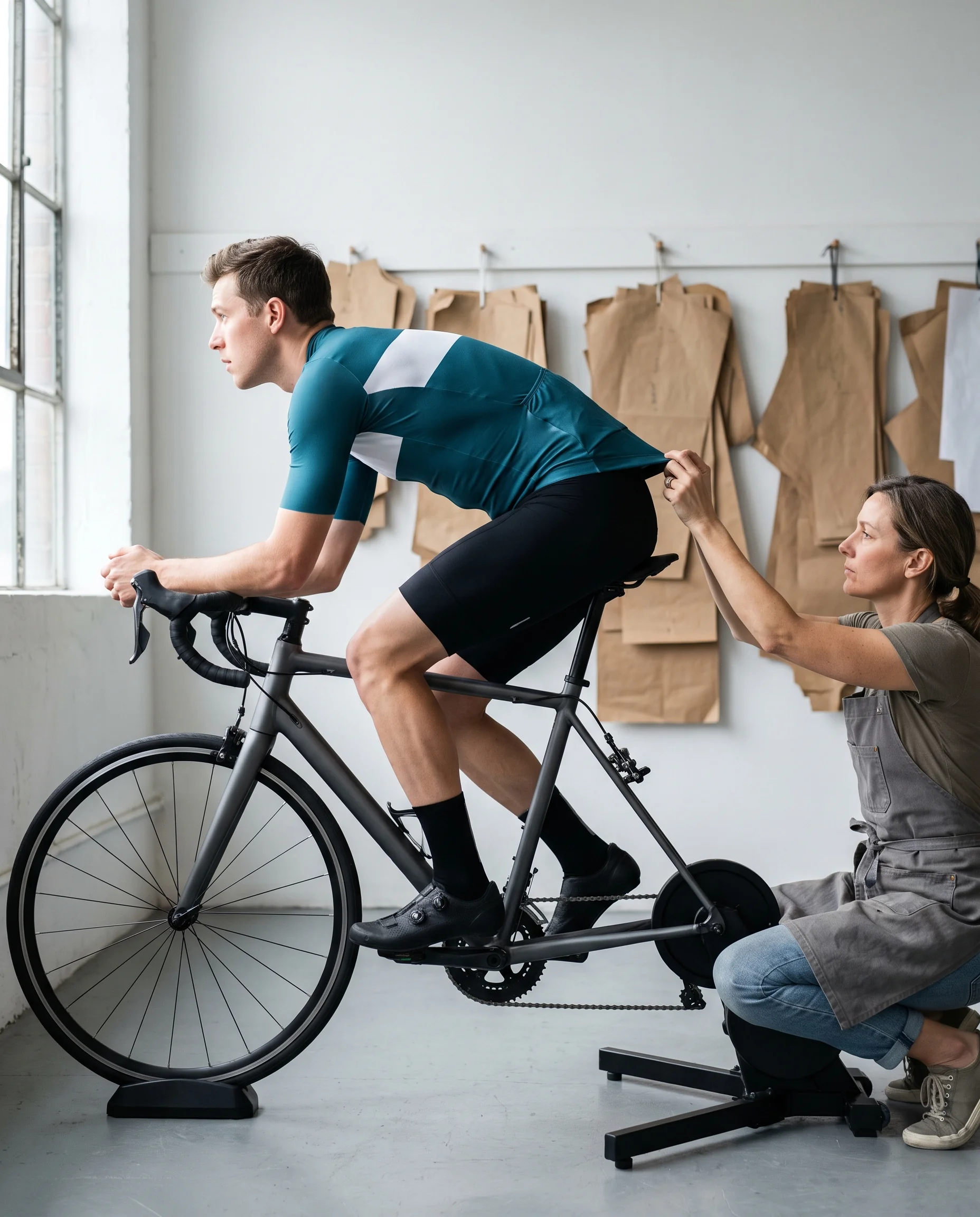
On the bike, in the hot weather sample, the pattern maker checks five items with the rider held in race position:
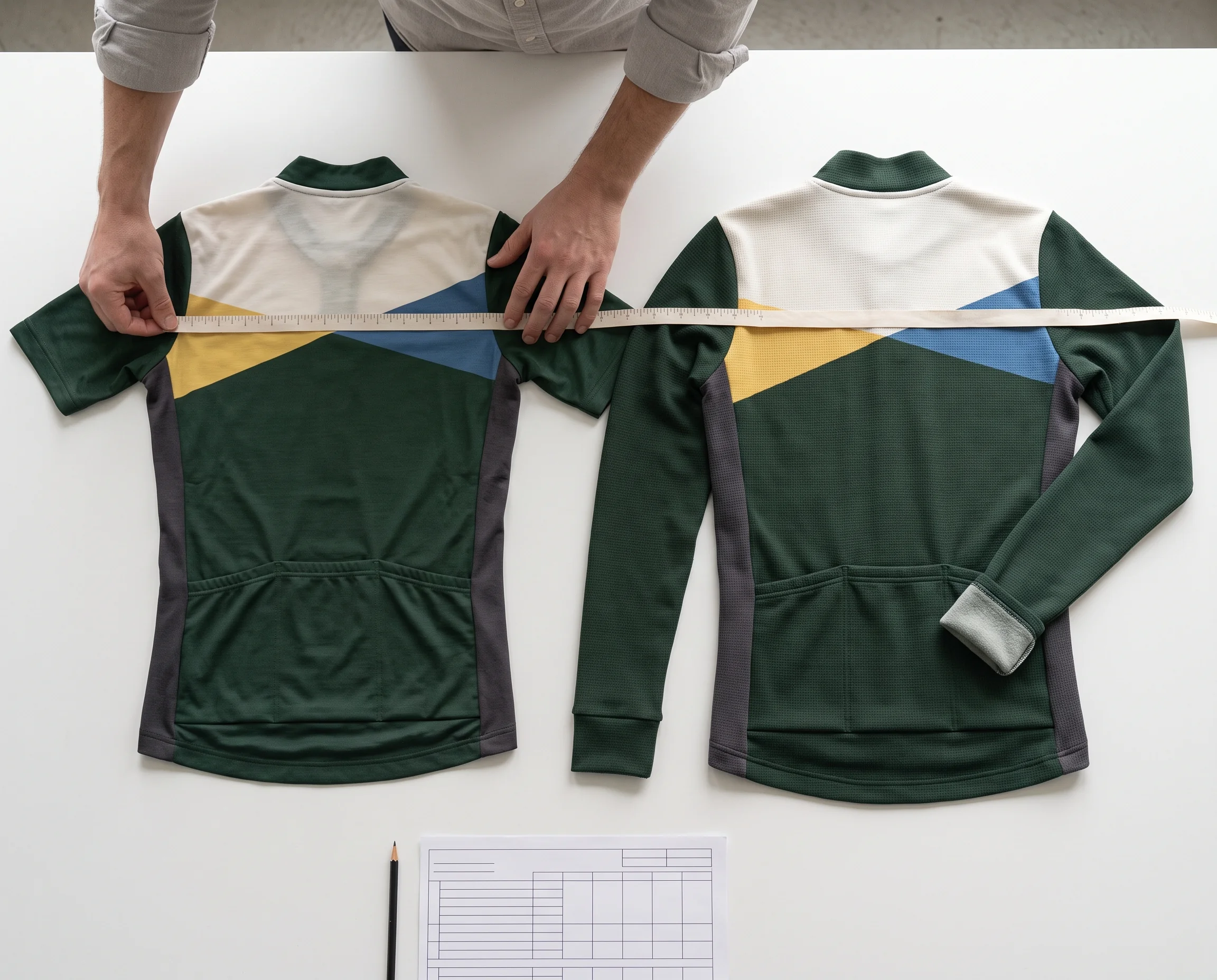
The hot weather jersey has its own fit sign-off column in its own measurement report. All five items are listed there, each one marked pass or return, and a return names the panel to be changed. The pattern maker signs this column only after all five pass.
Size is signed separately: the sample technician takes every measuring point on your size chart from the sample. Until the report passes, the sample stays in the studio. The pattern maker changes the returned panel, and the revision log records which panel, what changed and why.
How the riding block is drafted and graded is covered on our race fit cycling jersey page.
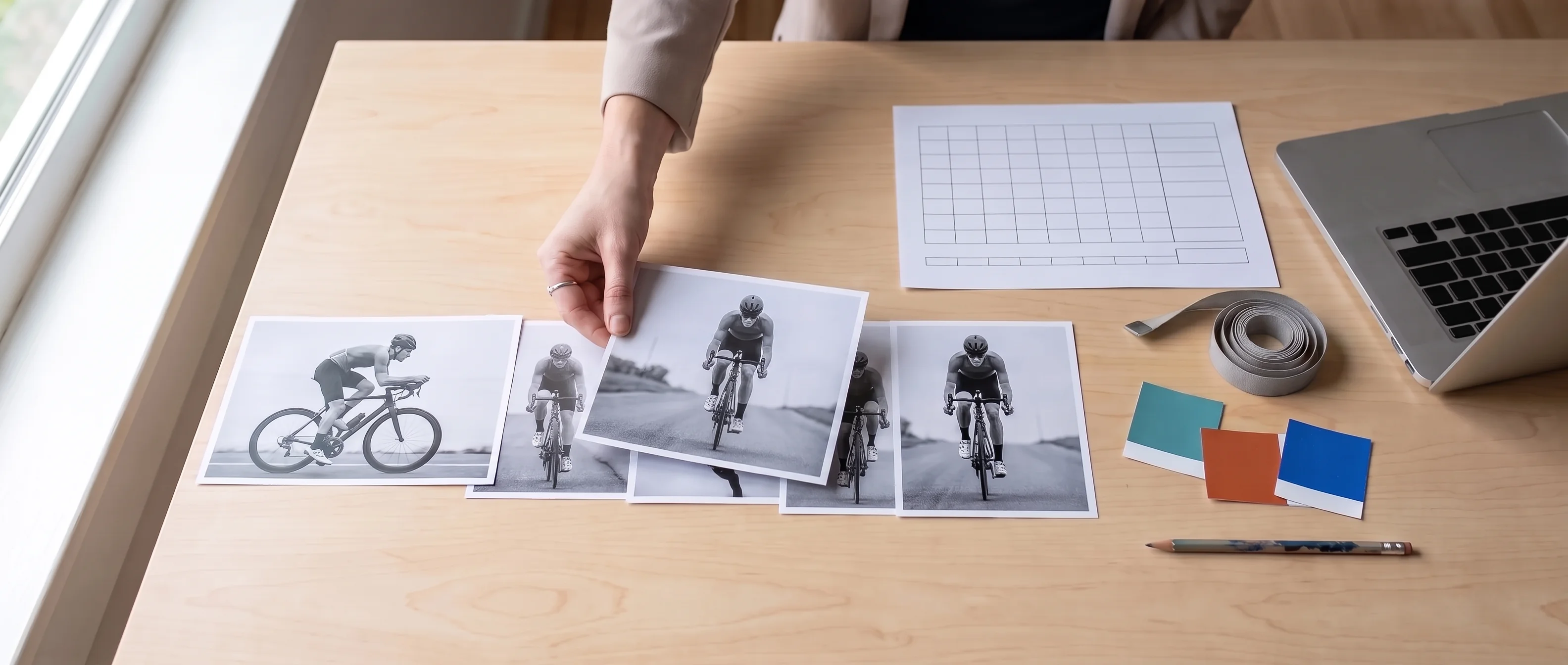
Send your artwork with every sponsor name and the smallest text on the jersey, plus your size chart. A complete brief gets the development manager's answer within 48 hours: whether we can develop it to your specification, the pattern and fabric direction, and the next sampling step.
Request a feasibility reviewLightweight summer mesh counts as a separate base fabric. It is printed on a strike-off of its own and signed on a colour card of its own, and the main-body front gets a second card. The two cards are matched to one colour standard under D65.
At the D65 colour-matching area of our development studio, the colour and print technician sublimates your artwork onto a mesh strike-off and a main-body strike-off, then brings both to your colour standard. Each fabric ends with one physical colour card, signed. The colour parameters for both fabrics are written into the spec pack.
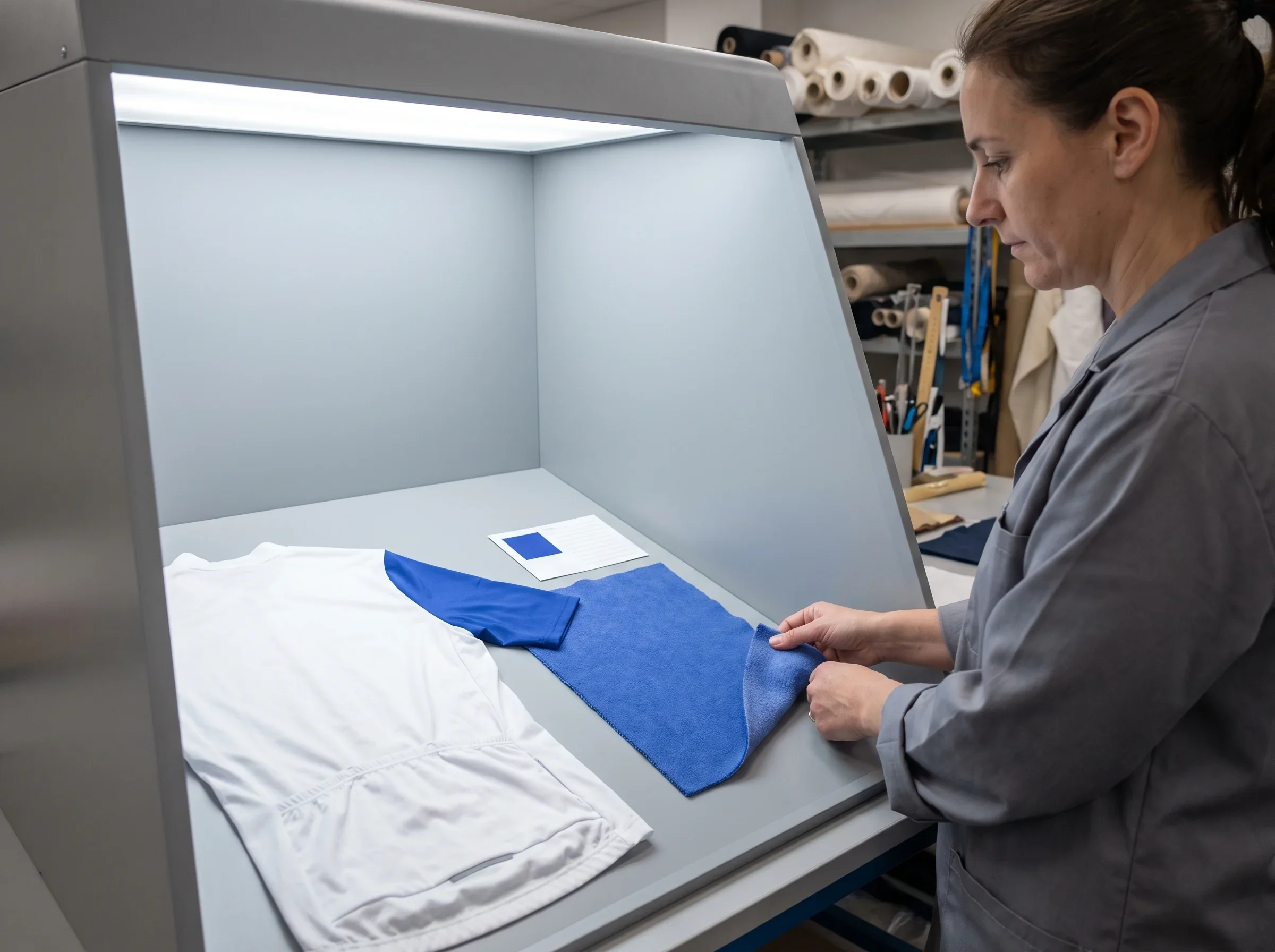
Both base fabrics carry OEKO-TEX® STANDARD 100 certification. Our development work, strike-offs included, runs under ISO 9001:2015.
Full sublimation on lightweight mesh gets two checks from the colour and print technician at the strike-off stage. Both are done before the colour card is signed, so any fix is made while the print is still on a strike-off.
The technician takes the mesh strike-off and the main-body strike-off to the D65 colour-matching area and stretches each one by hand along the directions a jersey is pulled in race position:
On each stretch the technician looks for the white base showing through the print.
Where it shows, the technician proposes one of three fixes for that zone:
At rest
Stretched by hand
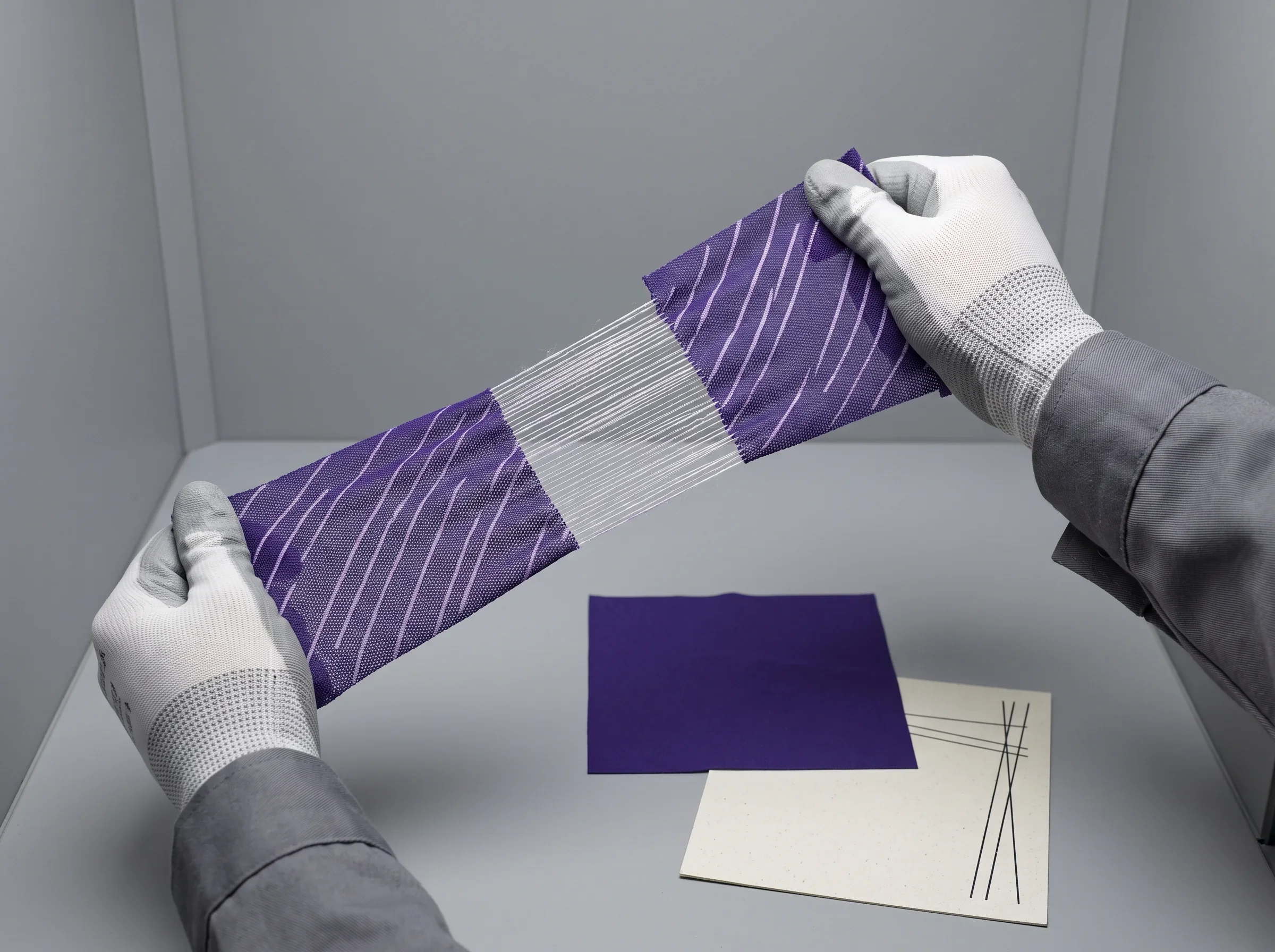
You confirm the fix. Only then is the colour card signed. The result of the stretch check is written into the notes of the colour parameters, zone by zone: where white showed, the fix chosen and your confirmation.
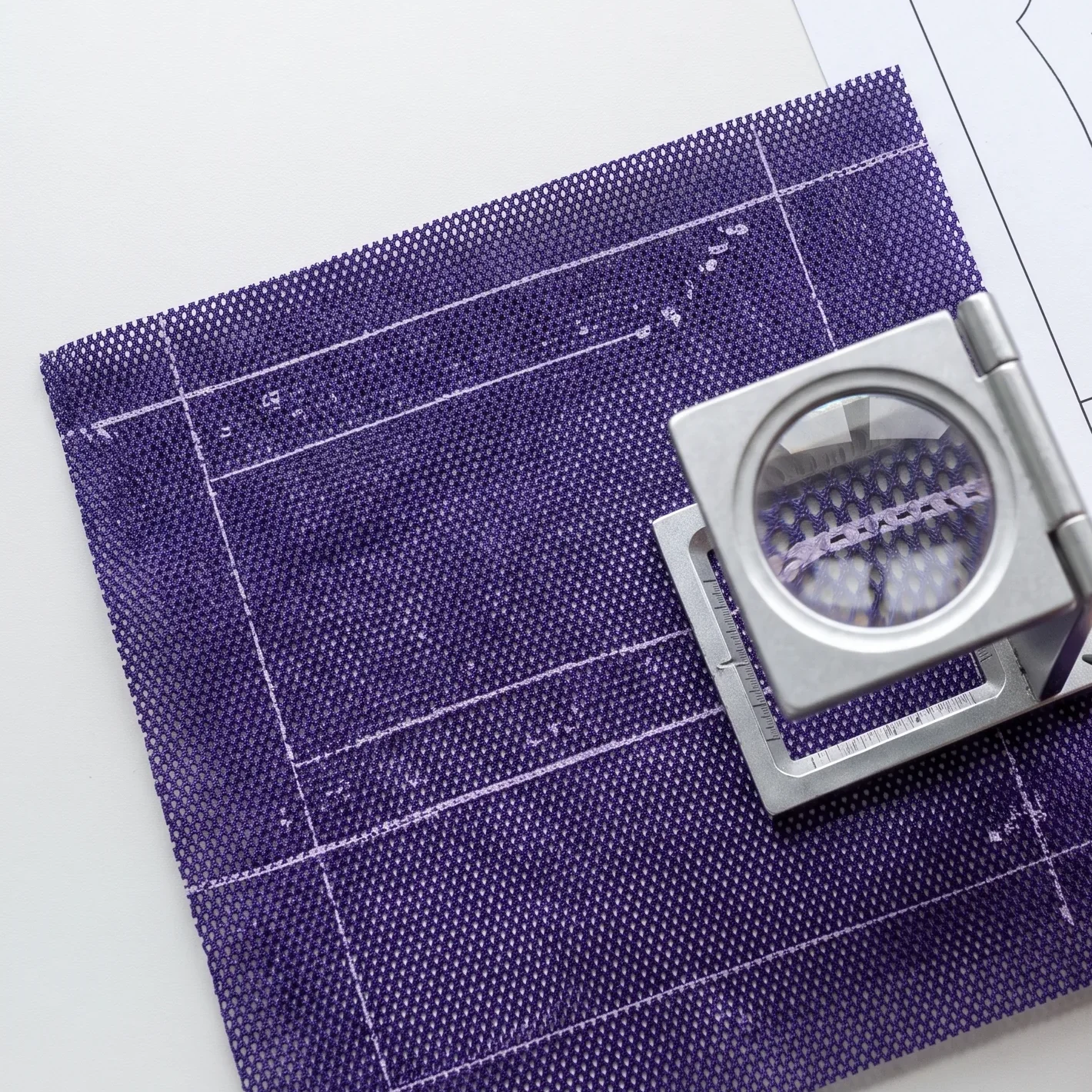
When full sublimation is printed on mesh, lines and text finer than the mesh openings break up. On the mesh strike-off, the technician checks each fine element of your artwork one by one: fine lines and small text, sponsor names included.
An element too fine for the mesh gets one of two proposals:
On an all-mesh jersey, a fine element is thickened.
Each change is drawn on the placement sheet, element by element, and you confirm it.
Three further choices set your hot weather jersey. Each one lands in the spec pack.
The mesh and main-body fabrics come in one of three binary nylon-spandex blends: 88/12, 90/10 or 91/9.
The jersey takes any of our decoration methods:
Every position is drawn on the placement sheet, with the fine elements already checked on the mesh strike-off.
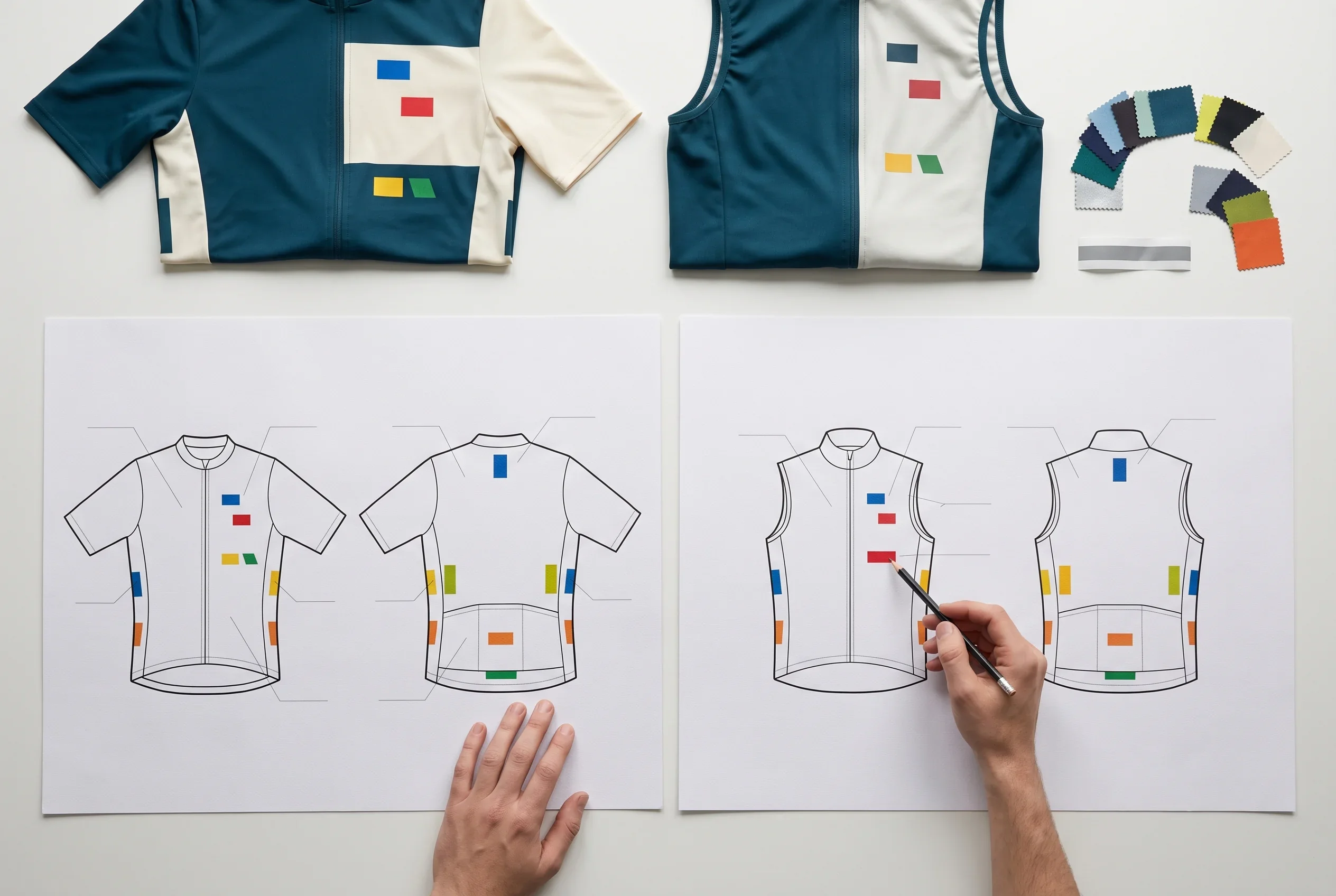
A men's and a women's hot weather jersey are drafted on separate base blocks, and grading follows the size chart and size range you confirm. If your main-body summer jersey is already drafted in both versions, each hot weather version starts from the matching block and gets a sample and fit signature of its own.
When a choice is disputed, the pattern maker rules on fit, your confirmed size chart rules on size and your signed colour standard rules on colour. The development manager takes any disagreement back to you, and a specification you confirmed stays as you confirmed it.
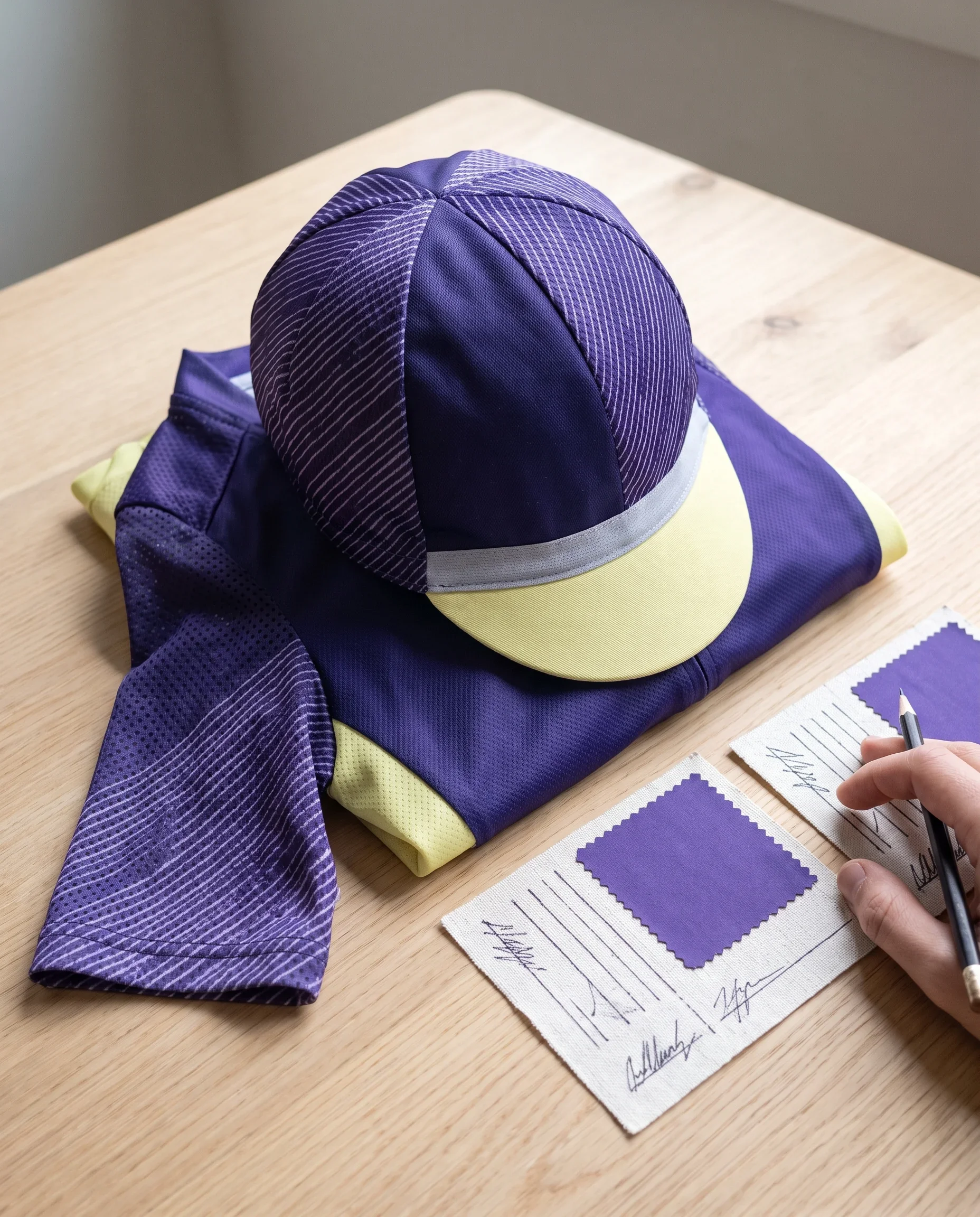
The cycling cap belongs to the band above 22 °C with the hot weather jersey, and we develop it as part of the same set.
The hot weather jersey enters your spec pack as its own garment. When the project also has a main-body summer jersey, the two versions are listed separately, each with its own files.
The mesh and main-body colour cards and their parameters, including the stretch check notes. A card already signed for the set is reused, and only a new base fabric adds one.
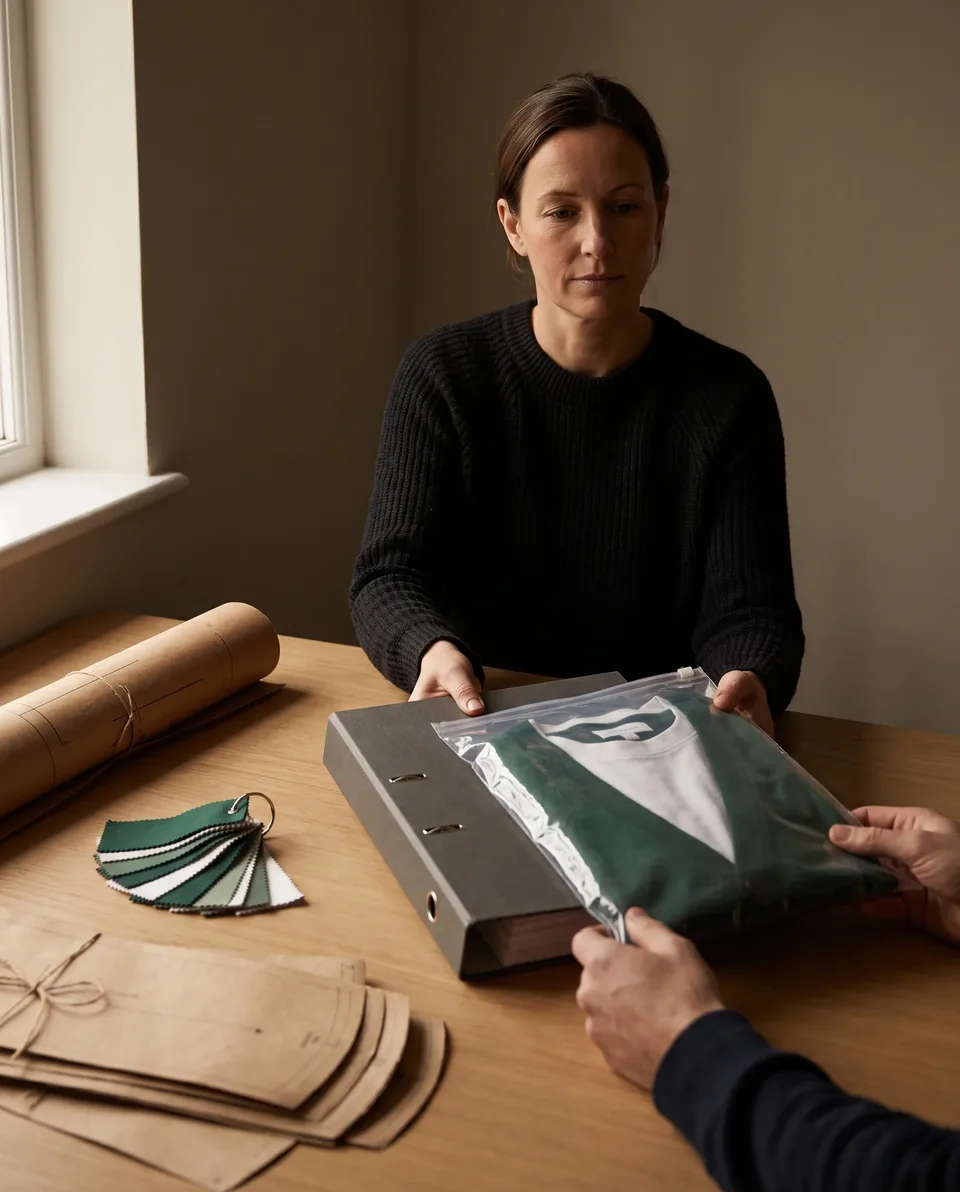
Every entry names the garment, the panel changed, what changed and why. A change to a specification you already confirmed opens a new sampling round, and it is logged the same way.
The pack is ready for production. The files, colour parameters and revision log are handed to you in full and archived per project, so next season's hot weather jersey starts from the same pack. Your jersey files are used for your project only, and an NDA can be signed before development starts.
Send what you have. Each item makes the review more specific.

We reply within 24 hours on working days. When the brief form is complete, with garment list, size chart and size range, and race format or band, the 48 hours start from the moment you submit it. If an item is missing, our reply lists what is still needed in one go.
The feasibility review reaches you from the development manager within 48 hours of a complete brief, and covers:
The same factory runs two other sites. Bulk production of your spec pack runs on cyclingapparelfactory.com, and the development manager can pass your pack to it. Club and team kit ordering runs on teamcyclingkits.com.
Send the races above 22 °C in your calendar, your size chart and whether a cap joins the set. The development manager takes your brief from first proposal to signed sample. Request a feasibility review.