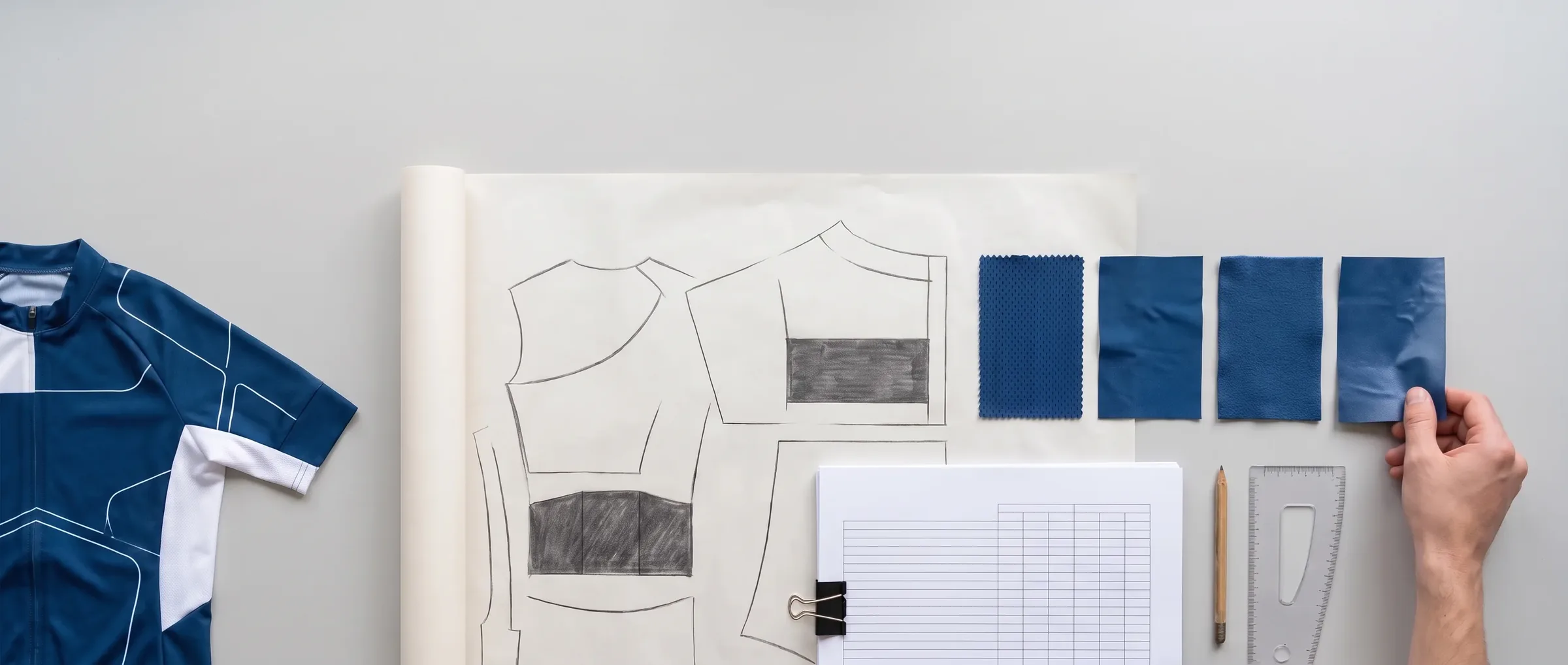
Aero Cycling Jersey Development: Seam Placement, Panel Direction, Textured Sleeve Fabric and Flat Cuff Finish

We develop aero cycling jerseys for race teams and performance cycling brands: a short sleeve race jersey with the seams, panels, sleeve fabric and edges worked for a rider held in race position.

A rider coming head-on in a low race position, the front of the shoulders, upper arms and chest of the aero jersey facing the camera

For technical leads of race teams preparing a jersey for time trials and criteriums, and for product leads at performance cycling brands launching an aero fit cycling jersey line.

This is aerodynamic clothing development from the pattern up, drawn on your panel map, with a spec pack for your own line or for bulk at cyclingapparelfactory.com.

Send your race format, size chart and any test results you hold.

Within 48 hours of a complete brief, the development manager sends a feasibility review: whether the jersey can be built to your spec, which aero tier, block and base fabrics we would start from, and how the first sample is scheduled.

What you can check on every aero jersey project:

  • Each sample is checked on the bike in the race position you name, time trial or criterium, and the aero items are signed one by one by the pattern maker.
  • The files each aero tier adds are listed in your spec pack, and they belong to you.
  • We supply no drag figures of our own. When you run your own wind tunnel or track test, each conclusion becomes a logged panel change.
  • A first sample takes 5–7 days from signed colour cards.

Aero Jerseys We Develop: Short Sleeve Race Jerseys for Time Trials, Criteriums and Brand Aero Lines

Our aero development covers one garment, the short sleeve race jersey, for riders who hold one position for most of a race and for brands adding an aero jersey to a race range.

Riders in close-fitting short sleeve race jerseys leaning low through a corner in a city criterium

We take on three kinds of aero jersey project:

  • A team race jersey for time trials and criteriums.

    You name the race format and the position the rider holds, and every sample is checked in that position.

  • A new aero line for a performance cycling brand.

    We develop to your size chart and colour standard and hand over a spec pack your own line can cut and sew from, or that cyclingapparelfactory.com can run for bulk.

  • An aero version of a race fit jersey you already have.

    If we developed the race fit jersey, the aero version starts from the same block and size chart. If it came from elsewhere, send the reference garment and we redraw it on our riding block first.

You choose how deep the aero work goes, across three tiers: pattern, fabric and test.

Aero Fit Cycling Jersey on the Race Fit Block: Seam Placement, Surface Fabric and Panel Direction, With Your Size Chart Unchanged

An aero fit cycling jersey from us keeps the race fit riding block and your size chart.

The aero work changes where the seams sit, how the panels run, what surface the sleeves and shoulders carry, and the collar and sleeve: the sleeve runs longer than our race fit short sleeve and ends above the elbow, the collar is set low, and both edges are finished flat.

The size label stays the one your riders or customers already wear.

The race fit block is the riding-position pattern with its shorter front, longer back, rotated sleeve head and dropped front collar. How that block fits and how it is checked on the bike is on our race fit cycling jersey page. The aero jersey inherits that check and adds its own items.

What stays the same:

  • Grading follows the size chart and size range you confirm. A men's cycling jersey with an aero fit and a women's version each start from their own base block and are graded to your chart.
  • Closeness through the torso is the race fit closeness. We do not grade the aero jersey down a size to make it tighter.
  • Seam types: flatlock in contact zones, four-thread overlock on main body joins.
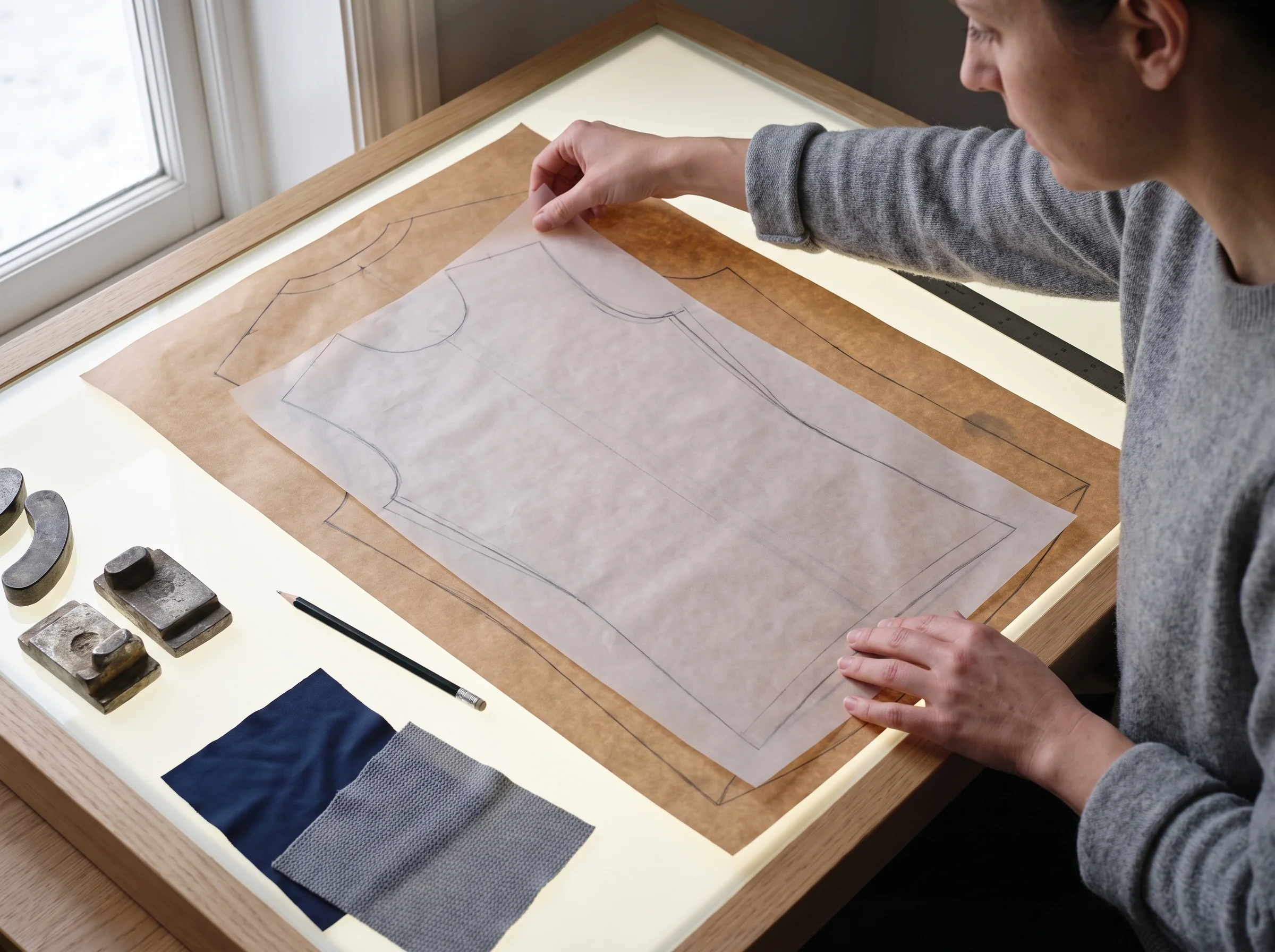
Pattern maker laying a translucent aero panel map over the race fit block on a light table

You receive the race fit block and the aero panel map side by side. Lay one over the other and every aero change reads straight from the paper: which seam moved, which panels were merged, which panels carry textured knit and where the sleeve now ends.
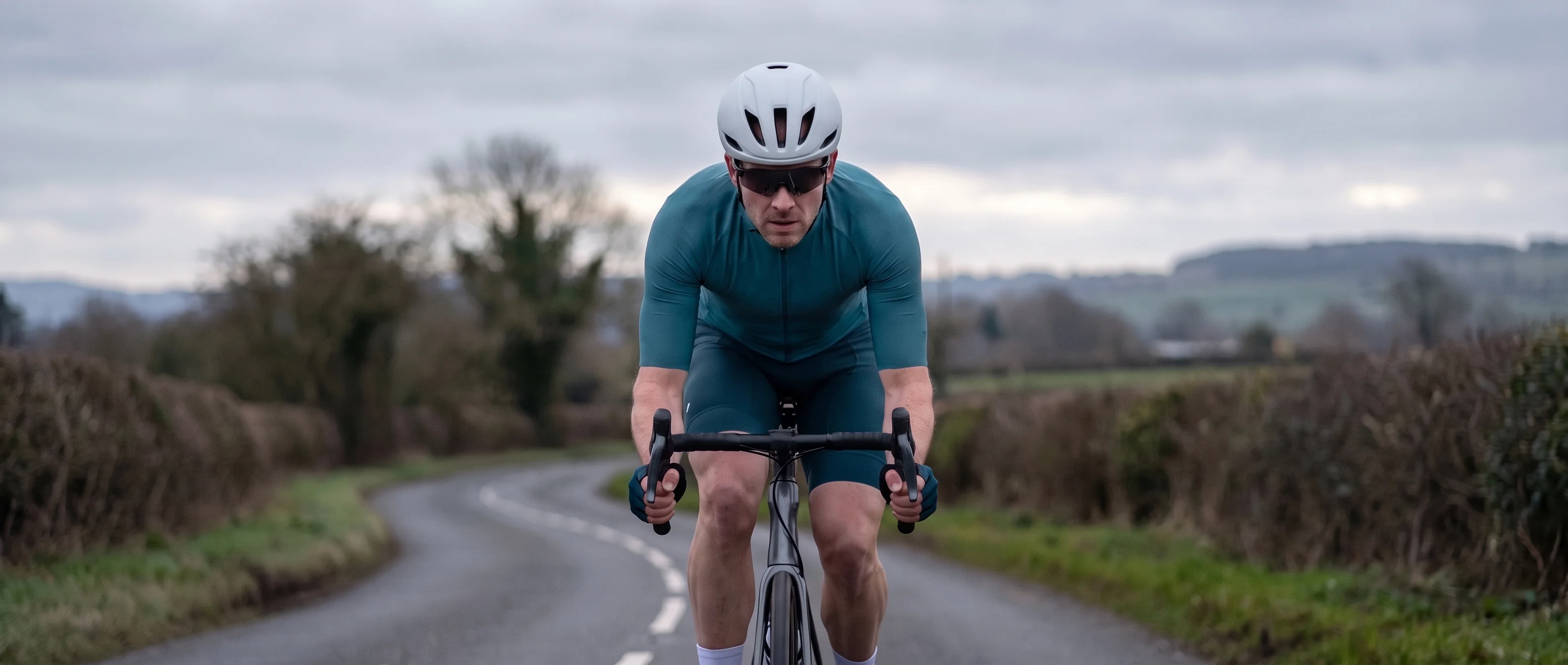

Seam Placement and Panel Direction: Leading Surfaces Kept Clear of Joining Seams, Drawn on Your Panel Map

This is the core of our aero cycling jersey work, and it is drawn before any fabric is cut.

Rider in race position seen from the front, aero panel map: the front of the shoulders, the upper arms and the chest are single panels, with seams only at the sides, under the arms and behind the shoulders 1 2 3
Rider in race position seen from the front, race fit block: joining seams cross the front of the shoulders, the front of the upper arms and the chest 1 2 3

Where the pattern maker starts.

On the race fit block, the pattern maker marks the three leading surfaces of a rider in race position: the front of the shoulder, the front of the upper arm and the chest. Every joining seam that crosses one of them is listed for relocation.

How the seams are moved:

  1. The shoulder join comes off the front of the shoulder and moves back, so the shoulder front is one continuous panel.
  2. The sleeve joins leave the front of the upper arm and run along the underside and back of the arm.
  3. Chest panels are merged into the front panel. Remaining torso joins sit at the sides and on the back.
  4. The centre front carries the zip. A full-length or half-length zip sets how the centre front is split, and every other front join is kept off the chest.

How the panels run.

Panel lines run front to back along the torso and down the sleeves. Where a seam has to stay on a leading surface, for example to keep the shoulder free to move, the panel map shows it and the feasibility notes say why.

Who decides.

The pattern maker proposes seam positions and panel directions from your brief, drawn on the panel map. You confirm the panel map before the first sample is cut. A change after confirmation opens a new sampling round and goes into the revision log.

Collar and sleeve edges, drawn on the same map:

  • The collar is set low and finished flat, so it lies against the neck in race position without wrinkling or catching air.
  • The sleeve ends above the elbow with a laser-cut edge or a silicone gripper band. We do not use a folded hem on the aero sleeve.
Pattern maker drawing seam lines on the riding block at the pattern table

How you verify it.

Put the approved sample on a rider in race position and run a hand across the shoulder front, the upper arm front and the chest. The seam lines you find sit where the panel map draws them, and nowhere else. Because the panel map is yours, the same check works on every bulk piece from any line.

Aero Development Scope: What We Build, What We Build on Conditions, and What We Do Not Supply

Every aero project has the same boundary, written into the feasibility review in three columns.

What we build:

  • The short sleeve aero jersey on our race fit block and your size chart, with seams off the leading surfaces, panels run front to back, and flat-finished collar and sleeve.
  • Textured-surface knit on sleeves and shoulders, matched to your colour standard.
  • The aero check in your race position and the spec pack files for your tier.

What we build on conditions:

  • Revisions against your own wind tunnel or track test. The test is yours: you run it and send the conclusions, and we turn each conclusion into a panel change, logged with the panel, the change and the reason.

What we do not supply:

  • Drag figures. We do not run wind tunnel or track tests and we do not state watts, seconds or drag percentages for any jersey. Figures in your product material come from your own tests.
  • Aero development of long sleeve jerseys, gilets or outer layers. Those are developed on our race fit and outer layer patterns without the aero tiers.
  • Skinsuits, which are covered on our time trial and triathlon apparel development page, with the pad built to your pad supplier's specification.
  • Bulk scheduling, which runs at cyclingapparelfactory.com, and team ordering, which runs at teamcyclingkits.com.

We report what we can sign: seam positions on paper, fabric by panel, colour cards and a sample checked in your race position.

Aero Check in Your Race Position: Itemised Pass or Return Marks Signed by the Pattern Maker

Each aero cycling jersey sample is checked on the bike in the race position named in your brief, time trial or criterium, before it leaves the development studio. The position is written at the top of the fit sign-off.

When the check runs.

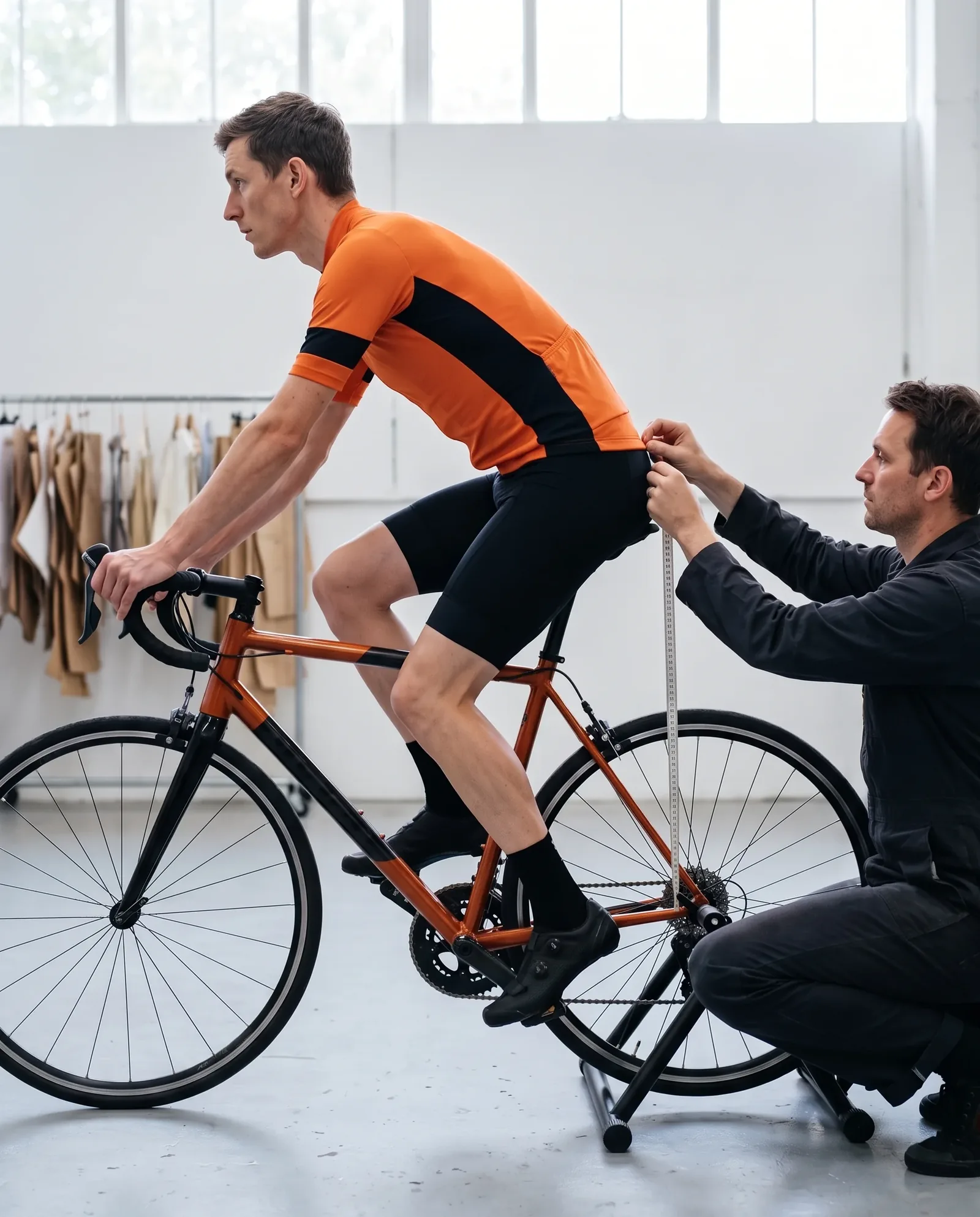
The sample technician first measures the sample point by point against your size chart and signs the measurement report. The pattern maker then puts the sample on a rider on the bike, runs the race fit on-bike check, and checks the aero items in the same session in your named position.

Rider in race position seen from the front with the five aero check points: front of the shoulder, front of the upper arm, chest, sleeve end and collar 1 2 3 4 5

The aero items, each on its own line in the fit sign-off column:

  1. Front of the shoulder

    no wrinkles, no fabric catching air.

  2. Front of the upper arm

    no wrinkles, no fabric catching air.

  3. Chest

    no wrinkles, no fabric catching air.

  4. Sleeve end

    stays in place and does not ride up the arm.

  5. Collar

    lies close against the neck.

Pattern maker running a flat hand across the front of the shoulder of an aero sample jersey on a rider held in race position

How each item is marked.

Every item is marked pass or return. A returned item names the panel it goes back to: the sleeve panel for a sleeve end that rides up, the front panel for a wrinkle across the chest. The pattern maker signs the column.

What happens on a return.

A sample with a returned item is not sent. It goes back to the pattern maker, the named panel is redrawn, and a new sample is cut and checked again in the same position. The redrawn panel and the reason go into the revision log.

What you receive and how you verify it.

The sample arrives with its measurement report, every race fit and aero item marked pass. Put the sample on in the position named on the report and look at the same five points against their marks.

Three Aero Development Tiers: Pattern, Fabric and Test, With the Panels and Files Each One Adds

Each tier adds named panels to the work and named files to your spec pack.

Pattern tier:

Front view with the shoulder, upper sleeve, chest, front, collar and sleeve end panels marked
Panels changed
shoulder, upper sleeve, chest and front panels for seam placement and panel direction; collar and sleeve end for length and flat finish.
Files added
the panel map with relocated seams and panel directions; the seam description with collar and cuff finish; the aero items in the fit sign-off column.
Base fabrics
lightweight summer mesh or mid-weight stretch main body, set by the temperature band in your brief.

Fabric tier,

everything in the pattern tier plus:
Front view with the sleeve and shoulder panels marked
Panels changed
sleeve and shoulder panels, cut in textured-surface knit.
Files added
textured-knit lines in the fabric-by-panel sheet; a colour card and colour parameters for the textured knit.

Test tier,

everything in the fabric tier plus, on conditions:
Front view with every panel outlined, any of which a test conclusion may point to
Panels changed
whichever panels your test conclusions point to.
Files added
revision log entries tying each test conclusion to a panel, the change and the reason.
Condition
you run the wind tunnel or track test and send the results.

You can start on the pattern tier and move to the fabric tier in a later revision round. The panel map carries over and the change is logged.

Textured-Surface Knit on Sleeves and Shoulders: Its Own Strike-Off and Signed Colour Card

On the fabric tier, the sleeves and shoulders are cut in textured-surface knit, the fifth base fabric in our range next to lightweight summer mesh, mid-weight stretch main body, brushed-back thermal main body and windproof laminate.

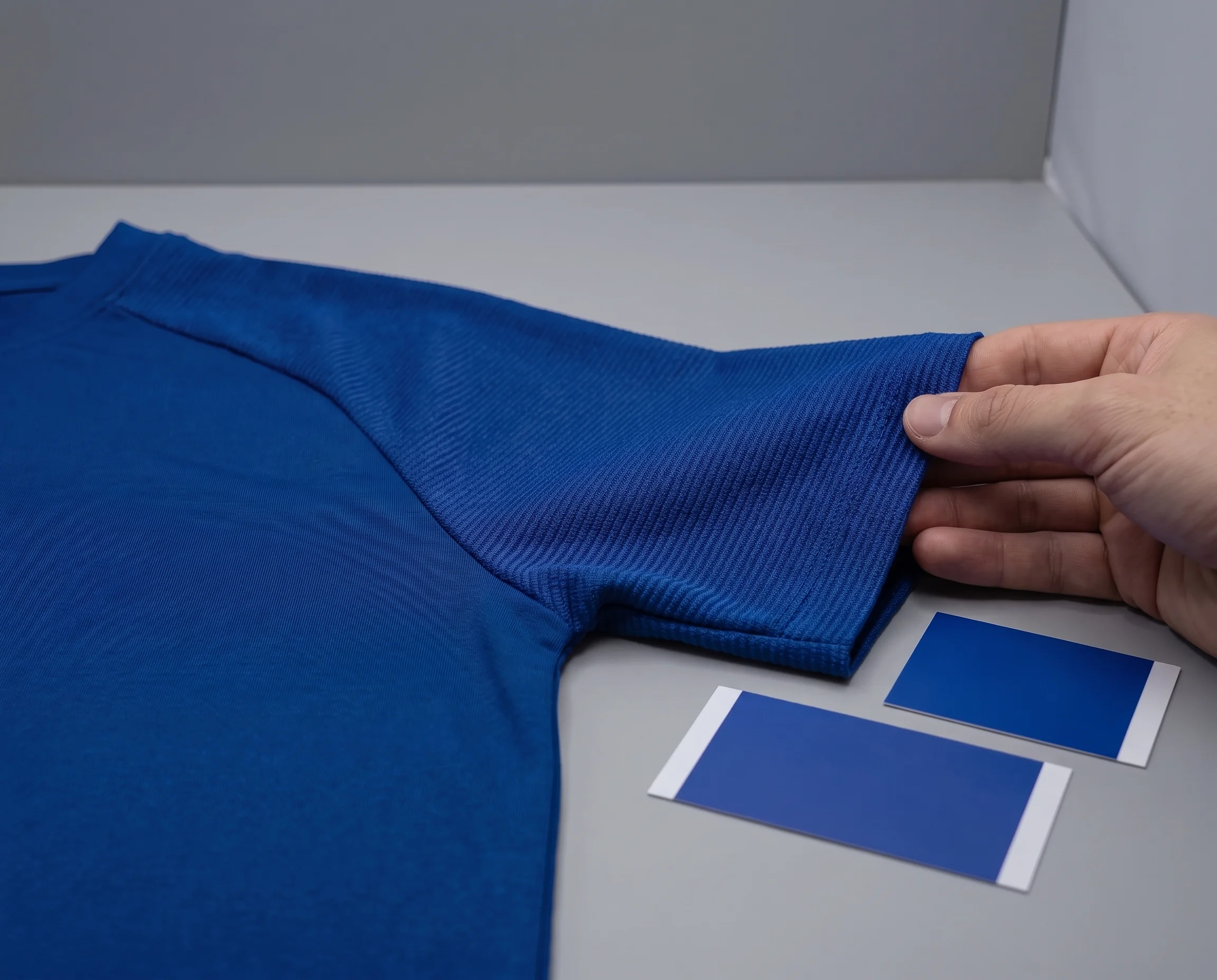
Textured-surface knit sleeve beside the smooth front panel of an aero sample jersey under D65 light, with a signed colour card for each fabric

What the fabric is.

Textured-surface knit is binary nylon-spandex in one of our three blends, 88/12, 90/10 or 91/9: a knit variant with a textured face, in the same fibre blend as the rest of the jersey.

Where it goes.

The panels cut in textured knit are listed one by one in the fabric-by-panel sheet, usually the sleeve and shoulder panels. You confirm the sheet before the first sample is cut, and your production line cuts from the same sheet.

How the colour is matched.

Every base fabric in the jersey gets its own print strike-off, and the textured knit is handled as a base fabric in its own right:

  1. The colour and print technician prints a strike-off on the textured knit, alongside the one on the main body fabric.
  2. Both are viewed under the same D65 standard light source against the colour standard you sign.
  3. The textured knit gets its own physical colour card, signed, and its colour parameters go into the spec pack next to those of the main body.
  4. The jersey goes to sampling only once every colour card in it is signed.

What you receive.

A signed colour card for the textured knit and one for the main body fabric, plus a card for any other base fabric on the jersey, each with its colour parameters in the spec pack.

How you verify it.

Under a D65 light, hold the sleeve of the approved sample next to its front panel, then compare each with its own signed card. Your line, or cyclingapparelfactory.com, prints the textured knit to the parameters on its card.

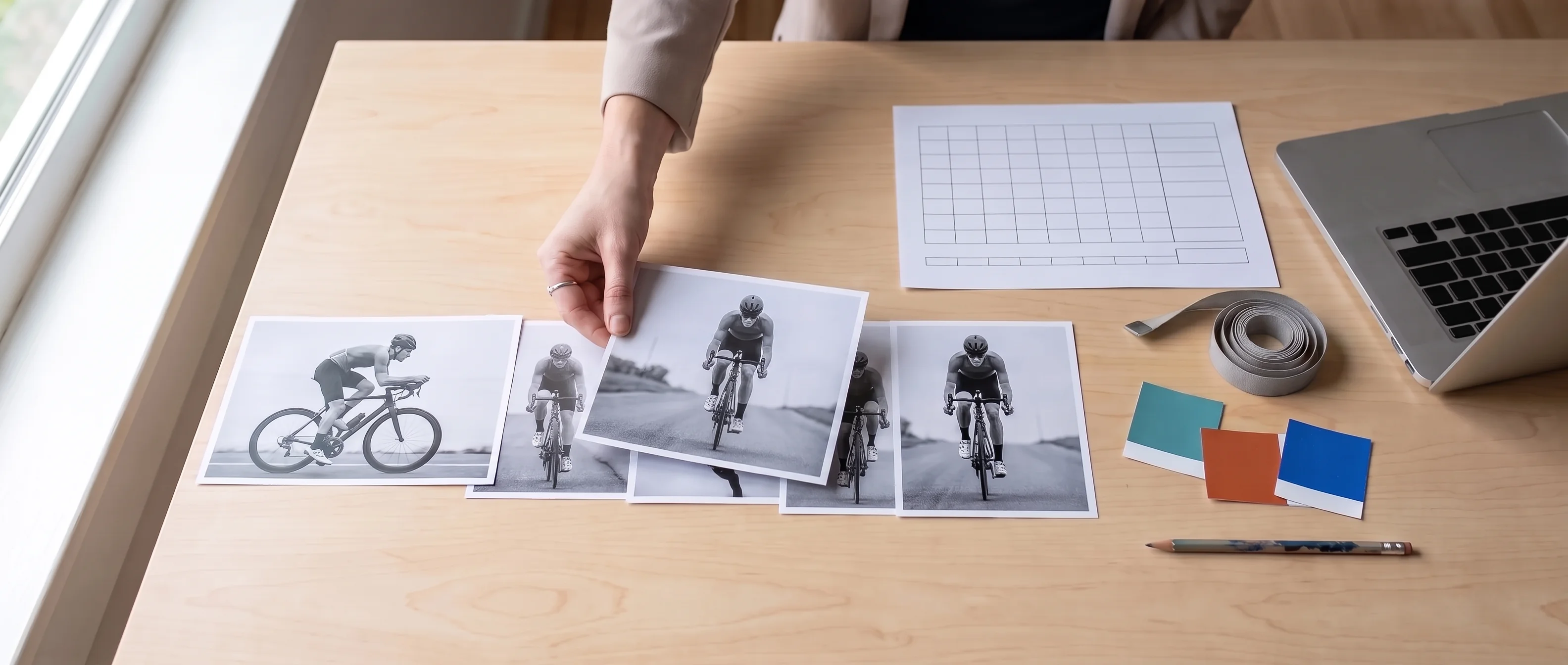
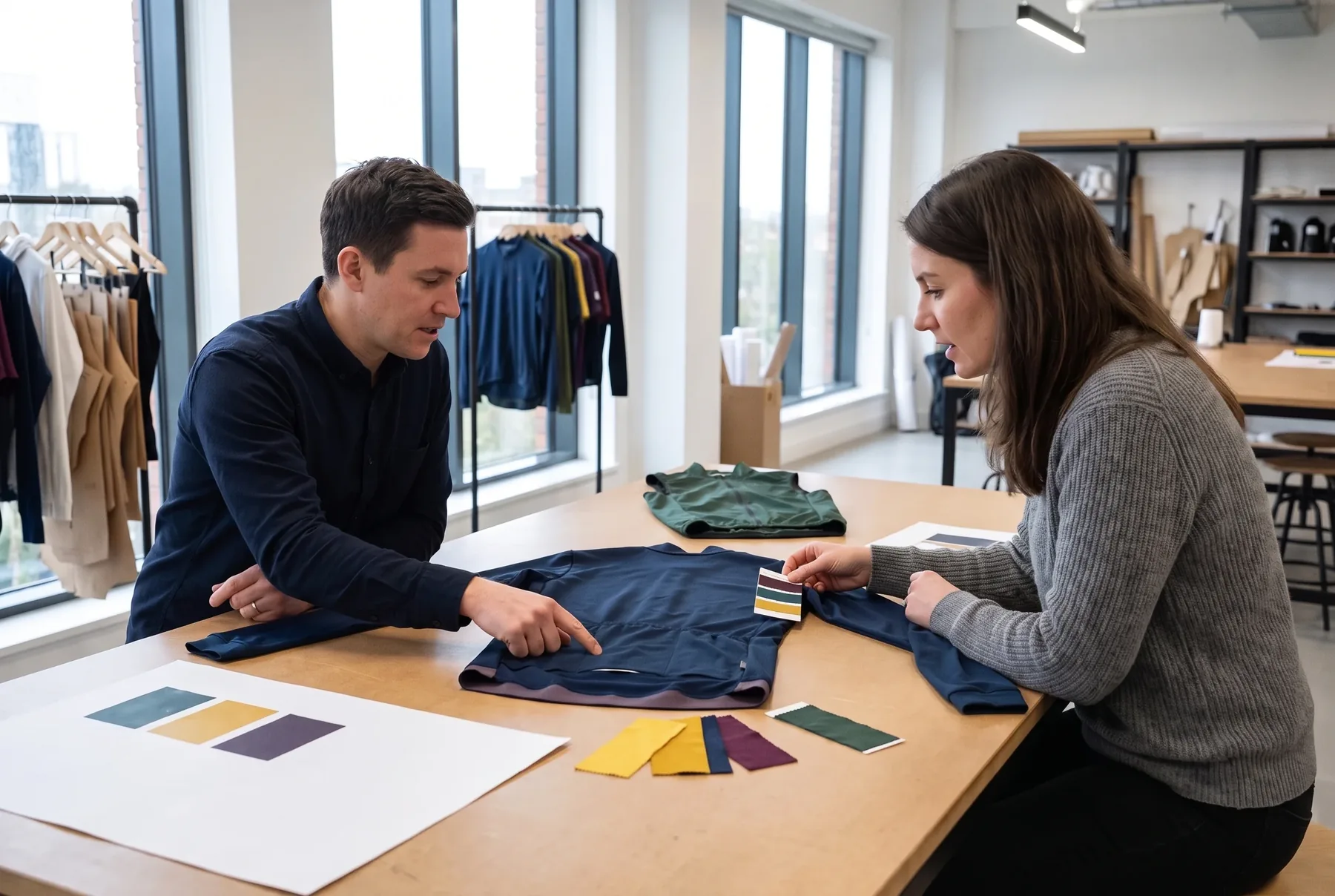
Development desk with printed photos of riders in race position, a size chart sheet and colour cards

Send Your Race Format and Size Chart for an Aero Feasibility Review

Send the race format, the position held in the race, your size chart and any test results you already have. The feasibility review tells you which aero tier fits the brief and how the first sample is scheduled.

Send your aero jersey brief

Aero Brief Inputs: Race Format, Position, Size Chart and Any Test Data You Hold

Development manager reviewing a sample jersey against a brief at her desk

Copy this list into your enquiry and fill in what you have:

  • Race format: time trial, criterium or both.
  • Rider position: a description or photos of the position held in the race.
  • Size chart and size range, men's, women's or both.
  • Temperature band the jersey will be raced in, which sets the main body fabric.
  • Aero tier: pattern, fabric or test, or a request for our recommendation.
  • Zip length and sleeve end finish, laser-cut or silicone gripper band.
  • Reference garment, if the aero jersey replaces one you already race in or sell.
  • Colour standard and artwork: logos, print and reflective positions.
  • Test results, if you have tested earlier jerseys.
  • Where bulk will run: your own line or cyclingapparelfactory.com.

Three briefs come back for discussion before the review starts: one with no size range; one with no race format or temperature band; and one asking for something outside development, such as a bib, bulk scheduling or team ordering.

The development manager writes back naming what is missing and where the out-of-scope part goes.

If the aero line is confidential, ask for a non-disclosure agreement before you send the brief. Your patterns, panel map, spec pack and colour parameters are used only on your project, never reused for another client and never shown on this site.

Aero Development Steps Added to the Standard Process: Textured-Knit Strike-Off and Race-Position Check

The aero jersey runs on our six-step development process, set out on the home page. The aero work adds these steps to it:

Pattern maker checking a first sample on a rider on an indoor trainer
  1. Feasibility review

    your race format and position are written into the review, with the recommended tier and the panels it will change.

  2. Panel map

    the pattern maker draws the relocated seams and panel directions on the race fit block and sends the map for your confirmation.

  3. Strike-offs

    on the fabric tier, the textured-knit strike-off is printed with the others and its colour card sent for your signature.

  4. First sample

    the aero items are checked in your named position after the race fit on-bike check.

  5. Revision rounds

    each round is driven by returned items, your feedback and, on the test tier, your test conclusions. The first 2 revision rounds carry no extra sampling fee.

The panel map confirmation is the step to settle early. Seam positions shape every later step, so the first sample is cut only once you have signed the map. Sending your zip and sleeve end choices with the brief keeps this step short.

Aero Spec Pack Files and Sign-Off: What Your Production Line Runs From

At sign-off, the development manager issues the eight-part spec pack. The aero work sits in named places inside it, so a production line can reproduce the jersey from paper:

  1. Cutting diagrams and panel map

    relocated seams, panel directions and the merged front panel.

  2. Graded patterns

    the race fit block with the aero changes, graded to your chart, men's and women's separately.

  3. Fabric by panel

    every panel and its base fabric, textured-knit panels included.

  4. Colour cards and colour parameters

    one per base fabric, textured knit included.

  5. Decoration placement sheet

    logos, print, gripper and reflective positions clear of the seam lines.

  6. Size chart

    the chart you confirmed.

  7. Seam description

    every seam by type, plus the collar finish and the sleeve end finish.

  8. Sample pack

    the approved sample and its measurement report, aero items in the fit sign-off column.

Spec pack laid out on a table: cutting diagrams, fabric swatches and a measurement sheet

The revision log comes with it. On the test tier it carries your test conclusions and the panel change made for each.

How a production line checks its first pieces.

Set a first bulk piece next to the approved sample and check seams against the panel map, sleeves and shoulders against the fabric-by-panel sheet, colour against each signed card, and collar and sleeve end against the seam description. Any difference points to one named file.

The files and revision log belong to you. We keep a copy on file for your project, so next season's aero jersey starts from the same spec pack and colour parameters.

Aero Jersey Development Compared With Stock Aero Jerseys and Generalist OEMs

Teams and brands looking for an aero cycling jersey usually weigh three routes: a stock aero jersey from a supplier's range with your logo printed on; a generalist garment OEM sewing to a pattern you provide; or aero development with us. This is what you hold at the end of each.

What you holdStock aero jersey with your logoGeneralist OEMAero development with us
Seam positionsSet by the supplier's own pattern; no panel map handed overWherever your own pattern puts them; you draw the placementMoved off the shoulder front, upper arm front and chest, drawn on a panel map you own
Aero checkNo per-project checkFlat measurements against the size chartFive aero items checked in your named race position, marked pass or return, signed
Sleeve and shoulder colourPrinted to the supplier's own settingsUsually one colour card, for the main fabricSigned cards and parameters for the textured knit and the main body, on one standard
Test resultsThe supplier's own claims about its jerseyRevisions without a panel-by-panel recordEach of your conclusions logged against the panel changed, no figures of ours added
Files at the endNoneWhat you suppliedThe eight-part spec pack and revision log, yours to run on any line

Teams and Brands We Develop Aero Jerseys For

Technical leads of race teams and club race squads.

You need a jersey for time trials and criteriums, and the fit and aero decisions are yours. Every sample is checked in your named position and feedback is recorded panel by panel. The finished jersey is raced by your team.

Product leads at performance cycling brands.

You are adding an aero jersey to a race range, made on your own line or at cyclingapparelfactory.com. Every aero change sits in a named file, and the jersey reaches your customers in the sizes they already buy from you.

Development manager and a brand product lead reviewing a sample jersey and colour cards

Technical directors at national and regional cycling federations can develop one aero jersey for several teams from a single spec pack, through the same steps. We work with buyers in the United States, Europe and Australia.

Development studio with the pattern table, sample bench and colour booth

Send Your Aero Jersey Brief

Send your race format, size chart and the aero tier you are considering. The development manager replies confirming what the feasibility review will cover and which inputs are still missing.

Please enter your name.
Please enter a valid email address.
Please give the size range.
Please describe the jersey you want developed.