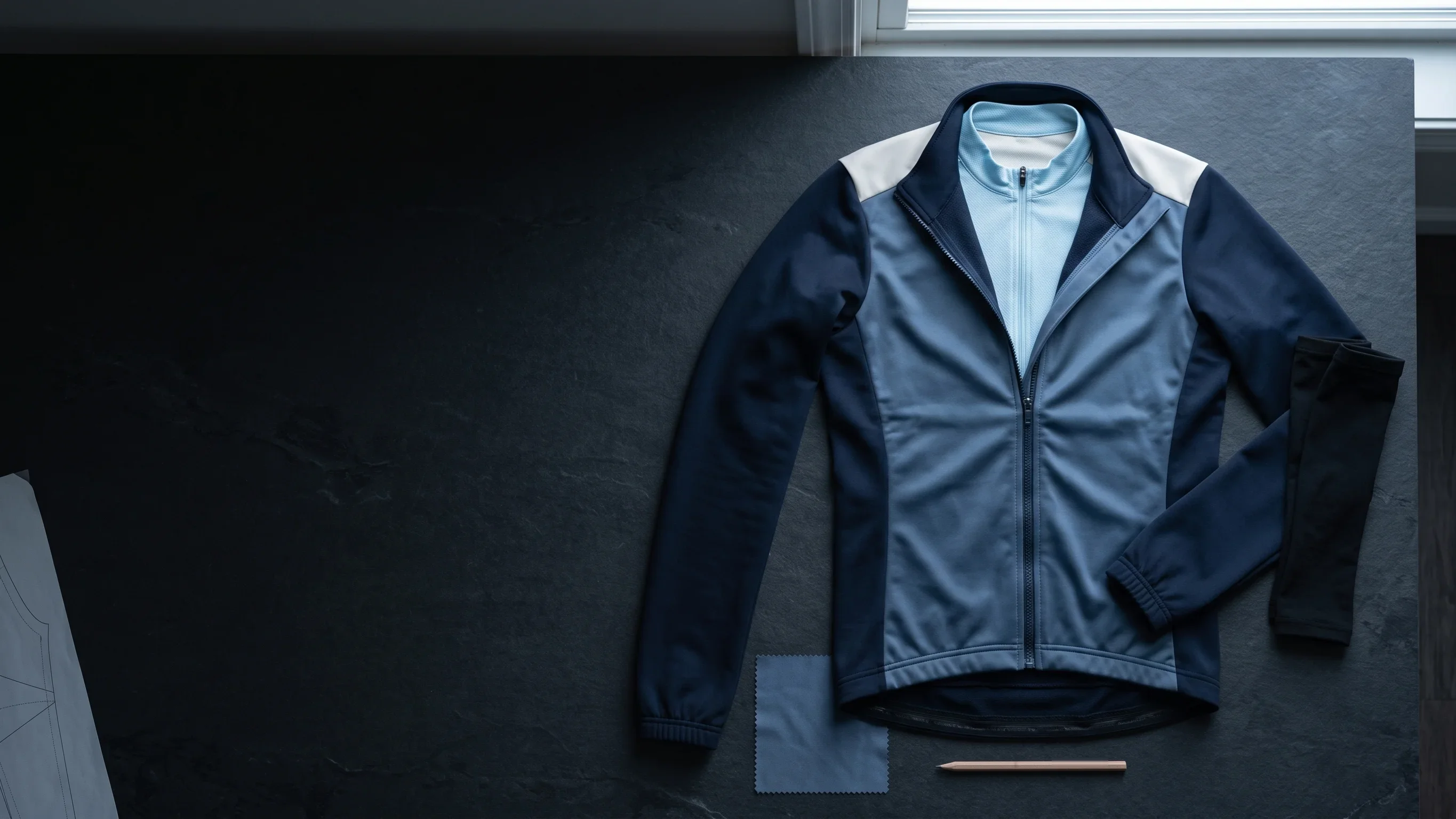
Windproof Cycling Jacket Manufacturer: Winter Race Jackets for the 5–10 °C Band, Drafted and Fit-Checked Over Your Race Jersey
We develop the windproof cycling jacket as the outer layer of your race kit for the 5–10 °C band. It has a windproof laminate front, brushed-back thermal body and sleeves, and a pattern drafted on the riding-position block of the race jersey it goes over.
- We develop it first for product leads at performance cycling brands adding a winter outer layer to a race line, on the block and colour standard of the jerseys already in that line.
- We also develop it for technical leads at race teams and club race squads who race early-season events and train through winter in the 5–10 °C band.
- Federations putting together a full season set will find every band and garment on our race cycling apparel range page.
The pattern maker signs the jacket's fit over the jersey sample from your project, and the sign-off names that jersey. Its files join your jerseys in one spec pack, and the pack is yours.
Send the size chart and spec pack of the jersey your jacket goes over. Within 48 hours of a complete brief, the development manager replies with the feasibility review.
Facts behind every windproof jacket we develop:
- Fit signed over the jersey sample it is worn on, with that jersey and any warmers named on the sign-off.
- Back length, sleeve length and chest listed beside the same size of the jersey underneath.
- Laminate placed panel by panel on a fabric-by-panel sheet you sign.
- First sample in 5–7 days, with no extra sampling fee on the first 2 revision rounds.
- Fabrics certified to OEKO-TEX® STANDARD 100; development work run under ISO 9001:2015.
Windproof Cycling Jacket for the 5–10 °C Band, Worn Over Your Race Jersey With Arm and Leg Warmers
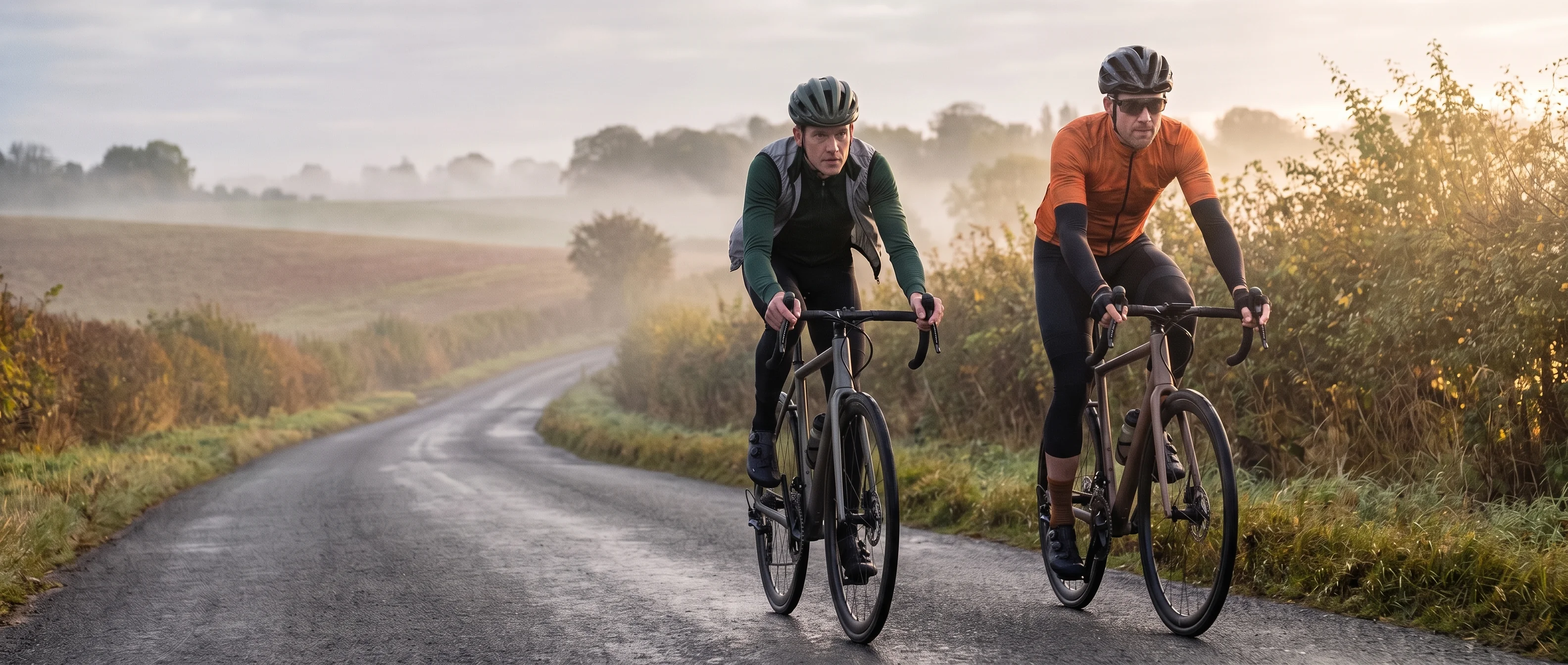
The windproof jacket is the garment for the coldest band in our range, 5–10 °C. A rider in that band wears three things together, and we develop the jacket to sit on top of the other two:
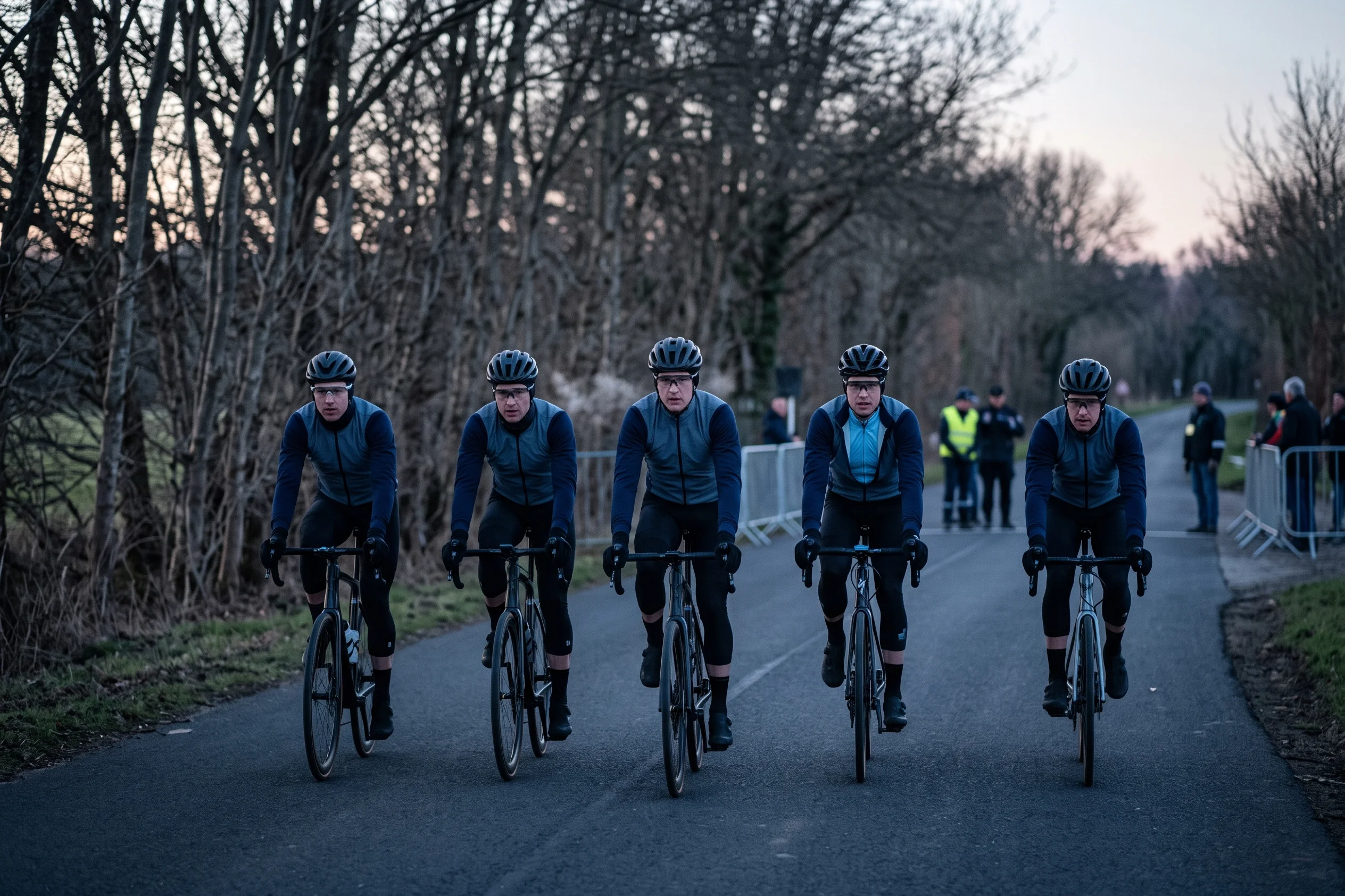
- The race jersey underneath: a short sleeve race jersey, or the thermal jersey if your project has one.
- Arm and leg warmers, graded to your size chart.
- The windproof jacket over both.
Brands add the jacket as the winter outer layer of an existing race line, on one block and one colour standard. Teams and club race squads use it for:
- Early-season road races and criteriums held at 5–10 °C.
- Late-season races and warm-ups before cold starts.
- Winter training blocks, in the outer layer riders race in.
Above this band, at 10–16 °C, the set moves to the thermal jersey or a long sleeve jersey with a laminate-front gilet. Every band and its garments are laid out on our race cycling apparel range page.
In the feasibility review we name which jersey in your project the jacket is drafted on and checked over, so the 5–10 °C set is settled before the first sample.
Choices You Confirm on a Windproof Jacket: Laminate Coverage, the Jersey Underneath, Versions, Pockets, Hem and Reflective Detail
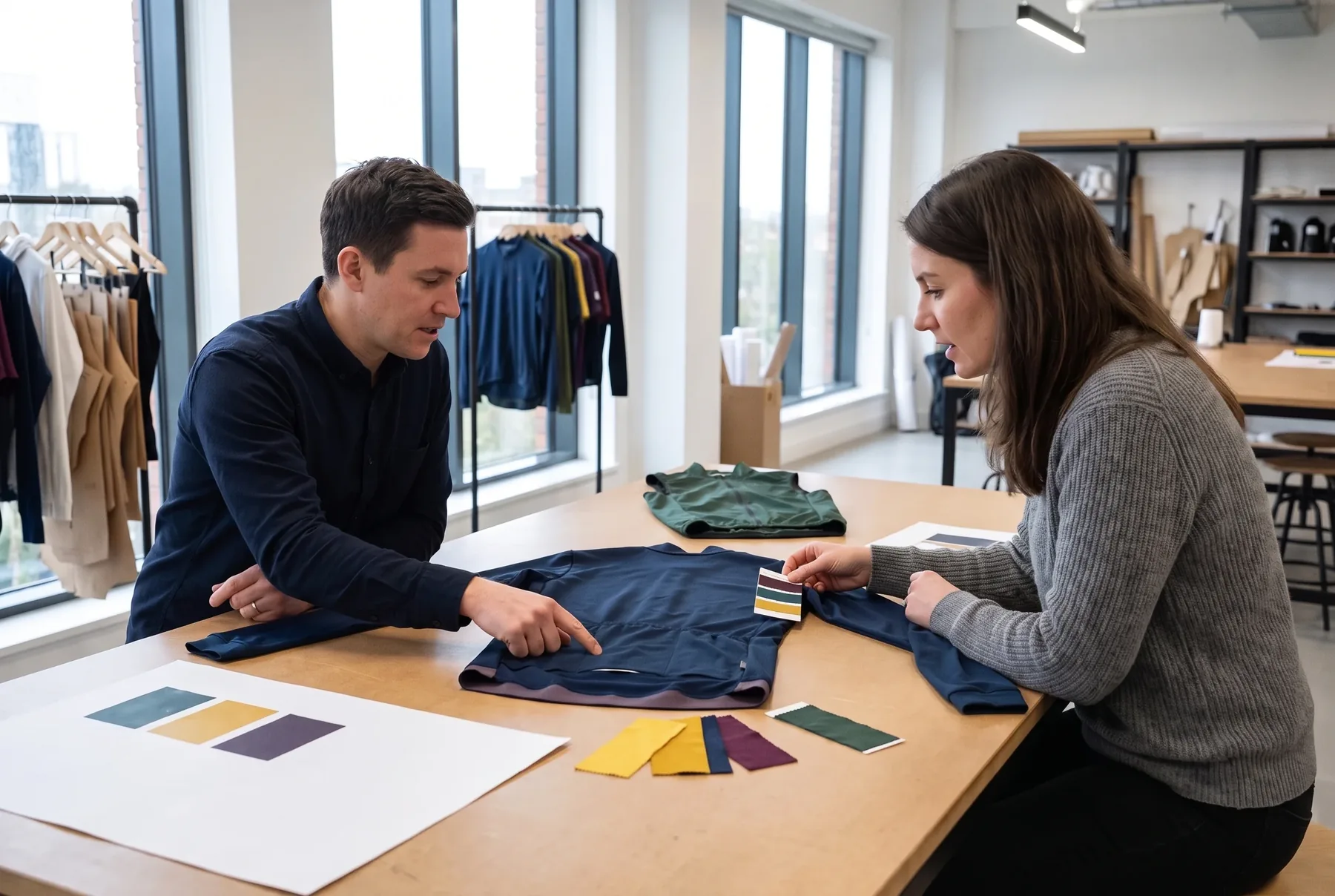
Your brief settles seven choices. The pattern maker proposes, you confirm, and each choice is written into a named file of the spec pack.
Fabric and fit:
Laminate coverage.
Left and right front panels in our starting proposal; laminate on the sleeve fronts is proposed by the pattern maker and confirmed by you in the fabric-by-panel sheet.The jersey underneath.
A short sleeve race jersey or the thermal jersey from your project; the fit check is run over that sample.Warmers in the set.
If your set includes arm or leg warmers, they are worn during the jacket's fit check.
Build and decoration:
- Men's and women's versions, each on its own base block, graded to your size chart.
Rear pockets.
The number follows your brief.Hem.
A silicone gripper, if you choose one.Reflective detail and decoration.
Reflective print or strip for the early dusk of the 5–10 °C season; full sublimation and heat transfer for your artwork. Positions go on the placement sheet.
The front zip is full length on every jacket we develop. Collar height and collar finish are set by the pattern maker against your brief.
Windproof Cycling Jacket Specification
- Garment
- Windproof outer jacket with sleeves, worn over the race jersey
- Temperature band
- 5–10 °C, worn with the jersey underneath and arm and leg warmers
- Pattern
- Riding-position block of the race jersey in your project, with layering ease set by the pattern maker
- Laminate
- Left and right front panels as the starting proposal; sleeve fronts proposed by the pattern maker, confirmed by you
- Body and sleeves
- Brushed-back thermal main body on back, side and sleeve panels
- Fabrics
- Binary nylon-spandex, 88/12, 90/10 or 91/9, in both base fabrics; OEKO-TEX® STANDARD 100
- Front
- Full-length front zip, position drawn on the cutting diagram
- Collar
- Height and finish set by the pattern maker against your brief
- Cuffs
- Elastic cuff
- Rear pockets
- Number per your brief; opening line drawn on the back panel
- Hem
- Silicone gripper, optional
- Seams
- Flatlock on contact zones; main joins in four-thread overlock
- Decoration
- Full sublimation, heat transfer, reflective print or reflective strip
- Sizing
- Your size chart and size range; separate base blocks for men's and women's versions
- Fit check
- Over the named jersey sample: four race fit points, sleeve to the wrist, one-hand reach to the jacket's own rear pocket
- Measurement
- Back length, sleeve length and chest beside the same size of the jersey underneath
- Colour
- One signed card per base fabric, brushed-back and laminate; a fabric already signed in your set adds no card
- Development
- 5–7 days to first sample; no extra sampling fee on the first 2 revision rounds
Jacket Fit Signed Over the Jersey Sample It Is Worn On, With the Jersey and Warmers Named on the Sign-Off
The jacket starts from the riding-position block of the race jersey in your project. The pattern maker adds layering ease to that block so the jacket sits over the jersey, and draws the ease on the jacket's own cutting diagram. The jersey block's shorter front, longer back and dropped front collar line stay in the jacket pattern.
How the outer layer is drafted on the jersey block is set out on our race cycling apparel range page. The jacket's fit is then proven in the combination your riders will race in.
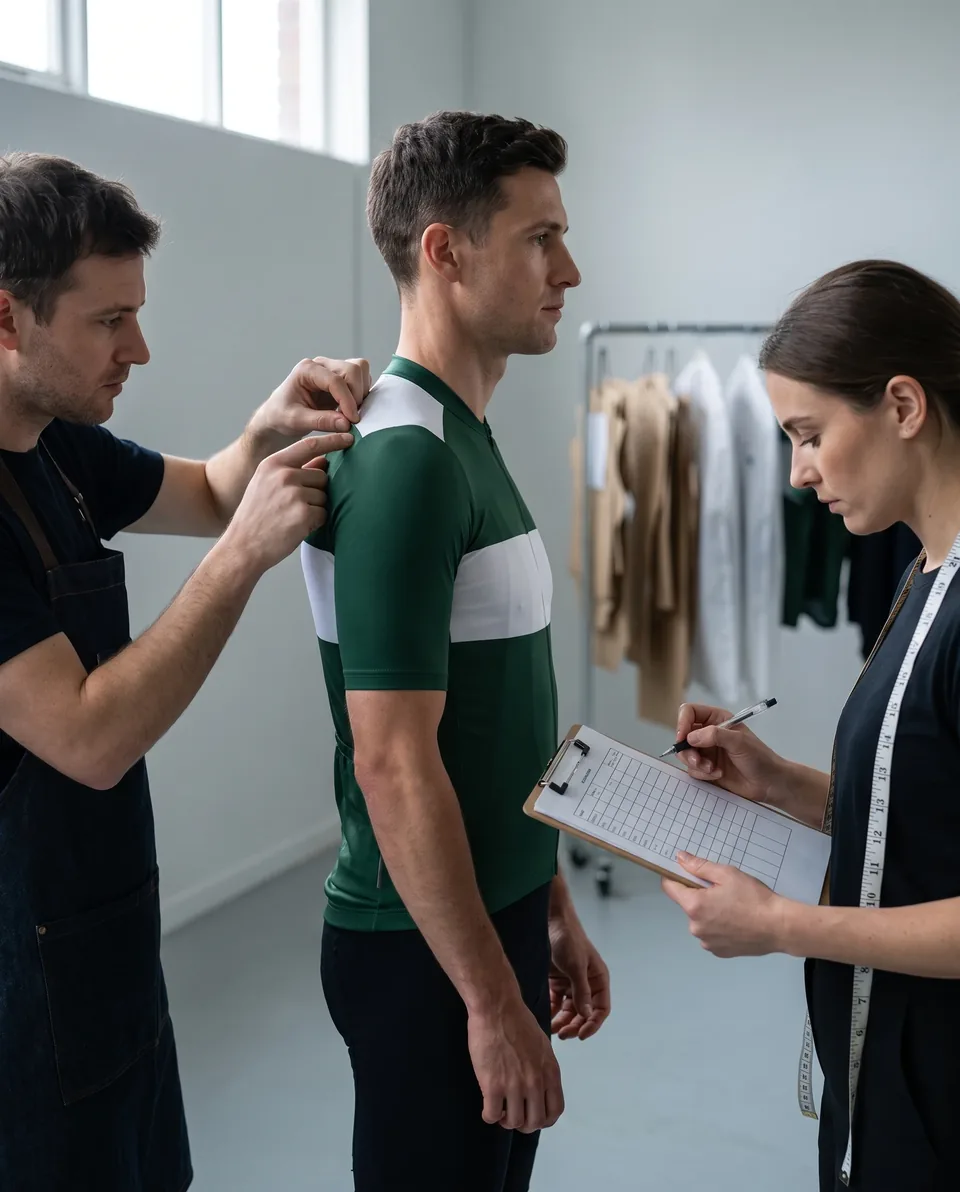
The combination is fixed before the check. The rider puts on the jersey sample you named in the brief, a short sleeve race jersey or the thermal jersey. If your set includes arm or leg warmers, the rider wears them too. The jacket sample goes on over all of it.
The check is run in race position on the bike. The pattern maker works through six items:
- The hem stays down when the rider is low on the bike.
- The collar sits clear of the throat over the jersey collar.
- The sleeve end sits flat on the arm.
- The shoulders move freely through both layers.
- With the arms reaching to the hoods, the jacket sleeve covers the wrist.
- In race position, the rider reaches the opening of the jacket's own rear pocket with one hand.
The first four are the race fit points from our race fit cycling jersey check. The last two are the long sleeve checks, applied to the jacket's sleeve and the jacket's pocket.
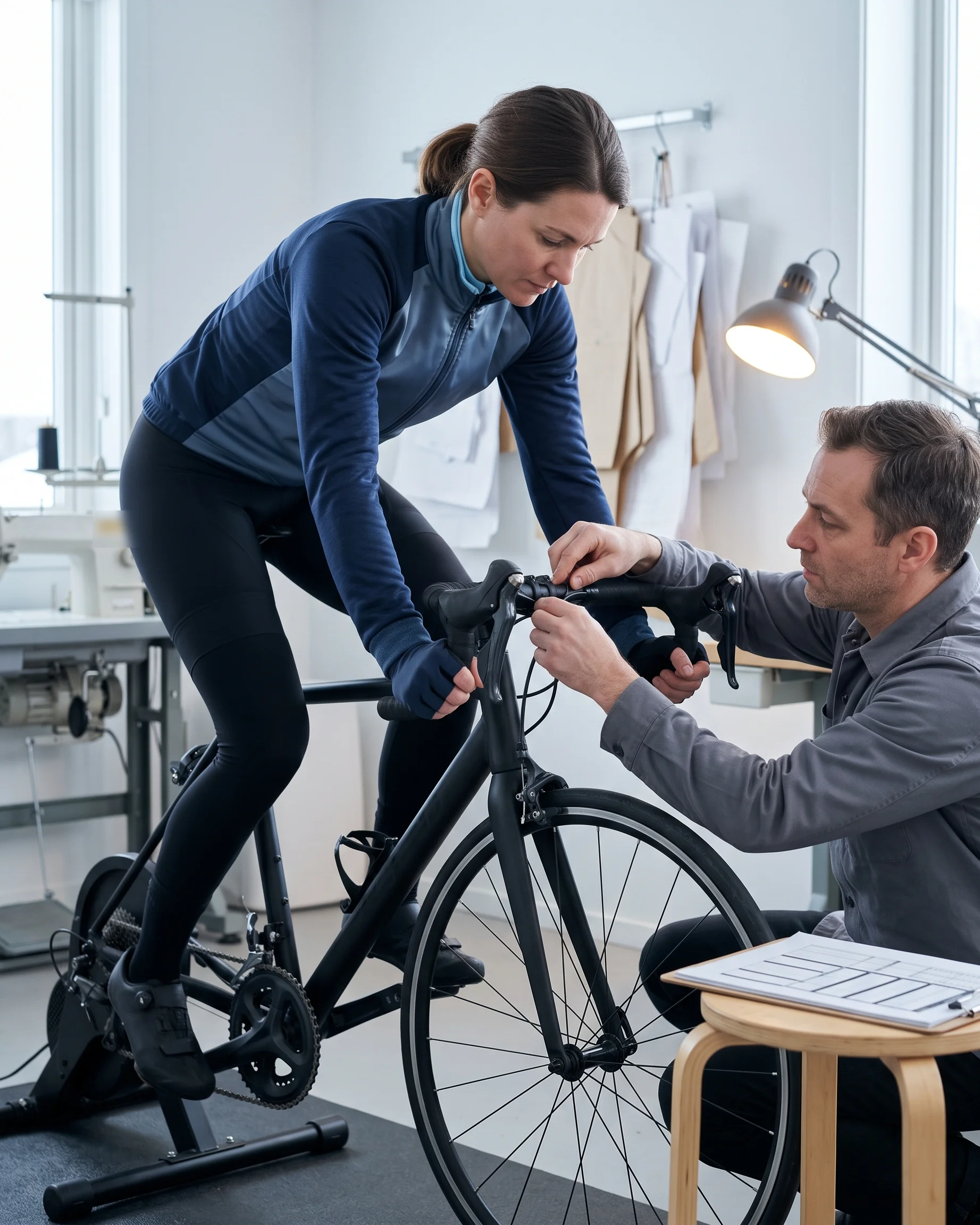
Each item is marked pass or return in the fit sign-off column of the jacket's own measurement report.
The head of that column records what was worn underneath: the jersey's style and size, and whether arm or leg warmers were on. The pattern maker signs the jacket's fit separately from the jersey's.
Documents and samples you hold after the check:
- The jacket's measurement report, with the fit sign-off column completed and the jersey underneath named on it.
- The jacket sample and the jersey sample in the sample set.
- The revision log entries for every jacket round.
Your riders put on the same jersey and warmers named on the sign-off, add the jacket, and repeat the six items in race position. A brand reads from the same column which jersey in its line the jacket was signed over, before the jacket enters production.
Windproof Jacket Construction by Zone: Front Zip, Collar, Sleeves and Cuffs, Rear Pockets, Hem and Seams
Every zone of the jacket is drawn on its cutting diagram, on the jersey's riding block.
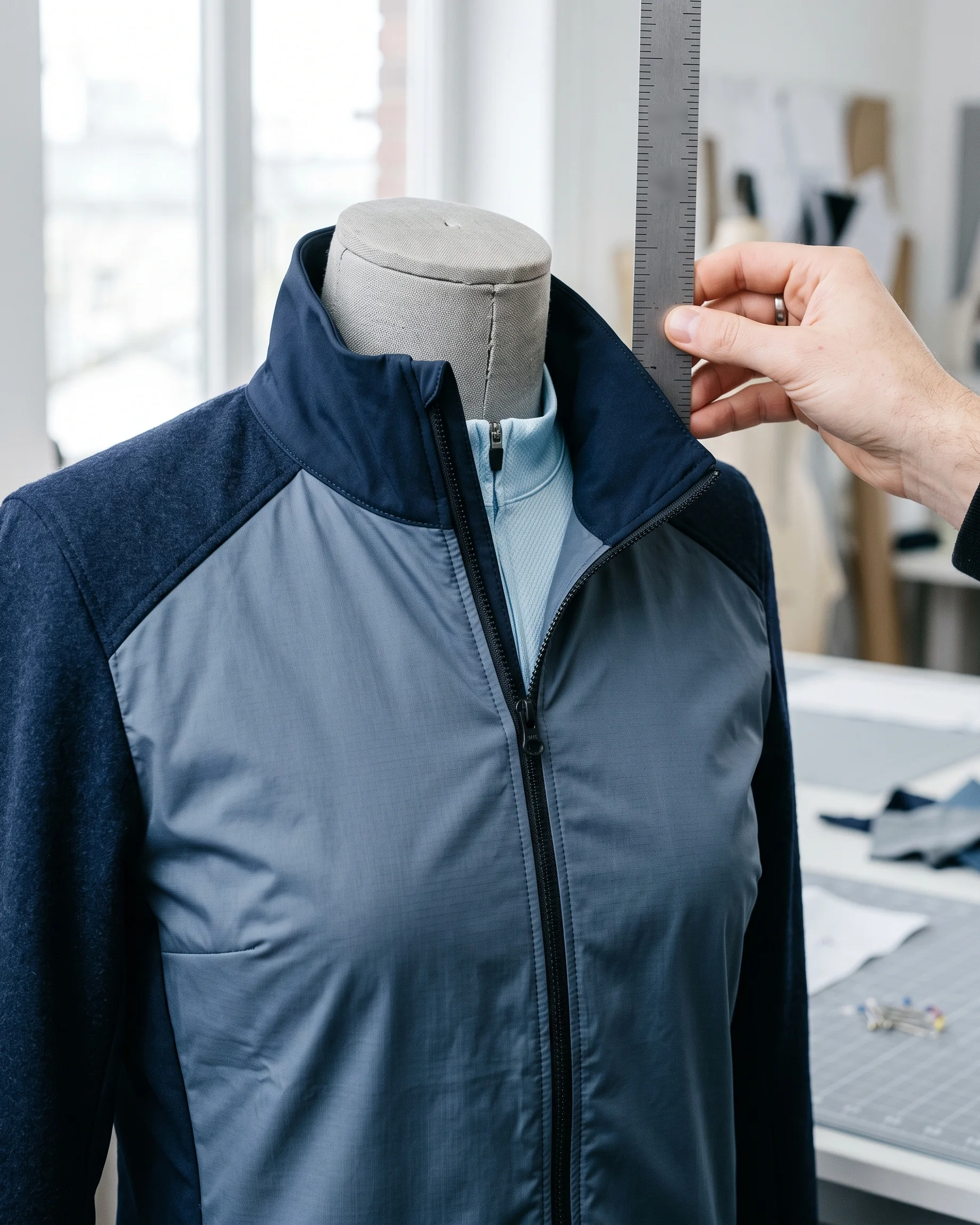
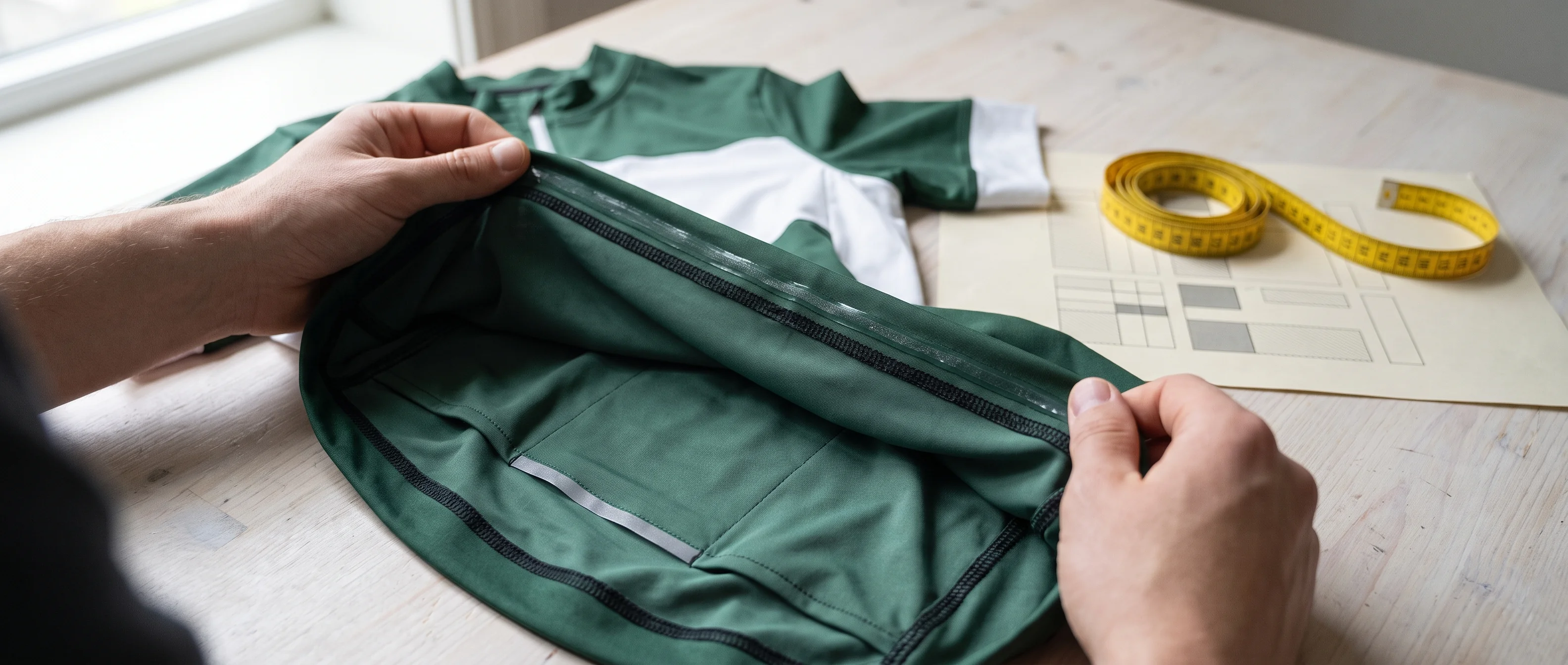
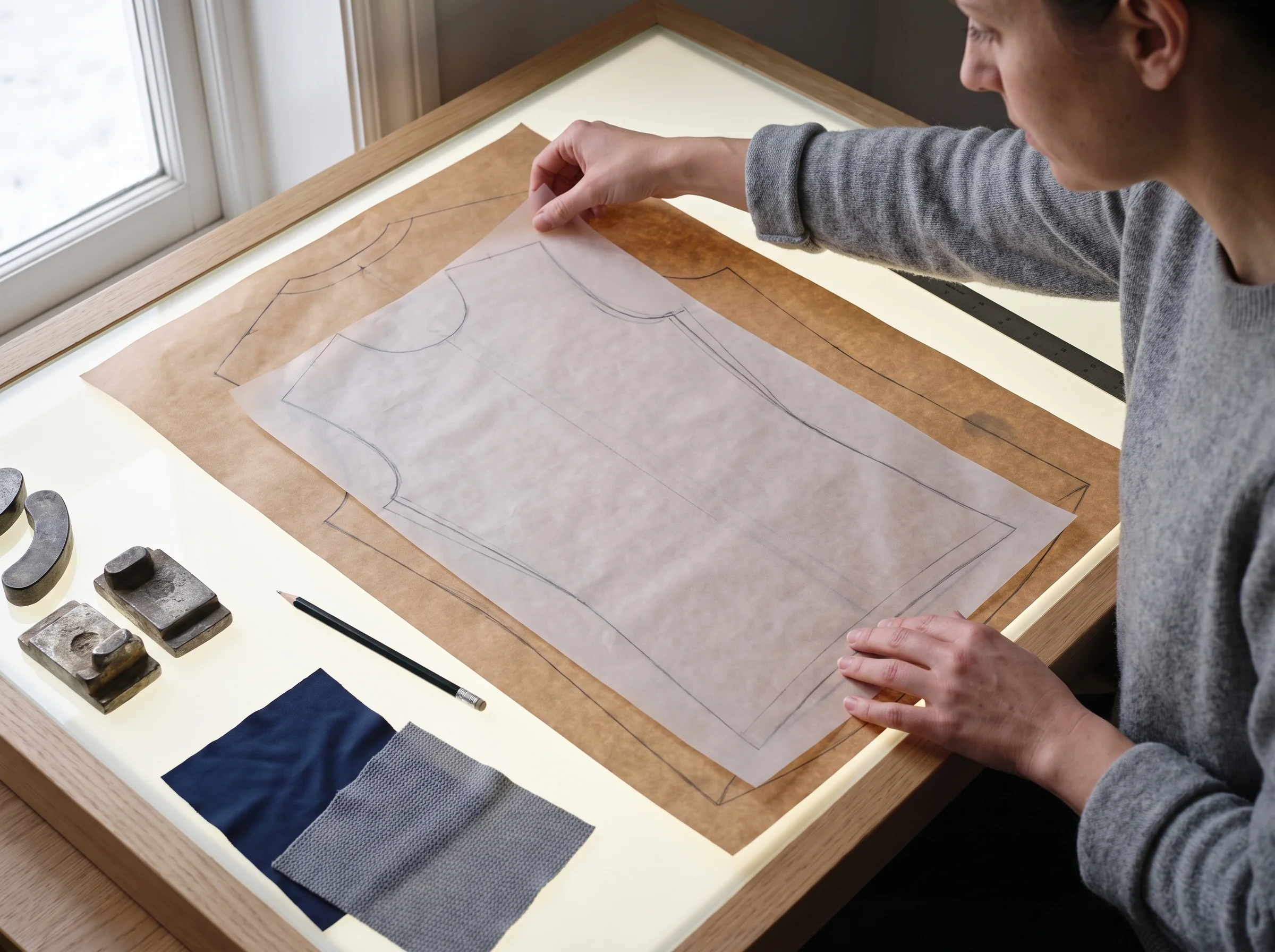
Front.
Left and right front panels carry the laminate in our starting proposal, closed by a full-length zip drawn on the cutting diagram.
Collar.
Drafted to sit over the jersey collar, with height and finish set by the pattern maker against your brief.
Sleeves and cuffs.
Brushed-back thermal main body, with laminate on the sleeve fronts if you confirm it. The sleeve head keeps the jersey block's reach to the bars, and each sleeve closes with an elastic cuff.
Back and rear pockets.
Cut longer than the front, in brushed-back thermal. The pocket opening line is drawn on the back panel, where a rider in race position reaches with one hand.
Hem.
An optional silicone gripper, drawn on the placement sheet.
Seams.
Contact zones are joined flatlock; main body joins run in four-thread overlock. The seam description lists every seam on the jacket by type, including the joins between the laminate front panels and the brushed-back side panels.
Every detail is located on a file you hold: zip and pocket line on the cutting diagram, gripper and reflective positions on the placement sheet.
Laminate Front Panels Set Panel by Panel in a Fabric-by-Panel Sheet You Sign
The laminate is what makes the jacket windproof, so where it sits is decided panel by panel and signed by you.
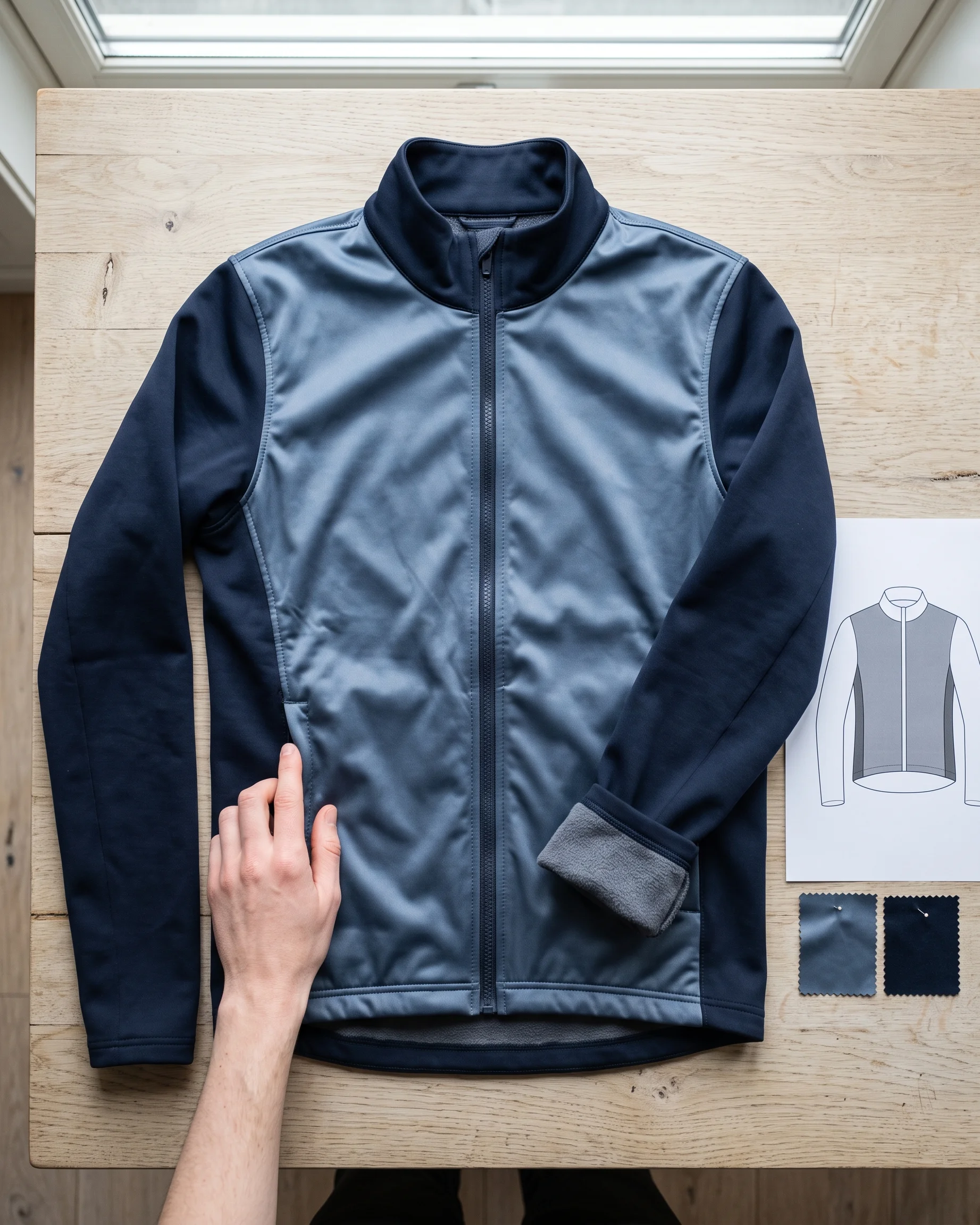
The starting proposal.
From your brief, the pattern maker proposes laminate on the left and right front panels. The back and side panels stay in brushed-back thermal main body. You confirm or change it before anything is cut.
The sleeve fronts.
Whether the laminate continues onto the front of the sleeves is a separate decision. The pattern maker proposes it against your brief, for example the race formats and conditions you name. You confirm it, and the sleeve panels are split on the cutting diagram to match.
The sheet.
Every panel of the jacket is listed in the fabric-by-panel sheet with its base fabric: laminate or brushed-back thermal main body. You sign the sheet before the first sample is cut. A change after signing opens a new sampling round and is written into the revision log.
The joins.
Where a laminate panel meets a brushed-back panel, the seam is listed by type in the seam description. Contact zones are flatlock, main body joins are four-thread overlock, and each join is drawn on the cutting diagram.
The colour.
The laminate is its own base fabric, so it takes its own strike-off. The colour and print technician prints the laminate, matches it to your colour standard under D65, and you sign its colour card. If your set already has a gilet with a laminate front, that card is already signed and the jacket uses it.
The laminate's base fabric is the same binary nylon-spandex blend as the brushed-back body, so the two print and match to one colour standard.
What you hold:
- The signed fabric-by-panel sheet, naming laminate or brushed-back for every panel.
- The cutting diagram with the laminate panels and joins drawn.
- The laminate colour card, signed.
Your production line cuts from the same signed sheet, so the laminate sits on the panels you approved.
Windproof Jacket, Gilet and Thermal Jersey: Where Each Sits in a Cold-Weather Set
Three garments cover the cooler bands of a race set. Each has a different role.
| Windproof jacket | Gilet | Thermal jersey | |
|---|---|---|---|
| Role | Outer layer with sleeves | Sleeveless outer layer | Worn as the jersey |
| Band | 5–10 °C | 16–22 °C on descents; 10–16 °C | 10–16 °C |
| Fabric | Brushed-back body and sleeves, laminate front | Laminate front, mesh or main-body back | Brushed-back and mid-weight main body, no laminate |
| Pattern | Jersey block with layering ease | Jersey block with layering ease | Jersey block, no layering ease |
| Fit check | Over the named jersey sample, six items | Over the jersey sample, four race fit points | On its own sample, six items |
The jacket and the gilet are both drafted over the jersey and both carry a laminate front; the jacket adds sleeves, a brushed-back body and the 5–10 °C band. The thermal jersey sits under them. Its development is covered on our thermal cycling jersey page.
Brushed-Back and Laminate Fabrics, Matched to Your Colour Standard on Two Cards
The jacket uses two base fabrics: brushed-back thermal main body and windproof laminate. Both are binary nylon-spandex, and both are certified to OEKO-TEX® STANDARD 100.
Colour cards count by base fabric. Each base fabric gets its own strike-off under D65 and its own signed card, and its colour parameters go into the spec pack. A base fabric that is new to your set adds one card; a base fabric already signed in your set adds none.
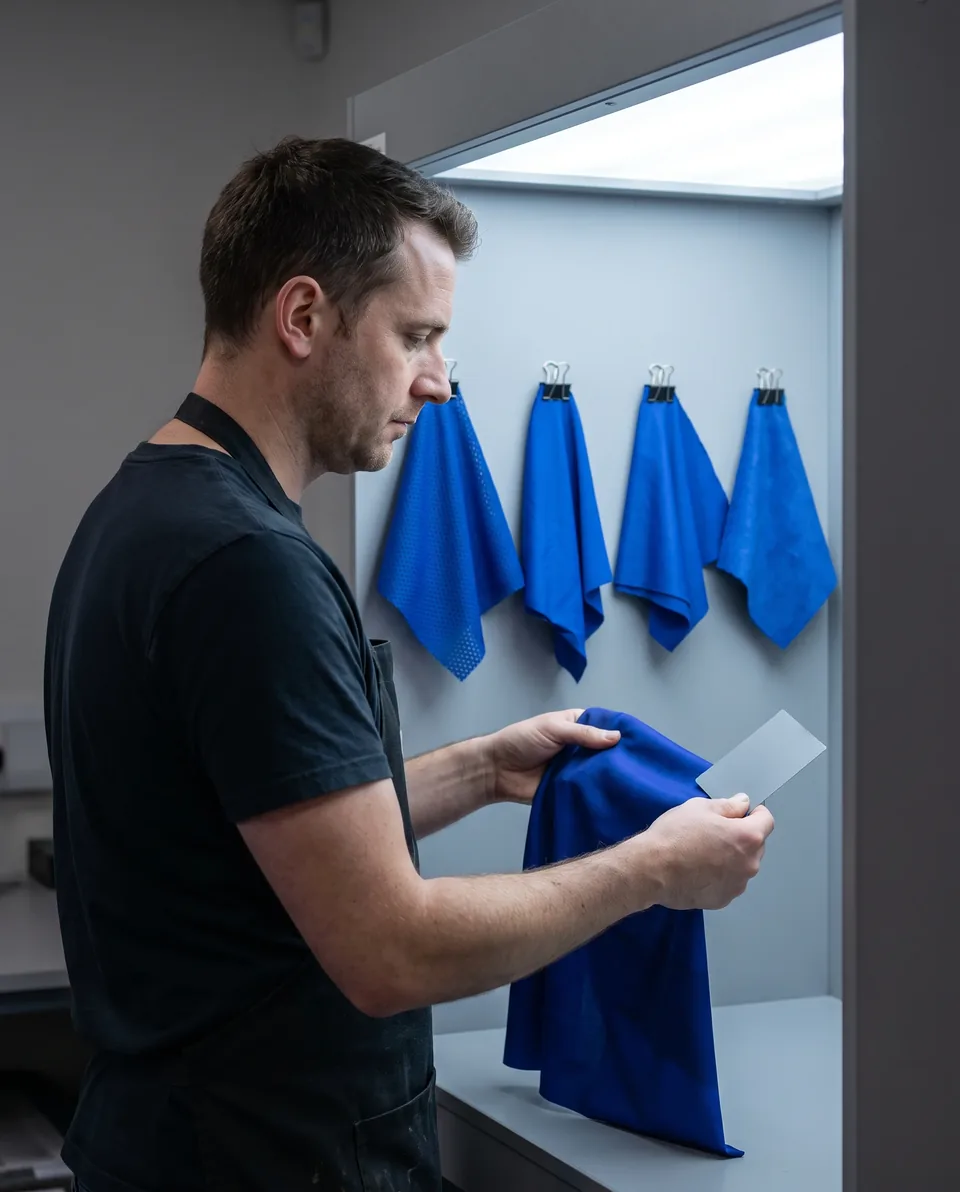
For the jacket, that works out as follows:
- A set with a thermal jersey or brushed-back warmers already holds the brushed-back card.
- A set with a laminate-front gilet already holds the laminate card.
- A set with both adds no card for the jacket.
No sample is cut until the cards the jacket needs are signed. The jacket body, the laminate front and the jersey underneath come out on the one colour standard you signed. The full card rule for a set is on our race cycling apparel range page.
Send the Jersey Your Jacket Goes Over
Send the spec pack or size chart of the jersey your jacket will be worn over, and the temperature bands in your calendar. The development manager replies with the jersey the jacket is drafted on, the laminate proposal and the colour cards your set needs.
Measurement Report With the Jacket and the Jersey Underneath Listed Size by Size
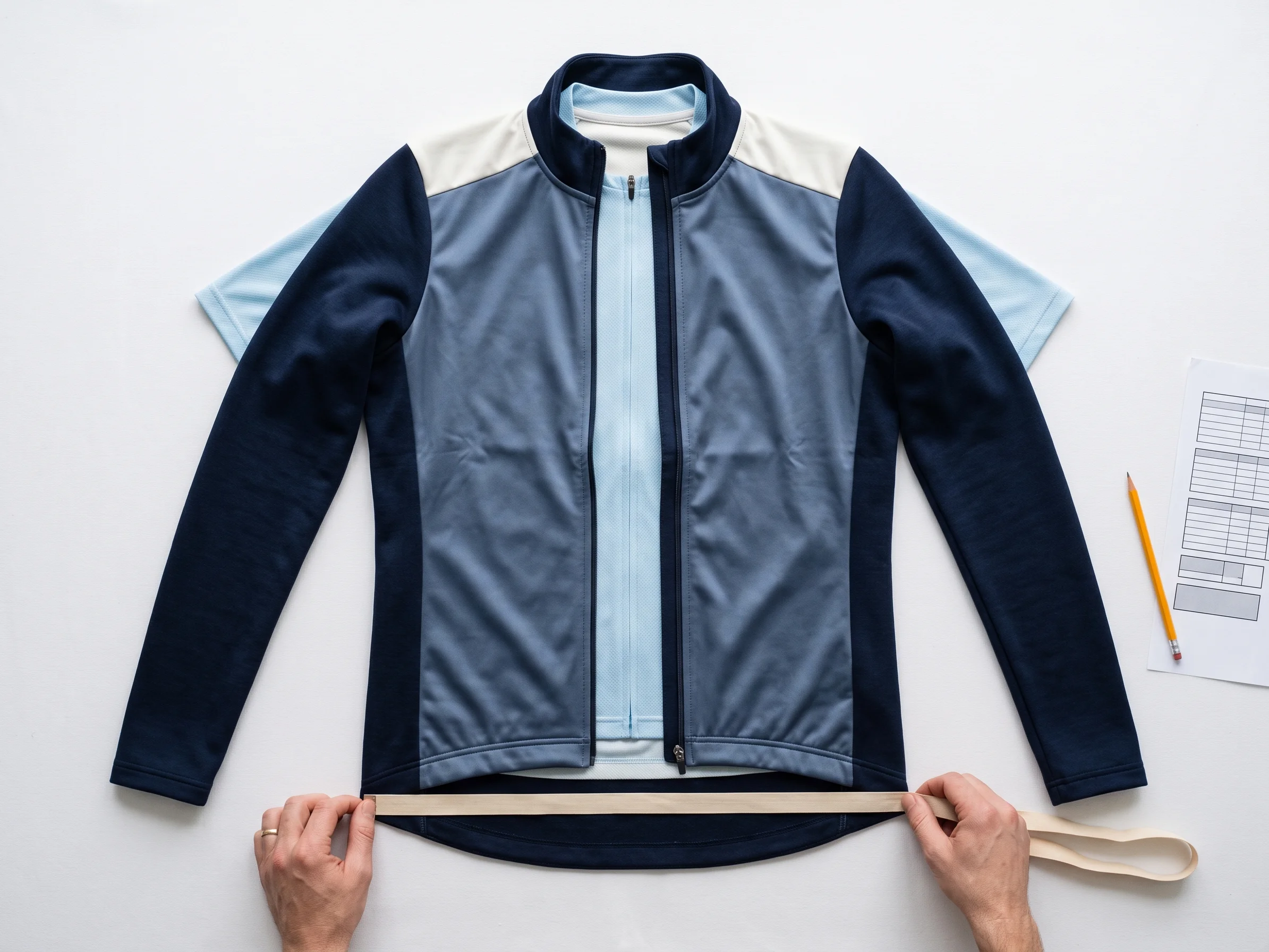
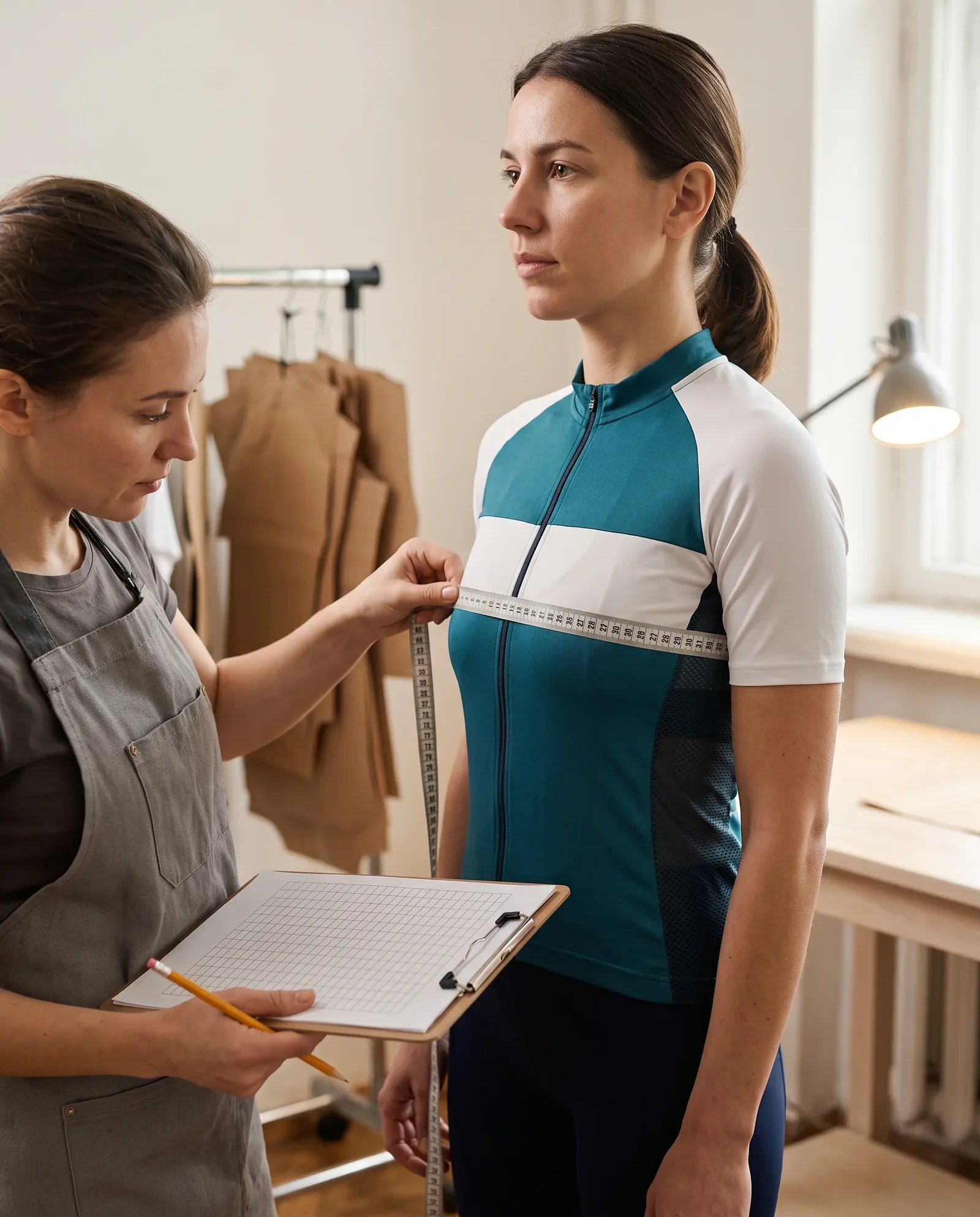
The jacket is measured against the same size chart as the jersey it goes over. The report shows how much the jacket adds over the jersey underneath, size by size.
The sample technician measures the jacket sample point by point against your size chart. Three points are then set beside the same size of the jersey the jacket was checked over:
- Back length, so you see how far the jacket back extends past the jersey back.
- Sleeve length, so you see the jacket sleeve running over the jersey sleeve or the arm warmer.
- Chest, so you see the room the jacket leaves for the jersey and any warmer underneath.
The sample technician's signature on the report covers size. The pattern maker signs the fit sign-off column on the same report, with the jersey underneath named at its head.
Reading it.
Each row is one size, with the jacket column next to the jersey column for the same three points. The gap between the two columns is the outer layer's addition at that size. You read it down the size range and check the addition at every size you ordered graded.
Checking it yourself.
Lay the jacket sample and the jersey sample flat. Measure back length, sleeve length and chest on each with a tape, and compare your readings with the two columns.
When the report does not pass.
A failed report stops the jacket sample at the studio. It goes back to the pattern maker, the panel is changed, and the change is entered in the revision log with the garment, the panel and the reason. You receive the sample only with a signed report.
Where size and fit are settled.
Size is set by the size chart you confirmed. Fit is decided by the pattern maker. The development manager brings any difference back to you and does not change a specification you have confirmed.
What you hold:
- The jacket measurement report, with the jacket and jersey columns side by side for back length, sleeve length and chest.
- The sample technician's size signature and the pattern maker's fit signature on one document.
- Both samples, for your own measurement.
For a brand, the report shows the outer-layer allowance across the whole size range in one document, before the jacket goes to production. Measurement and sign-off on the jacket run under our ISO 9001:2015 quality management system.
Windproof Jacket Development in Six Steps: Brief, Panel Proposal, Two Colour Cards, Sample Over the Jersey, Revisions, Spec Pack
Every step names who owns it and the document it puts in your hands.
Before the first sample:
- Brief and feasibility review. You send the size chart, size range, versions, temperature band and the jersey the jacket goes over. The development manager replies with the feasibility review.
- Laminate and fabric proposal. The pattern maker drafts the jacket on the jersey block and proposes the laminate panels. You sign the fabric-by-panel sheet.
- Strike-offs and colour cards. The colour and print technician prints each base fabric your set does not yet hold, brushed-back or laminate, and matches it under D65. You sign each card.
Sample to spec pack:
- First sample in 5–7 days. The sample technician measures it beside the jersey. The pattern maker checks it over the named jersey sample and signs the fit.
- Revision rounds. Each round is logged by garment, panel, change and reason. No extra sampling fee applies to the first 2 rounds. A change to a specification you confirmed opens a new round and is logged the same way.
- Spec pack. The development manager issues the jacket's files with the revision log.
If you need it, we sign an NDA before development starts. The jacket's pattern, cutting diagram and colour parameters are used only for your project.
Spec Pack Files the Windproof Jacket Adds, and Handoff to Production
The jacket's files go into the same spec pack as the jerseys in your project. For the jacket, the pack gains:
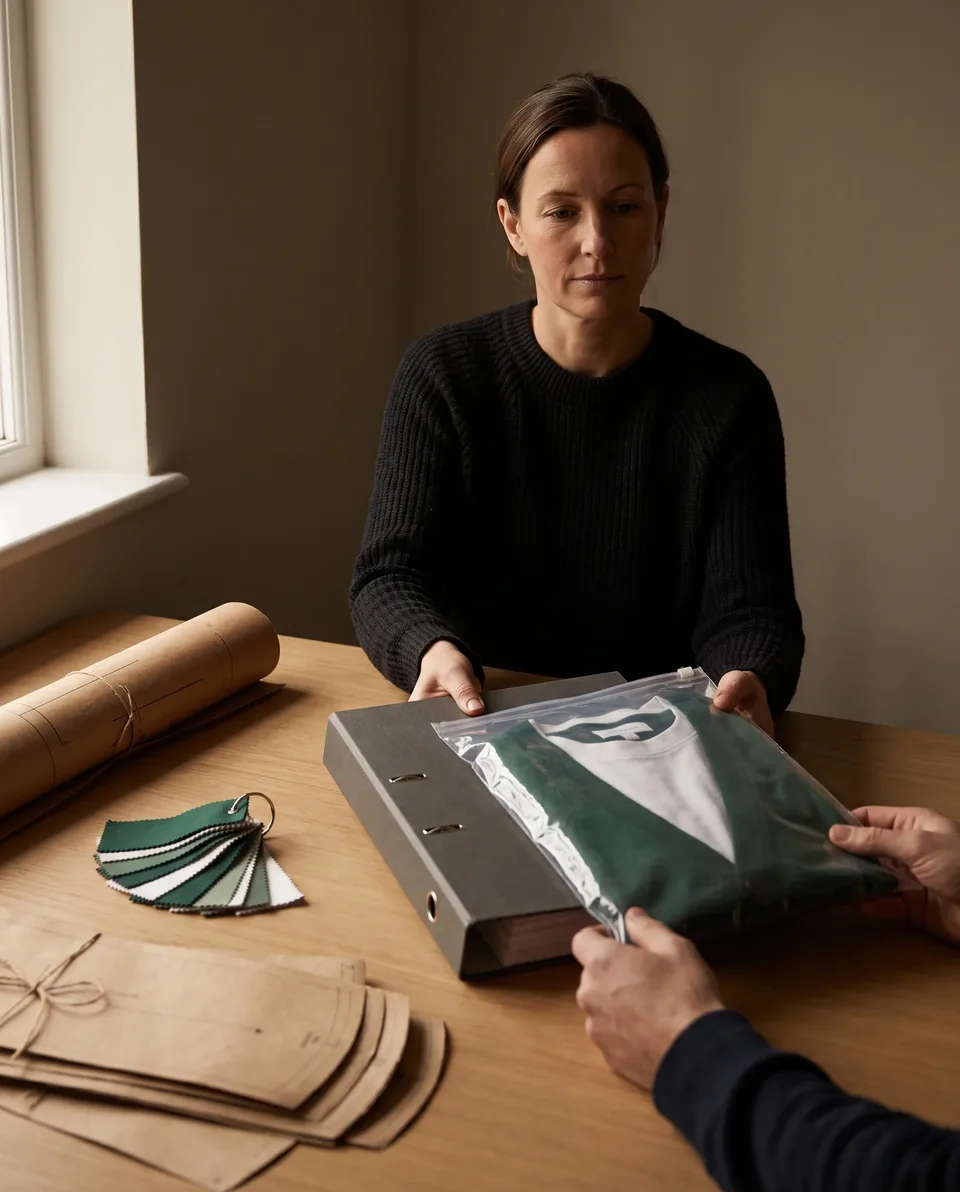
- Cutting diagram, on the jersey block, with zip, pocket line and laminate panels drawn.
- Graded pattern across your size range.
- Fabric-by-panel sheet, laminate or brushed-back for every panel.
- Placement sheet, with decoration, reflective positions and any hem gripper.
- Size chart.
- Seam description, every jacket seam by type.
- The jacket sample in the sample set.
Colour cards are added only for a base fabric new to your set. Each revision log entry names the jacket and the panel changed.
Files, colour parameters and revision log are yours at handoff. Your own line can produce from the pack, or the development manager passes it to cyclingapparelfactory.com, our sister site for bulk production.
We keep the pack on file for your project. When you add a garment next season, or run the jacket again, it starts from the same block, the same pack and the same colour parameters.
Brief Checklist for a Windproof Jacket: Items to Copy Into Your Request
Three items start the clock on the feasibility review:
- Garment list: the jacket, the jersey it goes over, and any warmers.
- Size chart and size range.
- Race formats or the temperature band, 5–10 °C for the jacket.
Add whatever else you have:
- The jersey's spec pack, if we developed it. If we did not, send its size chart and a reference garment: the pattern maker drafts that jersey's riding block and sample first, and the jacket is built and checked on them. You can post the reference garment to our studio or send photos first.
- Men's and women's versions.
- Laminate on the sleeve fronts, or leave the proposal to the pattern maker.
- Number of rear pockets.
- Hem gripper: yes or no.
- Colour standard, artwork, and decoration and reflective positions.
- NDA, if you want one signed before development starts.

You get a first reply within 24 hours on working days. If one of the three starting items is missing, that reply lists what is still needed in one go.
Within 48 hours of a complete brief, the feasibility review tells you:
- Whether the jacket can be developed to your specification.
- The jersey block it starts from and the laminate and fabric proposal.
- The next steps for sampling.
Jerseys, Warmers and the Full Range the Jacket Builds On
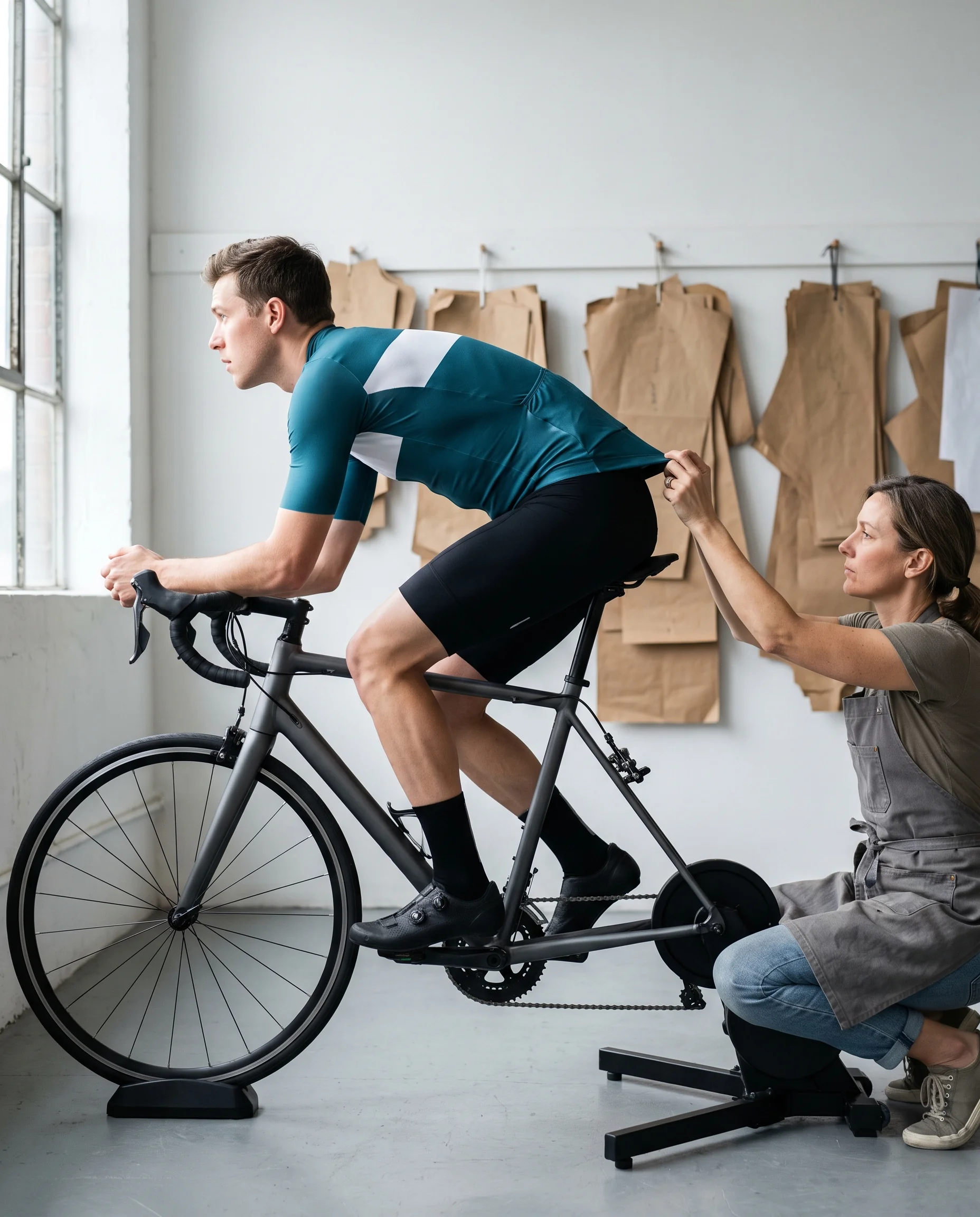
Race fit cycling jersey
the riding block and on-bike check the jacket is drafted and checked on.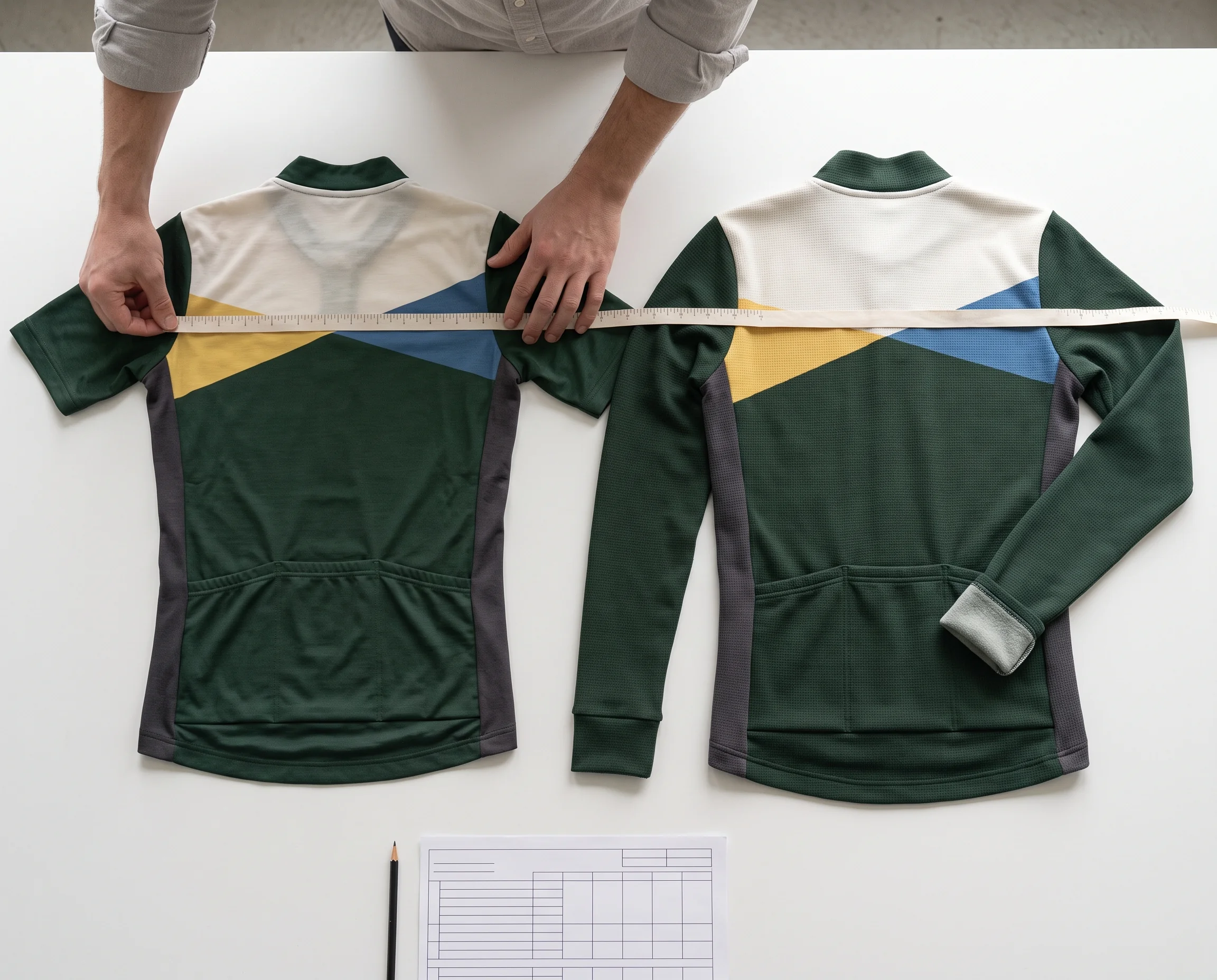
Thermal cycling jersey
the brushed-back jersey for 10–16 °C, and one of the jerseys the jacket can be checked over.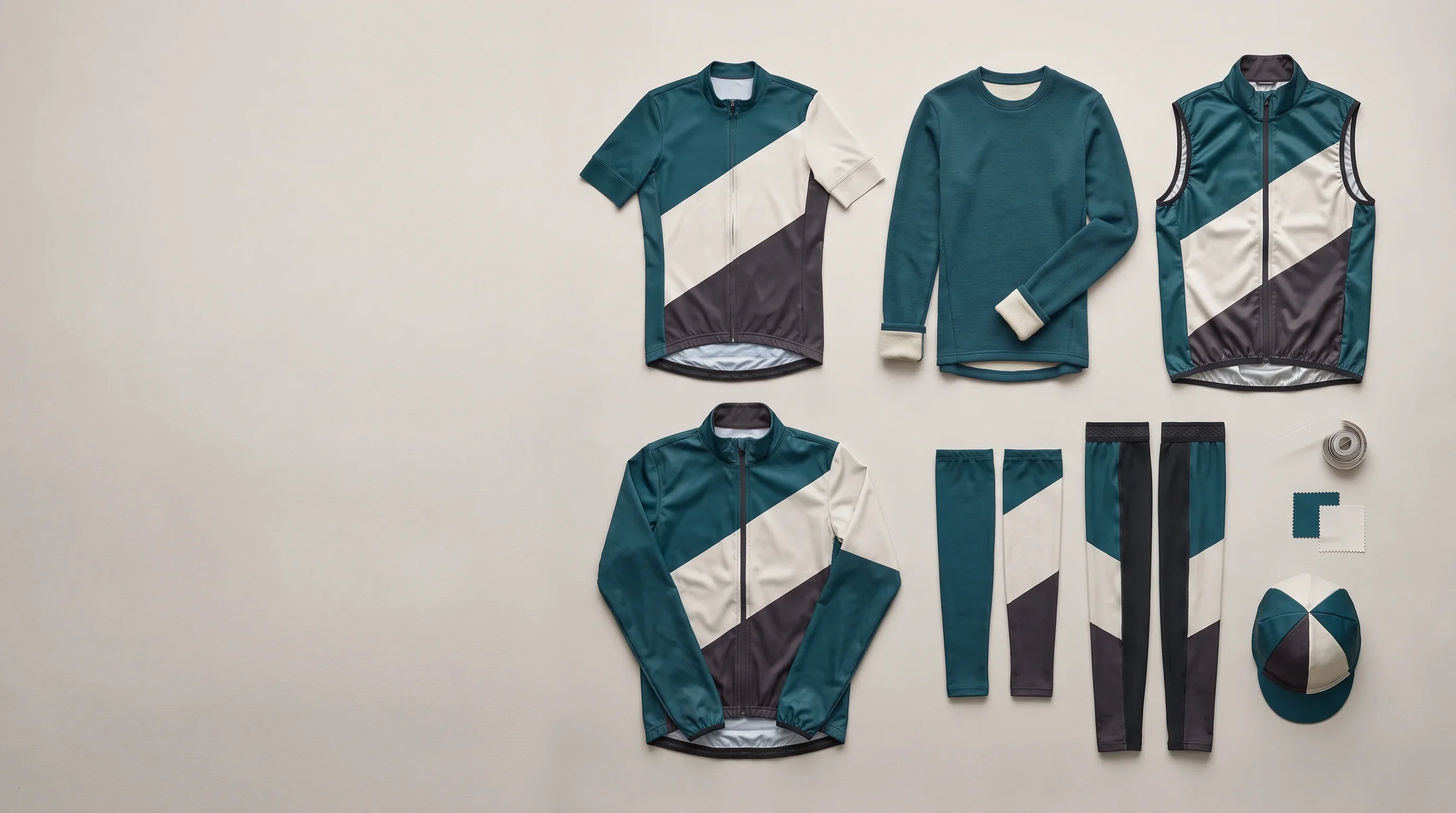
Race cycling apparel range
every garment by temperature band, including the gilet and arm and leg warmers.
Contact
send your brief to the development manager.

Request a Windproof Jacket Feasibility Review
Tell us the jersey your riders race in and the bands on your calendar. The development manager sends back the jacket plan: the block it is drafted on, the laminate panels and the jersey it will be fit-checked over. Request a feasibility review.