Race Kit Decoration and Print Durability on Stretch Fabrics
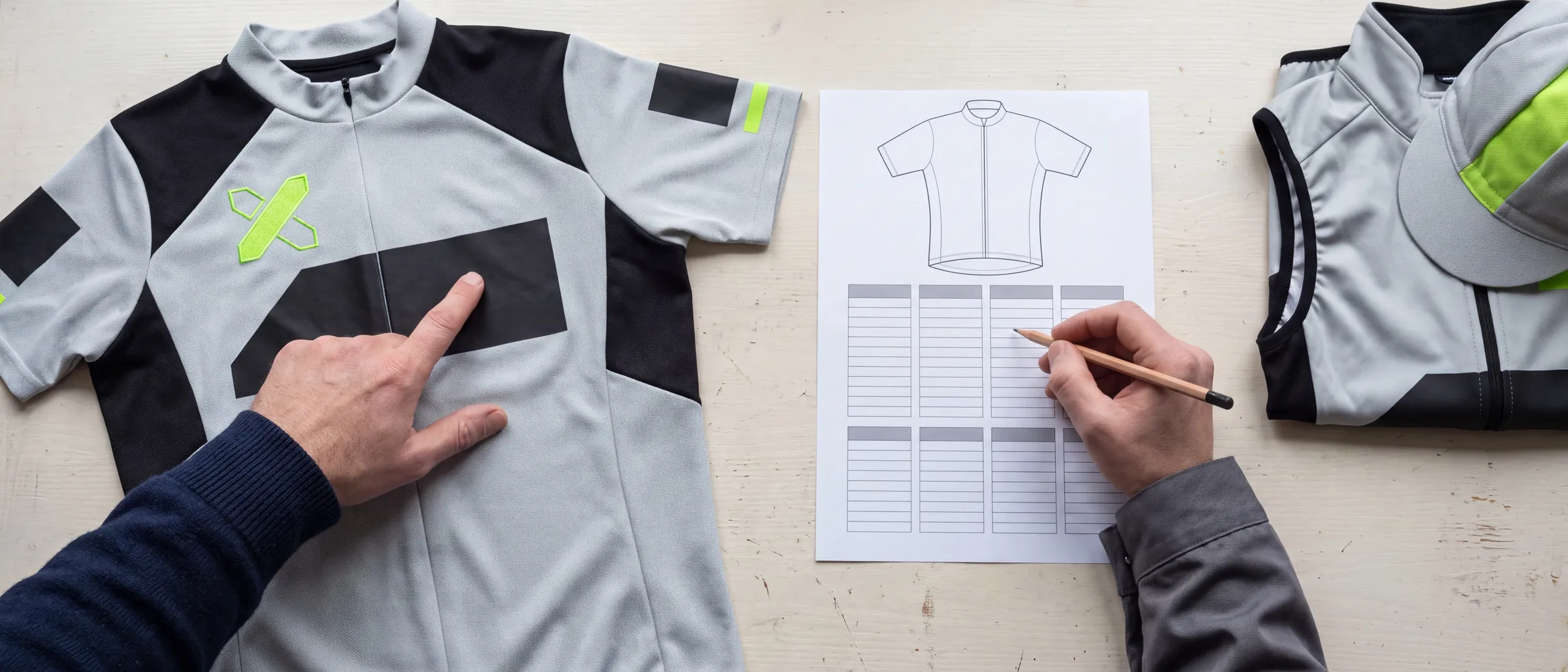
We develop race kit decoration with the jersey, gilet, jacket, warmers and cap, and set it at the strike-off stage. Every logo, sponsor mark, reflective detail and silicone gripper is assigned a method for the panel and base fabric it sits on. It is pulled and washed on that fabric, then recorded on the placement sheet in your spec pack.
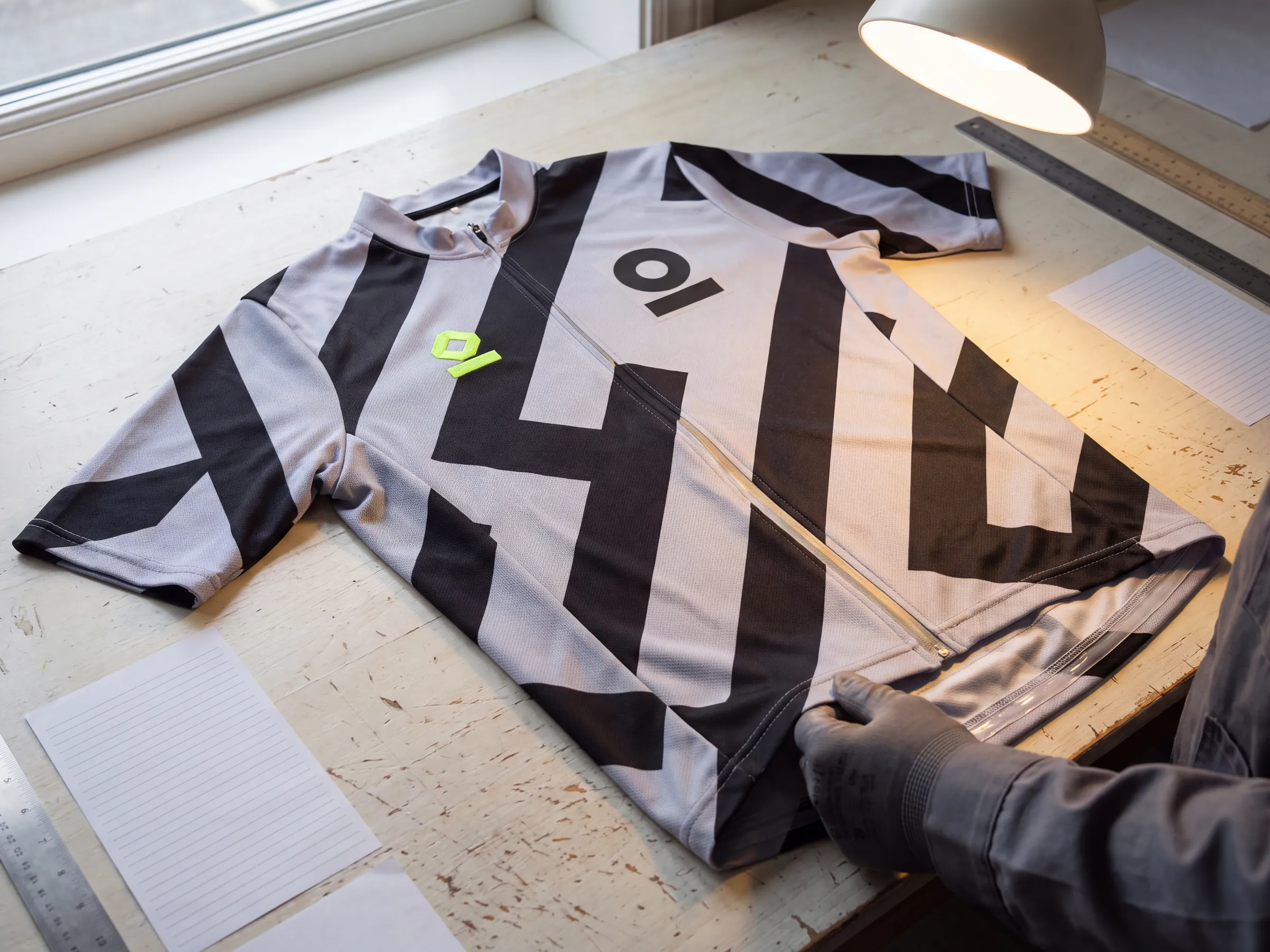
We work with product leads at performance cycling brands, technical directors at national and regional cycling federations and race events, and technical leads at race teams and club race squads.
Our sublimation race kit decoration covers every panel of the set, with heat transfer, embroidery, reflective print or strip and silicone embossing placed where each one holds on the fabric underneath.
Send your artwork, colour standard and garment list. Within 48 hours of a complete brief, the development manager replies with the feasibility review: whether the garments can be developed to your brief, the suggested pattern and fabric direction, and the next sampling steps.
What every decoration we develop with you comes with:
- Five methods: full sublimation, heat transfer, embroidery, reflective print or strip, and silicone embossing.
- A pull check and a wash recheck on the base fabric strike-off before that fabric's colour card is signed.
- One row per decoration on the placement sheet, one of the eight files in your spec pack.
- Samples sent with every decoration applied.
- Fabrics certified to OEKO-TEX® STANDARD 100; development run under ISO 9001:2015.
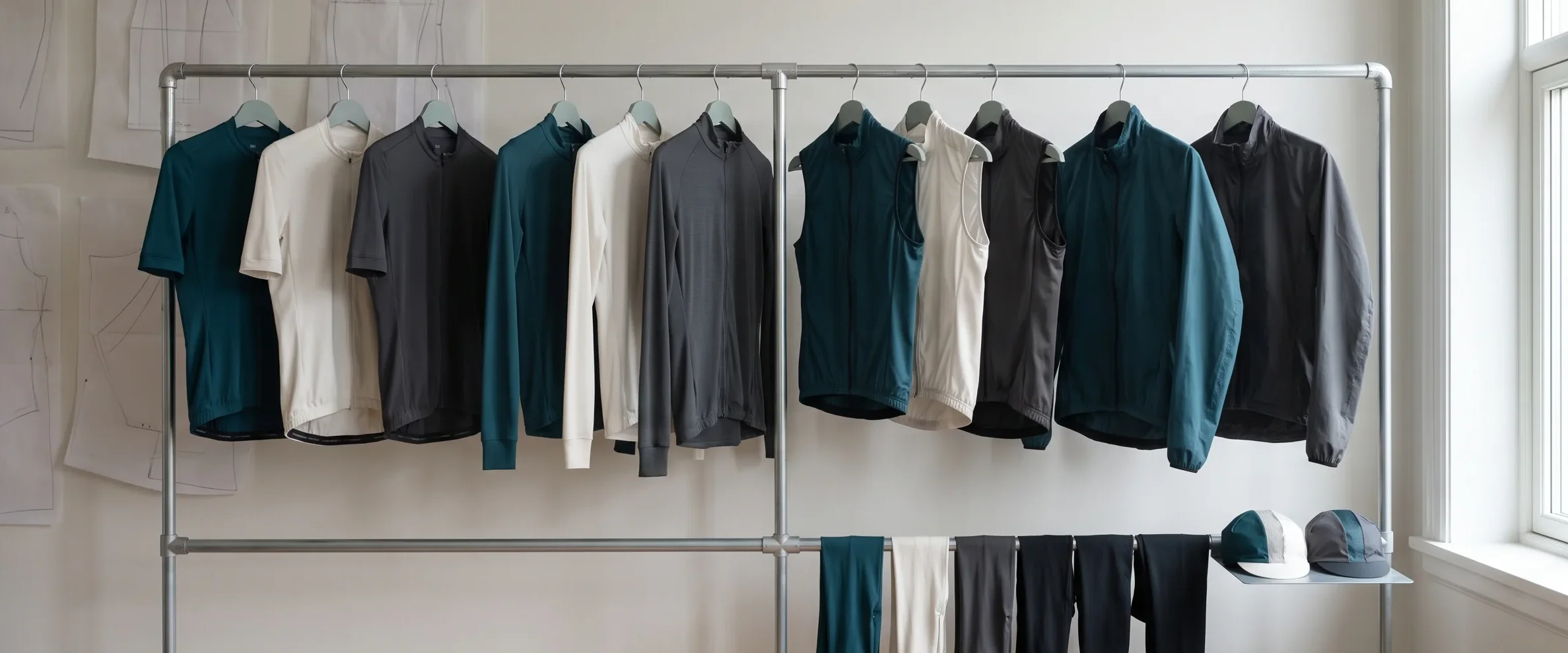
Decoration Work We Take On for Brands, Federations and Teams
Decoration work reaches us from three kinds of buyer. Each one brings a different starting file.
A product lead at a performance cycling brand
arrives with artwork from the brand's designer, a brand colour standard and the list of garments for the season.The work is setting each graphic on the right method for each panel, so the signed sample is what production makes.A technical director at a federation or race event
arrives with sponsor logo files and the sponsors' brand guidelines, which set position, proportion and colour, plus the federation crest.The work is placing every mark where it was agreed, in the agreed colour, on every garment that carries it.A technical lead at a race team or club race squad
arrives with the team's sponsor positions, the team crest, and often last season's jersey as a reference garment.The work is making those marks line up from jersey to gilet, cap and warmers.
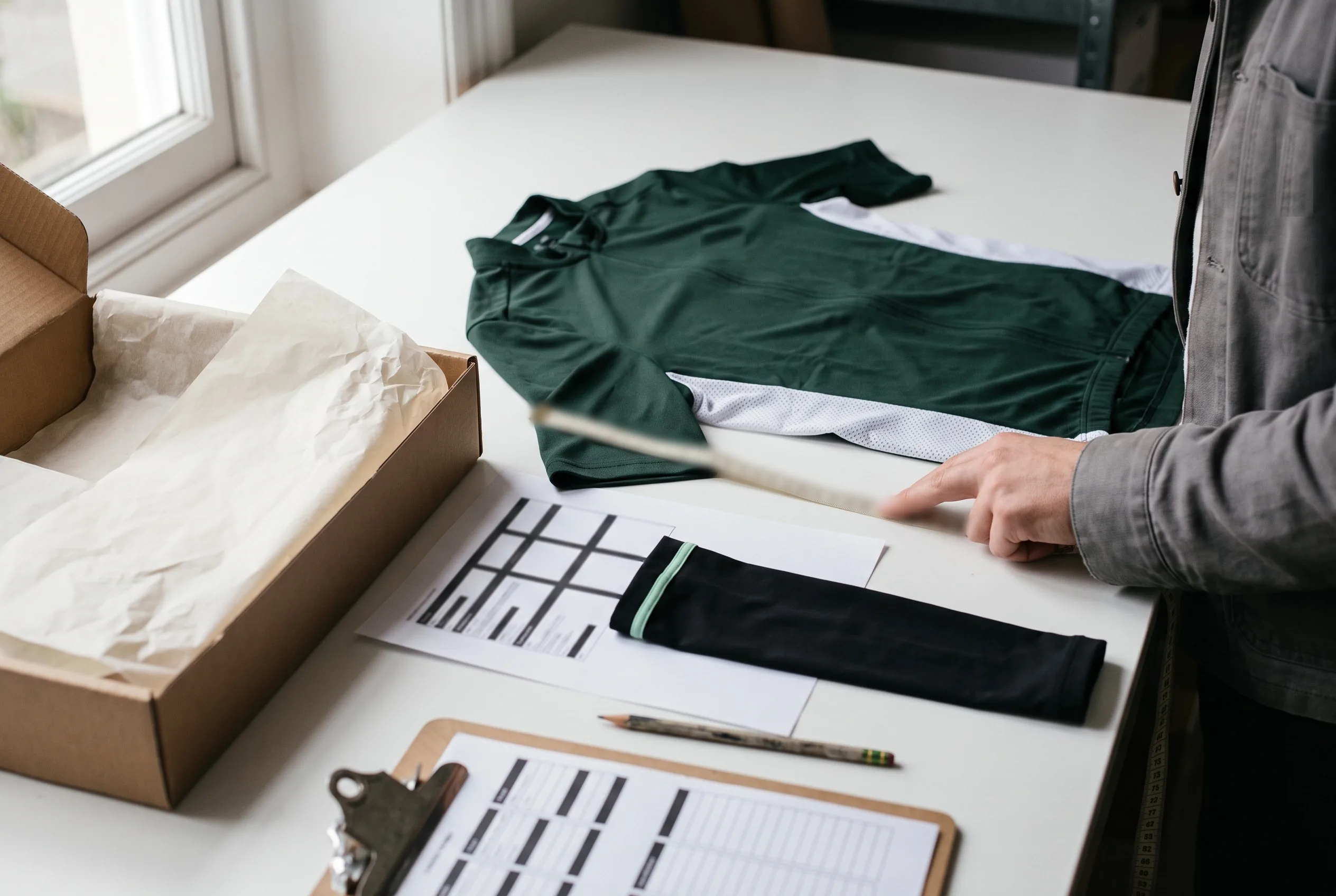
A fourth situation runs across all three: adding a garment to a kit you already race. A team adds a gilet, warmers or a cap to a jersey made elsewhere. In that case we match colour to the colour standard you signed. You can also post the reference jersey to our studio, where the technician sets it beside our strike-off under D65. The new garment matches your signed standard. The jersey made elsewhere uses a base fabric and print process we do not control, so we do not promise an identical match to it.
Decoration by Garment: Available, Conditional and Not Offered
Sublimation race kit decoration runs on all five base fabrics we develop with. Ink goes on the face of the fabric, and on the windproof laminate it goes on the face of the base fabric, before the film is bonded. The other four methods each have a defined place.
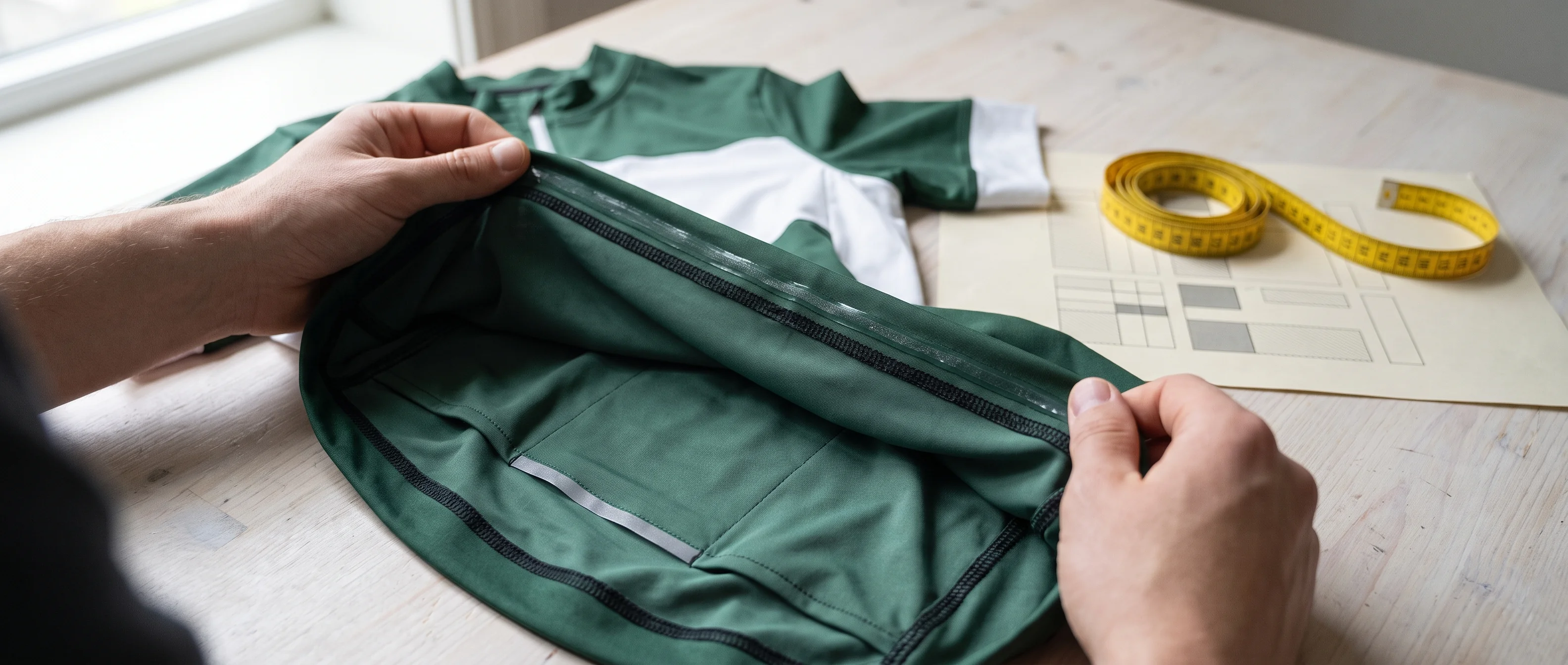
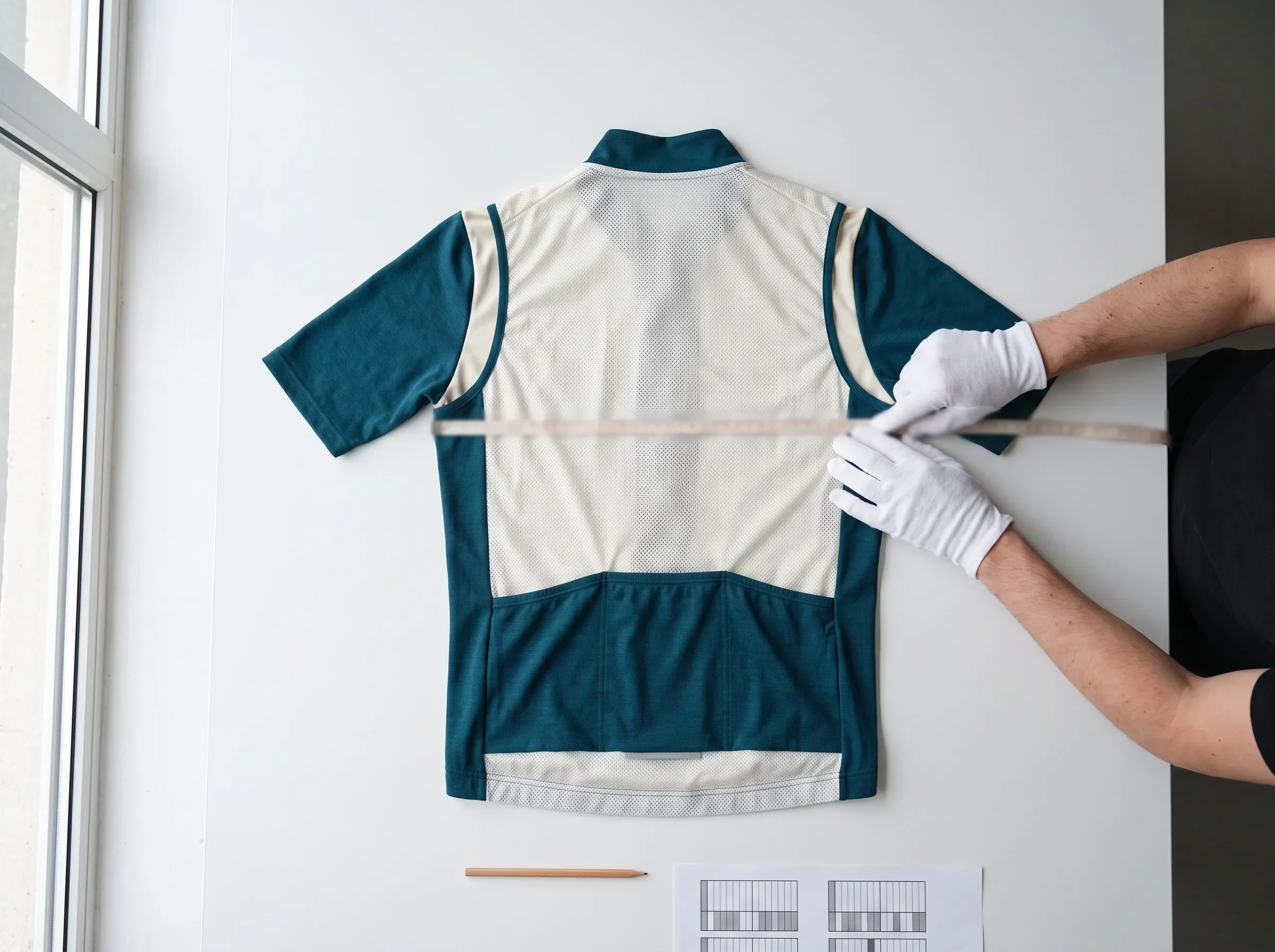
Race fit, aero, hot weather and thermal jerseys
Gilet
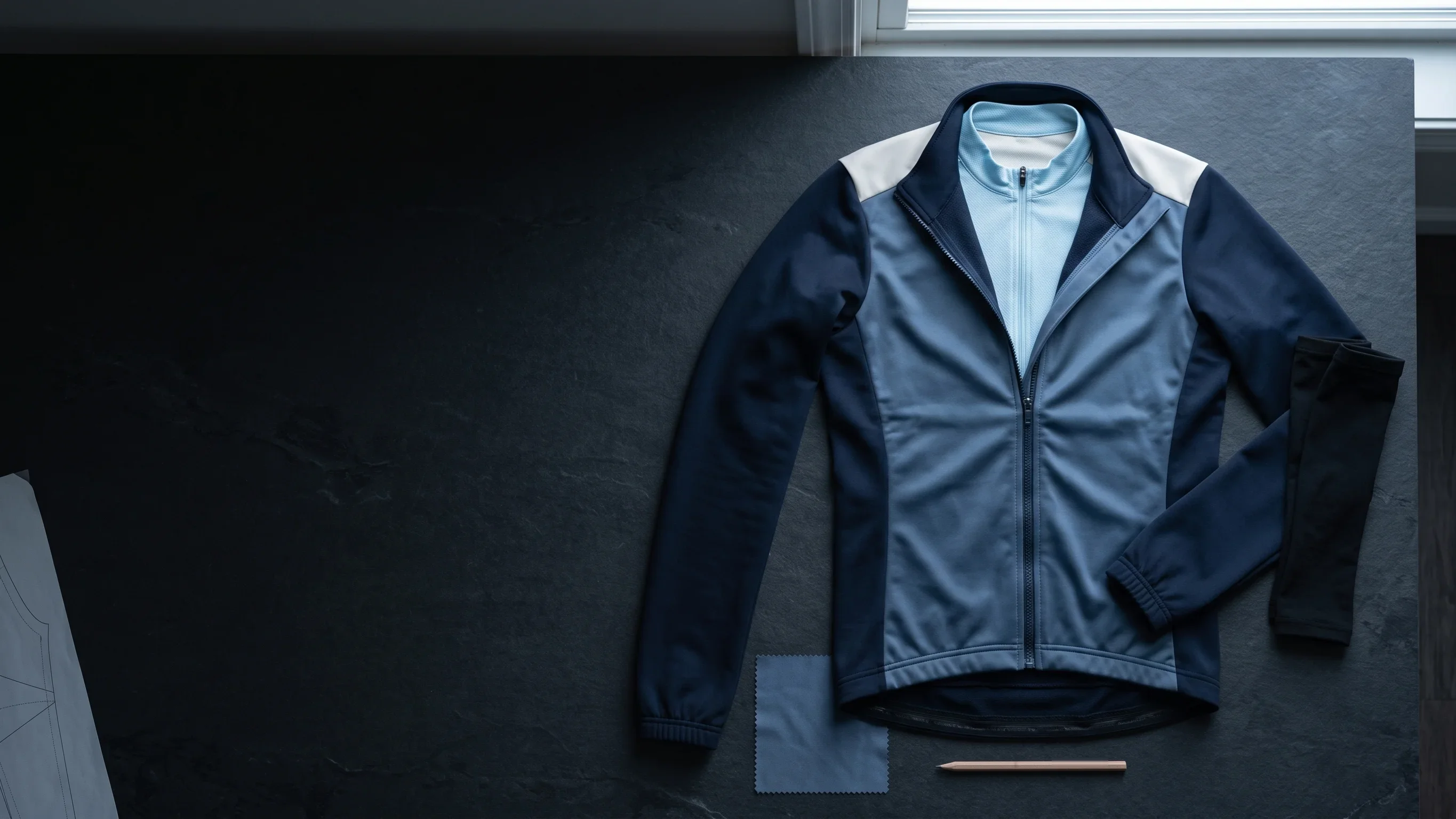
Windproof jacket
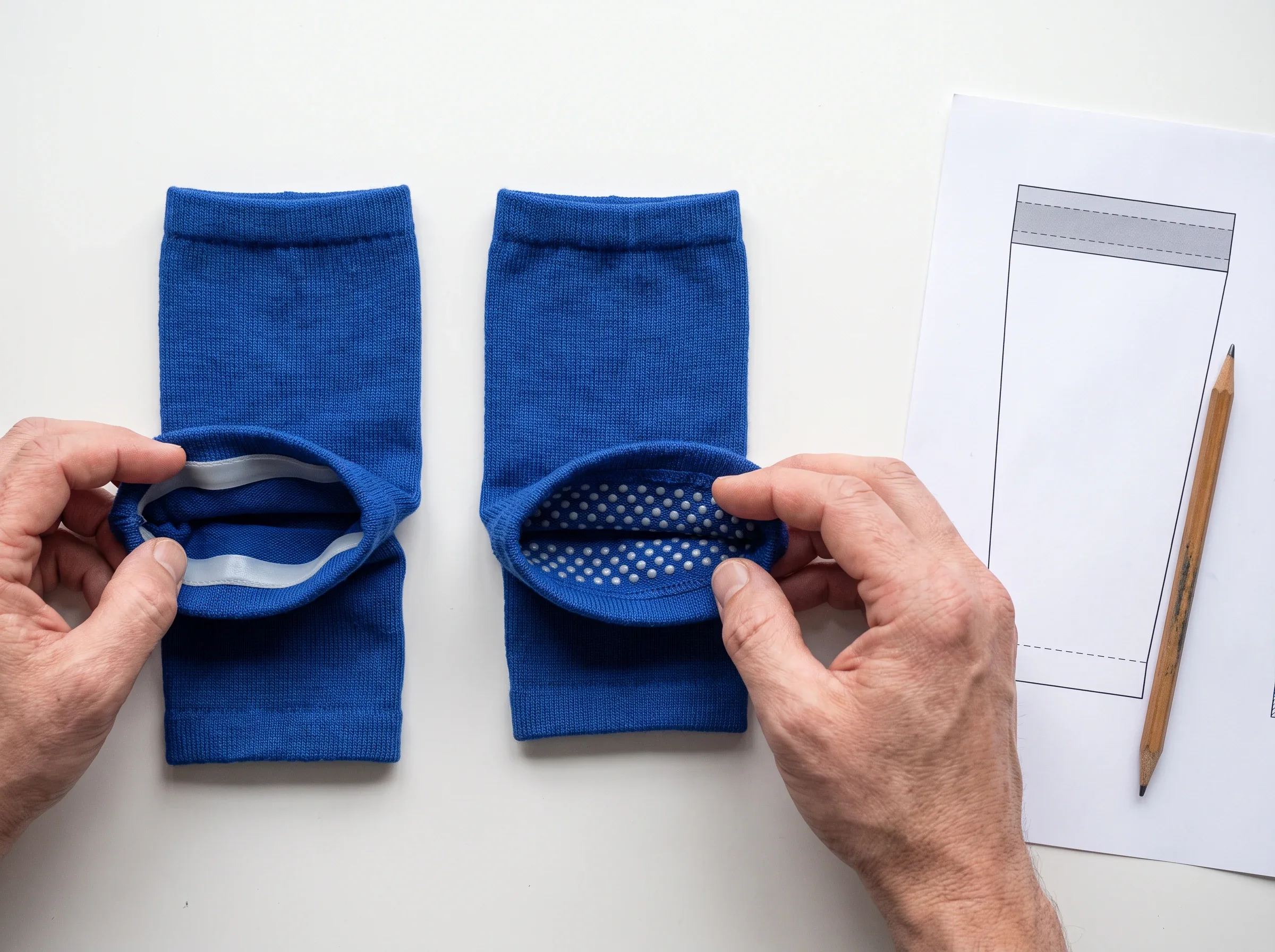
Arm, knee and leg warmers
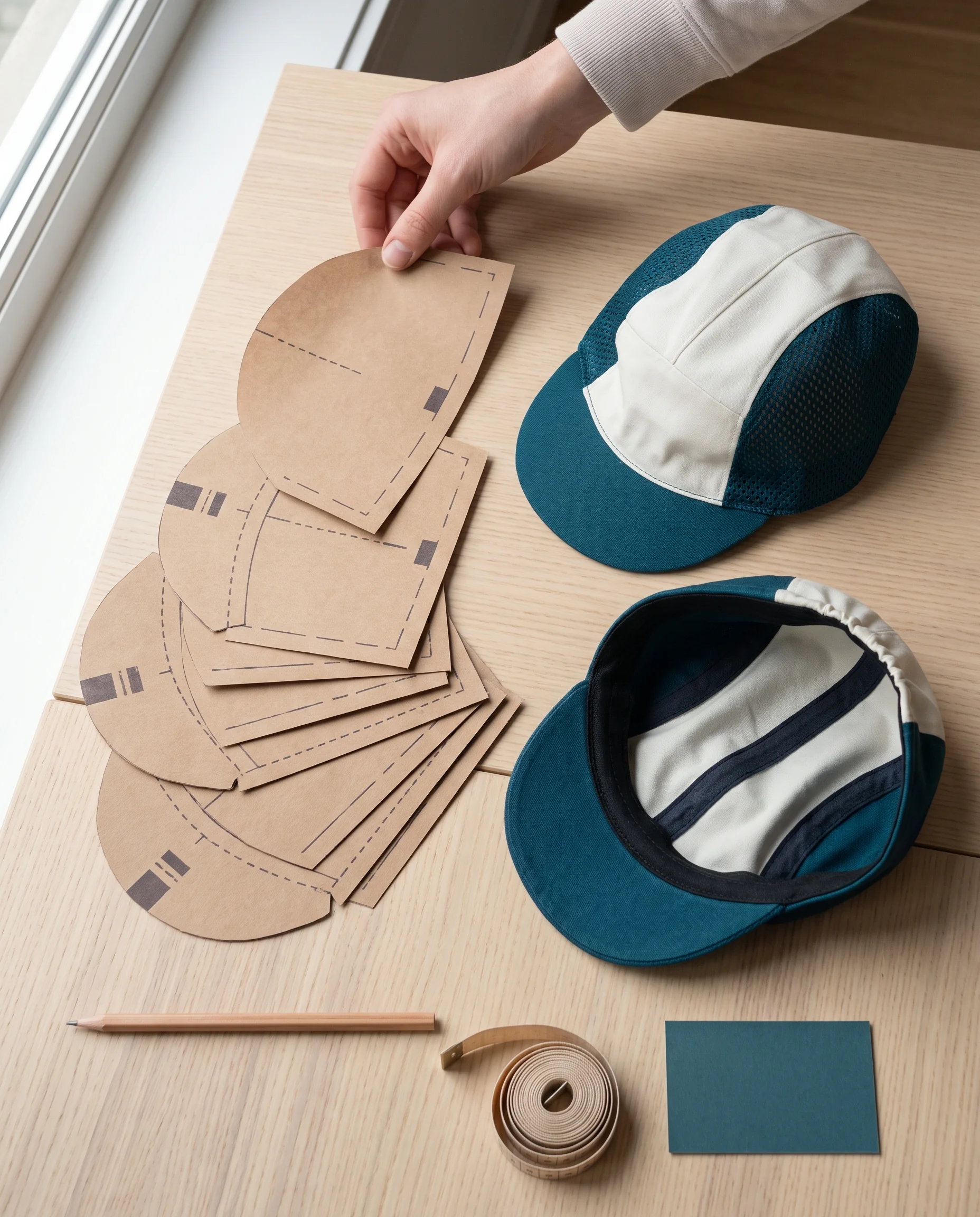
Cycling cap
Embroidery stays off mesh panels, gilets, jackets and warmers because the stitches do not stretch with the fabric and the back of the embroidery would sit against the skin.
The grip choice at the top of a warmer, a sewn silicone band or silicone embossing, is set out on our arm and leg warmers page.
Race Kit Decoration Assigned by Garment, Position and Base Fabric
Every decoration in your kit is assigned a method before any strike-off is printed. The colour and print technician reads your artwork and proposes, mark by mark, which method goes where. You confirm each proposal on the placement sheet.
How the methods are divided:
- Full sublimation carries the graphics and the ground colour on every panel.
- Heat transfer carries small solid-colour marks.
- Reflective detail is reflective print or reflective strip.
- Silicone embossing carries the gripper at a hem, inside a warmer top opening, at the aero sleeve end, and any wording in the silicone.
- Embroidery is used on the cap and for small marks on jersey main body panels.
Heat transfer on lightweight mesh is the placement we review most closely. Mesh is an open-hole knit, and on a race jersey it sits on the back, side and sleeve panels. We take it on under two conditions:
- The mark is small and in one solid colour.
- It sits clear of the shoulders, upper back and upper arms, the directions a jersey is pulled in race position.
When a heat-transfer mark on mesh is too large or falls in a stretch zone, the technician proposes one of three fixes:
- Move the mark to a main body panel.
- Change it to full sublimation.
- Split it into smaller marks.
You confirm the fix, and the placement sheet row records the panel, the method and the fix.
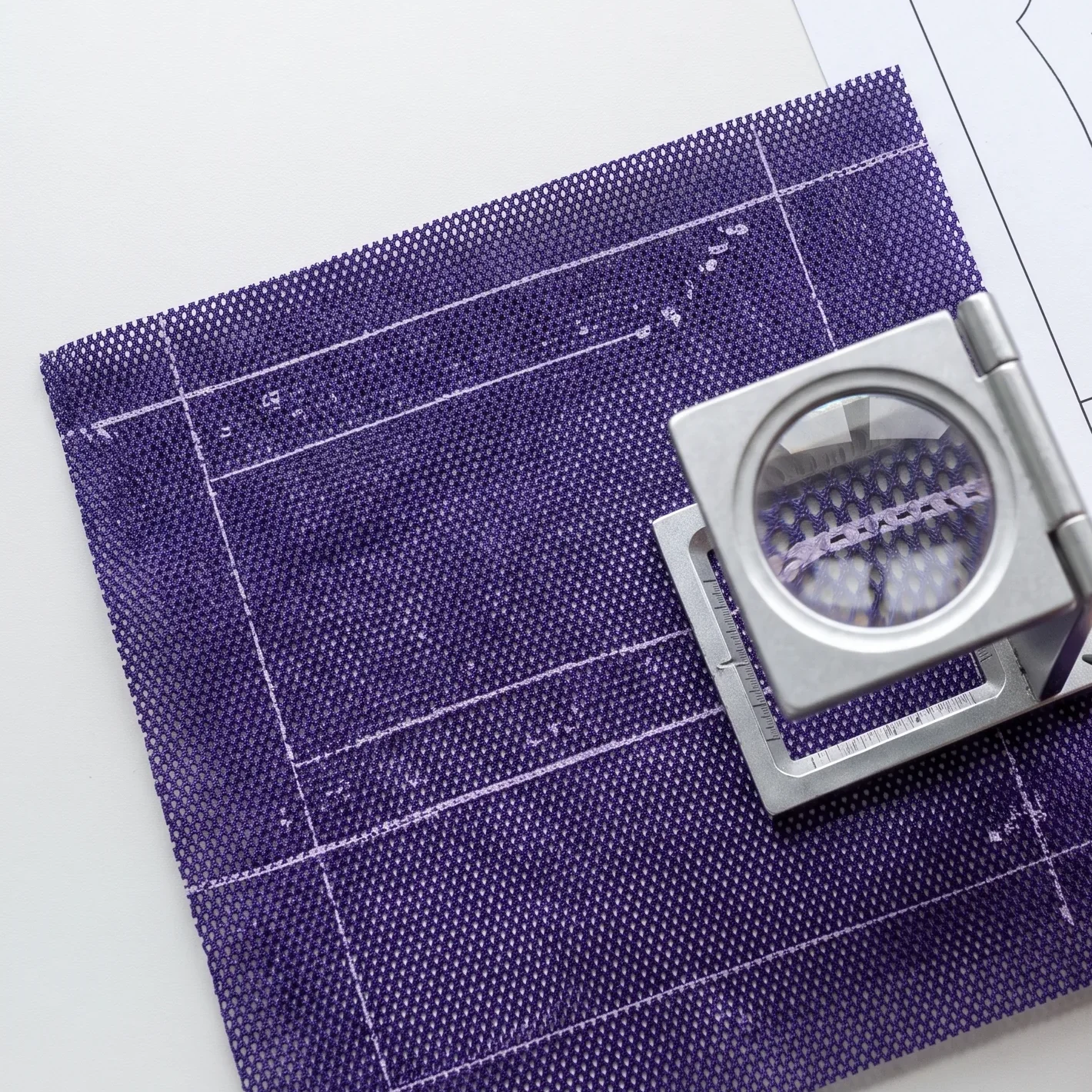
The fabric each panel is cut in comes from the fabric-by-panel sheet; how each base fabric is built is on our race cycling jersey fabrics page. A comparison of methods by fabric tier is published by our sister site cyclingapparelfactory.com on its printing methods page.
Print Durability Pull Check on Each Base Fabric's Strike-Off
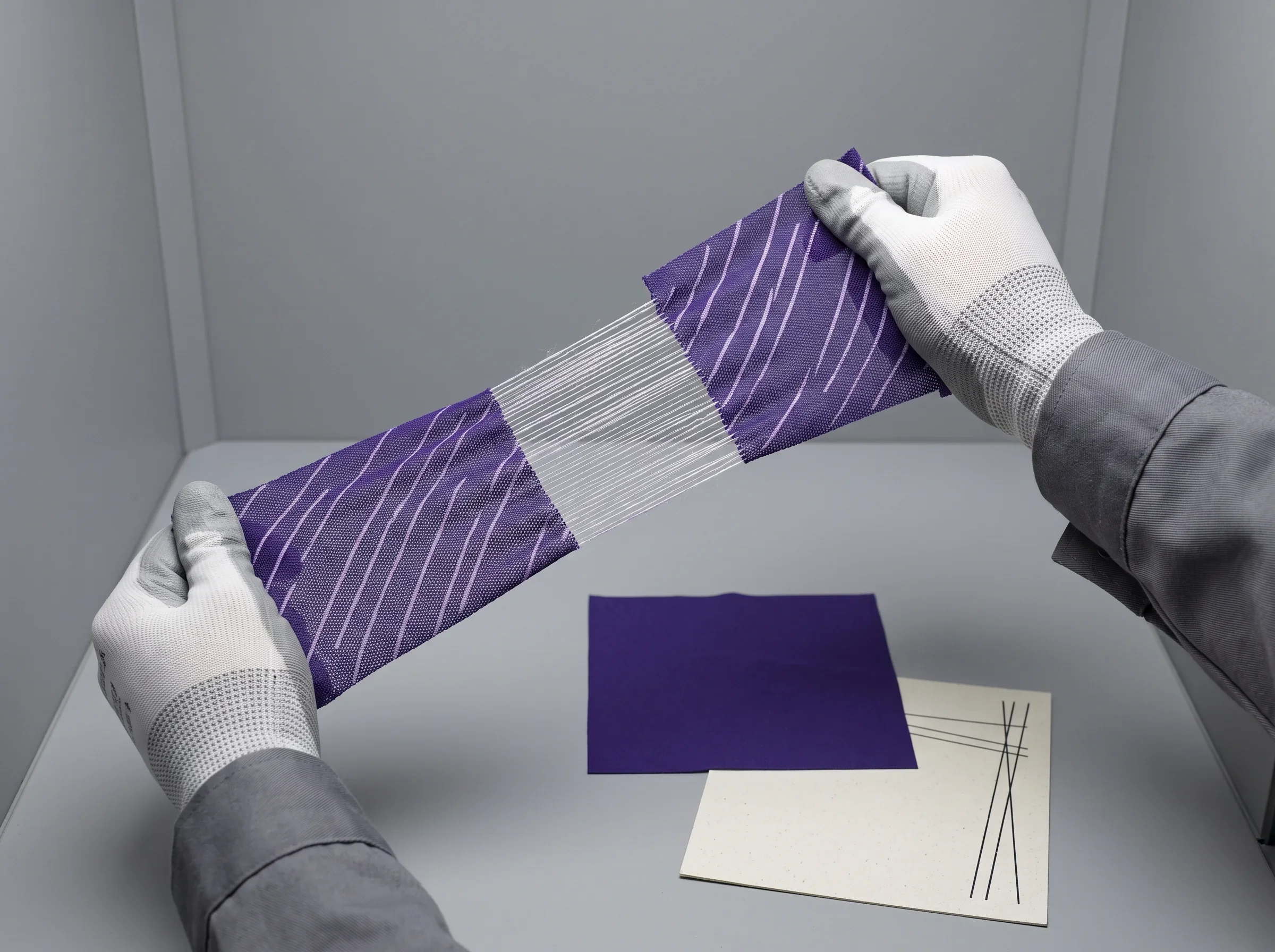
Mesh, main body, brushed-back thermal, textured-surface knit and windproof laminate each get their own decorated strike-off. The pull check is made on the strike-off the colour and print technician prints for each base fabric in your set. That is the same piece used to match colour under D65. Every heat-transfer mark, reflective print or strip, silicone embossing and embroidered mark in your artwork is applied to the strike-off of the fabric it will sit on.
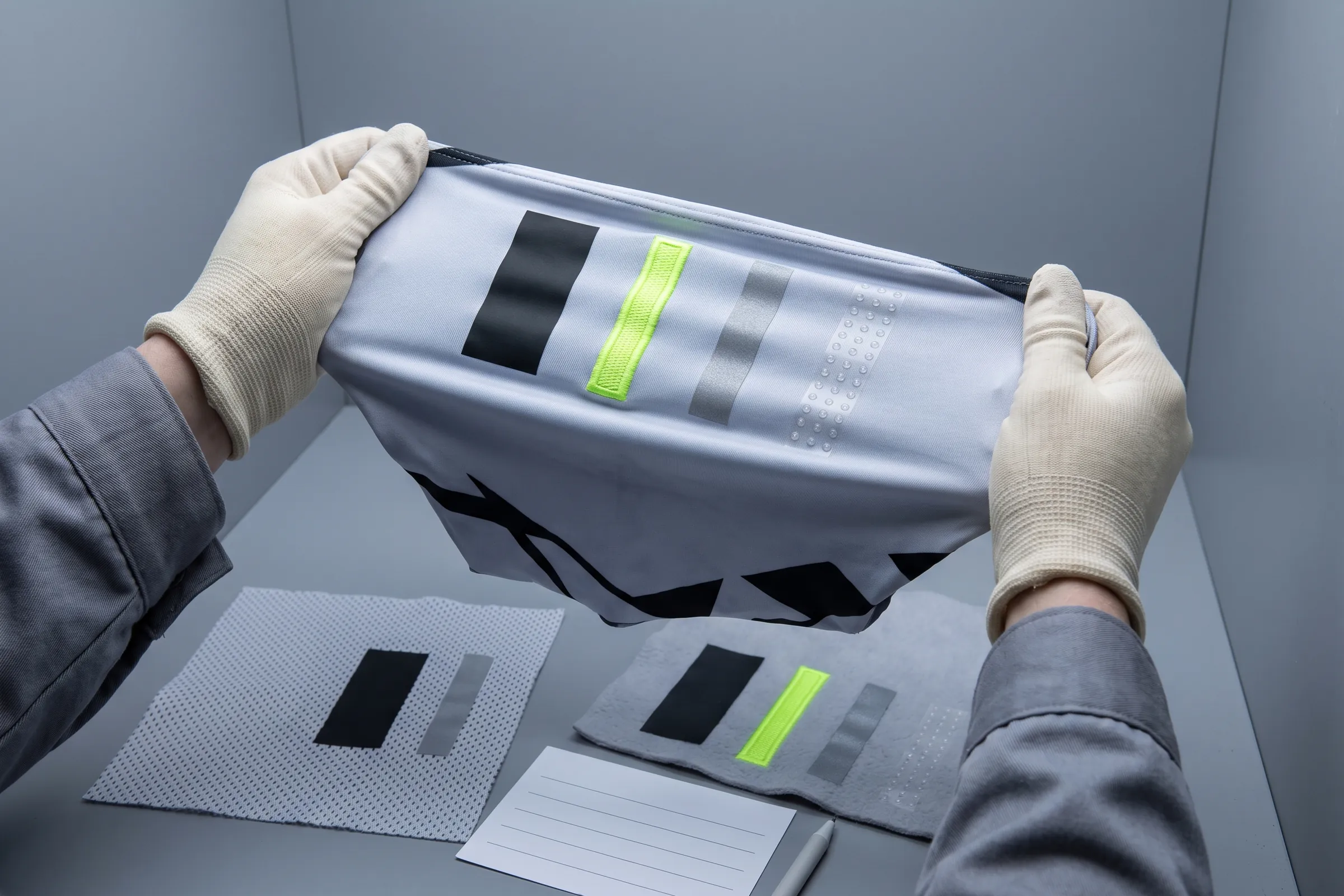
How the check runs:
- The technician applies each decoration to that base fabric's strike-off, in the method set on the placement sheet.
- The technician stretches the decorated strike-off by hand in the three directions a jersey is pulled in race position: across the shoulders, across the upper back and along the upper arms.
- On each pull the technician looks for four things: edges lifting, cracking, whitening and delamination.
- A decoration that shows any of them gets a fix proposed by the technician: make the mark smaller or split it, move it, or change the method.
- You confirm the fix, and only the confirmed version goes onto the placement sheet.
- The result is written in that decoration's check result column on the placement sheet, and the technician signs it.
The pull check comes before the colour card. A base fabric's colour card is signed only after every decoration on that fabric has passed both the pull check and the wash recheck below. A base fabric with no check result on the sheet gets no colour card.
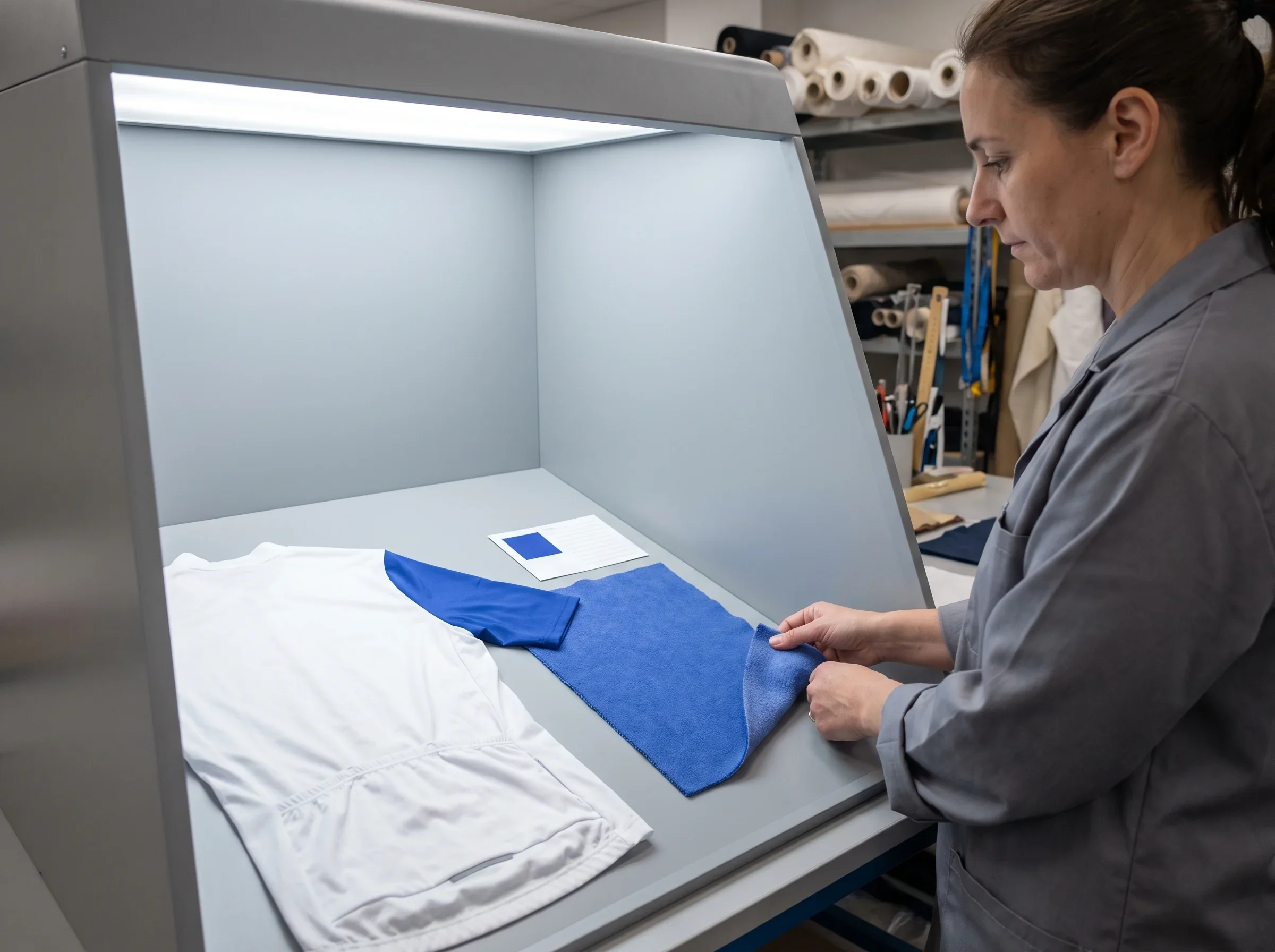
Full sublimation has its own stretch check on mesh and main body, for white base showing through the print, along with a fine-line check on mesh. Both run at the same point, before the card is signed, and are covered on our hot weather cycling jersey page.
What this gives you: when a colour card reaches you, the decoration on that fabric has already been pulled, washed and signed off. Read the placement sheet beside the card, and each decoration on that fabric shows its check result and the technician's signature.
Wash Recheck to the Care Instructions on Your Label
After the pull check, the same decorated strike-off is washed and dried following the care instructions you will print on the garment's care label. The technician then runs the pull check again on the washed piece, looking for the same four things: lifting, cracking, whitening and delamination.
Many briefs reach us before the care label has been decided. In that case:
- The technician looks at every decoration method in your kit and identifies the most delicate one.
- The technician proposes care instructions written for that method, so every decoration on the garment is washed within what its most delicate method allows.
- You confirm the care instructions, or change them.
- The strike-off is washed to the instructions you confirmed, then pull-checked again.
- The confirmed care instructions are written into the notes of the placement sheet.
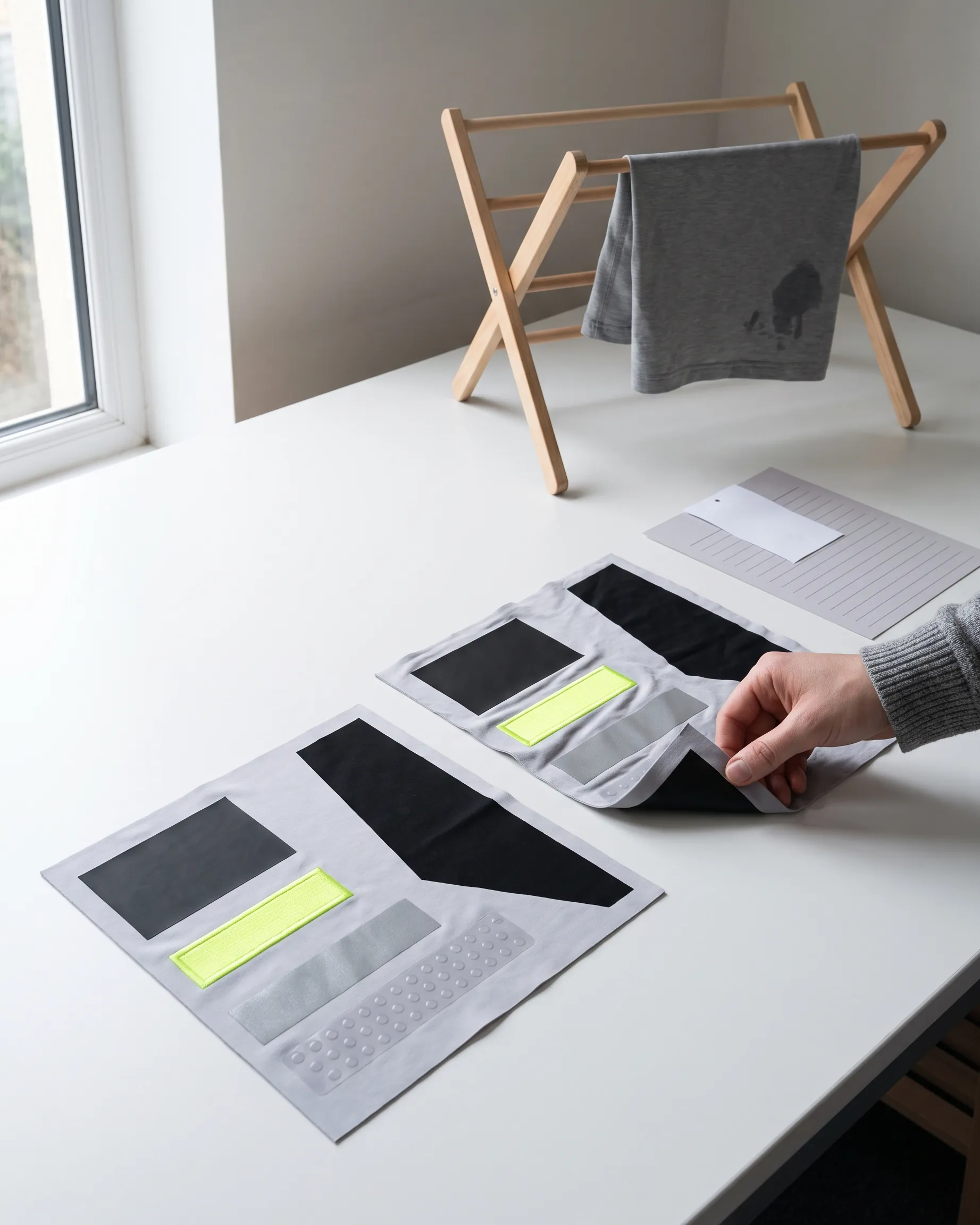
When a decoration fails the recheck, the technician proposes a fix from the same set as the pull check, with one addition:
- Make the mark smaller or split it.
- Move it.
- Change the method.
- Amend the proposed care instructions.
After the fix, the strike-off is washed again and checked again. You confirm the result before it goes onto the placement sheet.
One Placement Sheet per Garment, Drawn From the Jersey
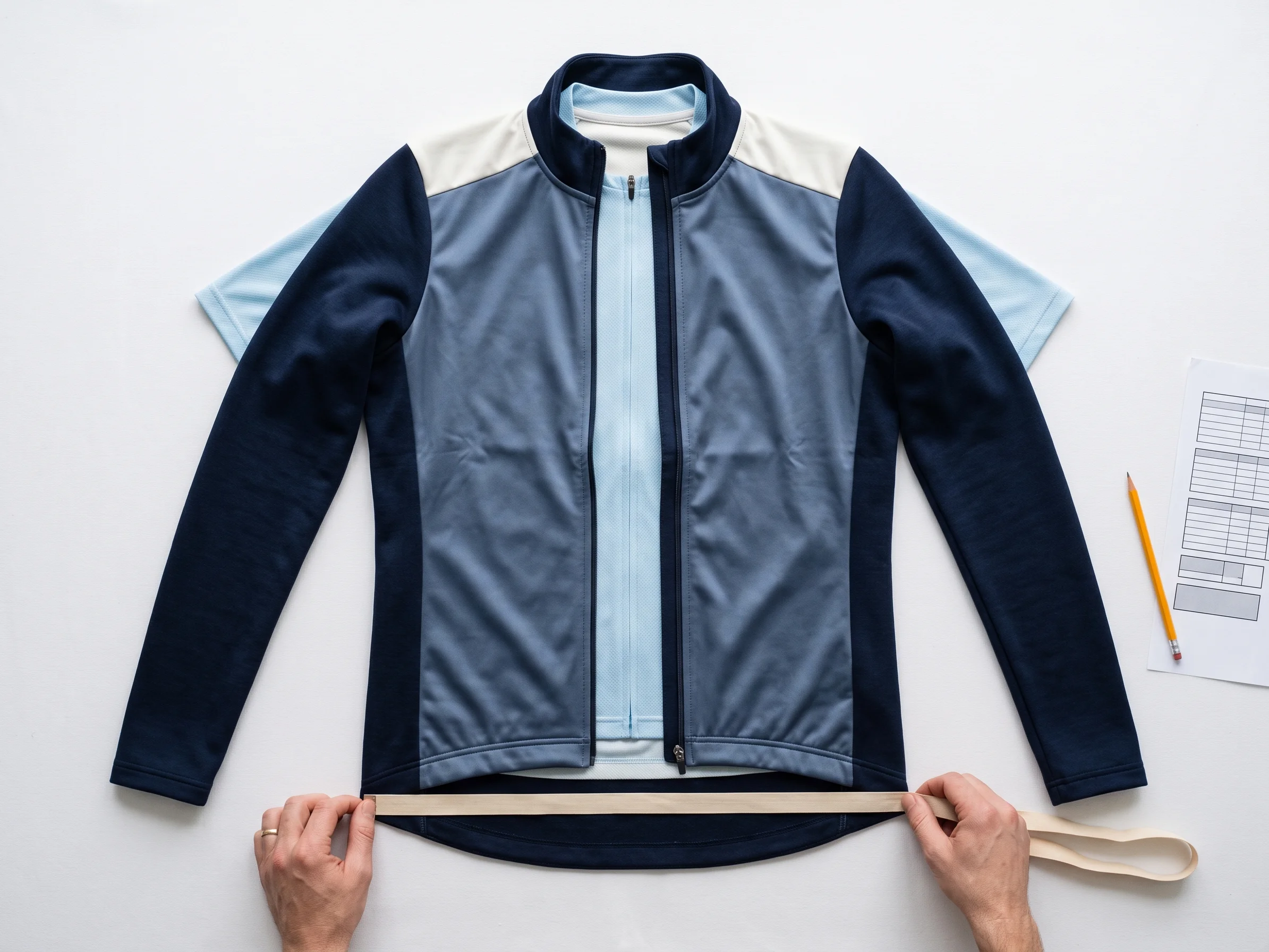
Each garment in your set has its own placement sheet. A garment added to the set adds its own placement sheet to the spec pack.
The jersey's sheet is drawn first. The other garments are drawn against it:
- Gilet:drawn against the jersey's sheet, with the sponsor positions you choose carried over. The detail is in the next section.
- Cap:drawn against the jersey's sheet, with the cap's own positions on the front, side and back panels and the brim.
- Arm, knee and leg warmers:drawn against the jersey's sheet, with sublimation, reflective and silicone positions.
- Windproof jacket:has its own artwork and reflective positions on its own sheet. The jersey's sponsor positions are not carried over to the jacket.
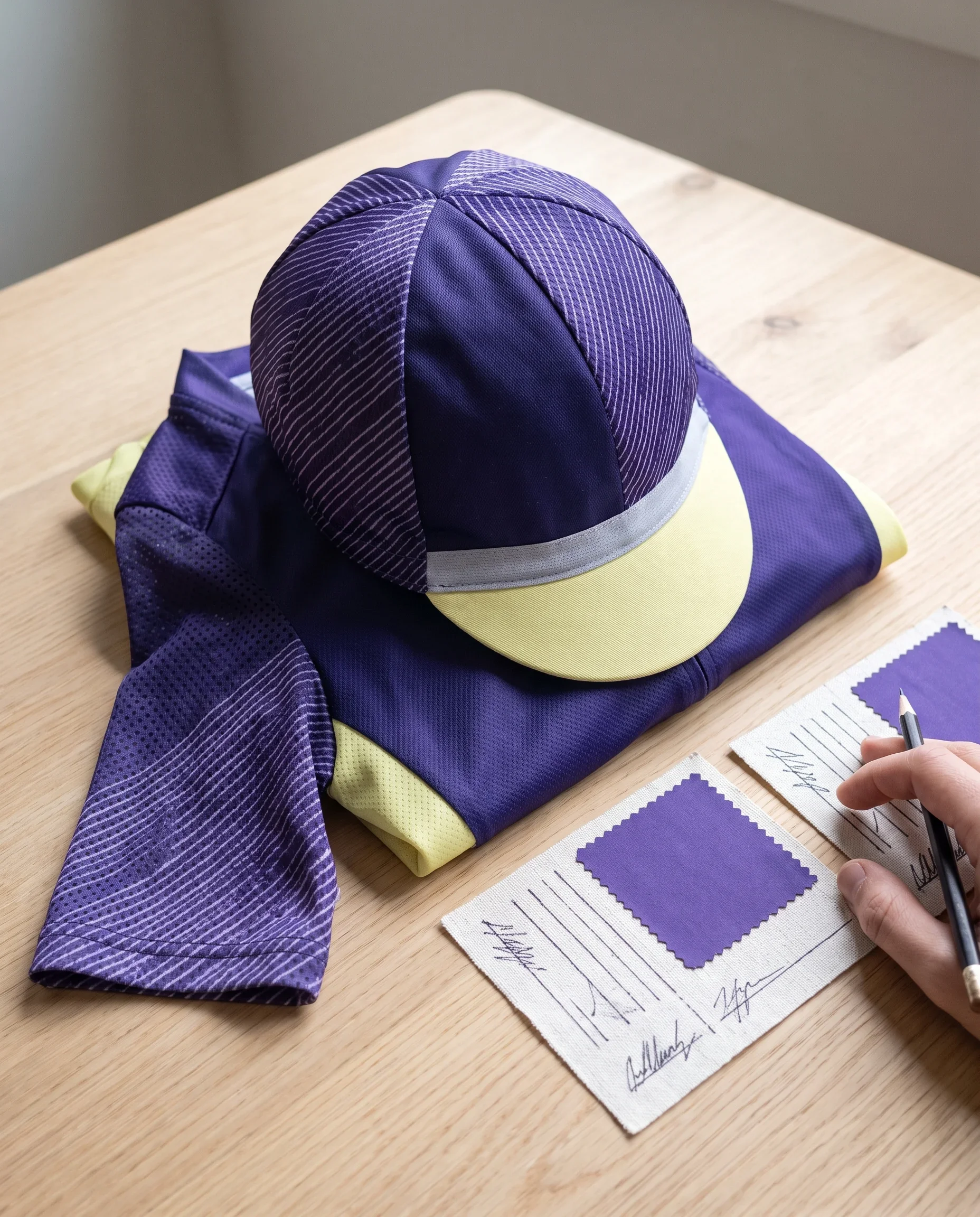
Colour runs through the set on one colour standard. Every base fabric is matched under D65 and gets one signed colour card, so cycling kit decoration in one colour is matched to the same standard on every fabric it is printed on. Cards are counted by base fabric, so a garment in a fabric the set already has needs no new card.
When the jersey was developed elsewhere, the chain starts from your signed colour standard and the reference jersey you send. Each garment we add is drawn and matched from those.
Sponsor Marks Carried From Jersey to Gilet, Confirmed One by One
On cool race days the gilet is the garment on the outside, worn over the jersey, so the sponsor positions on it carry the visibility of the kit.
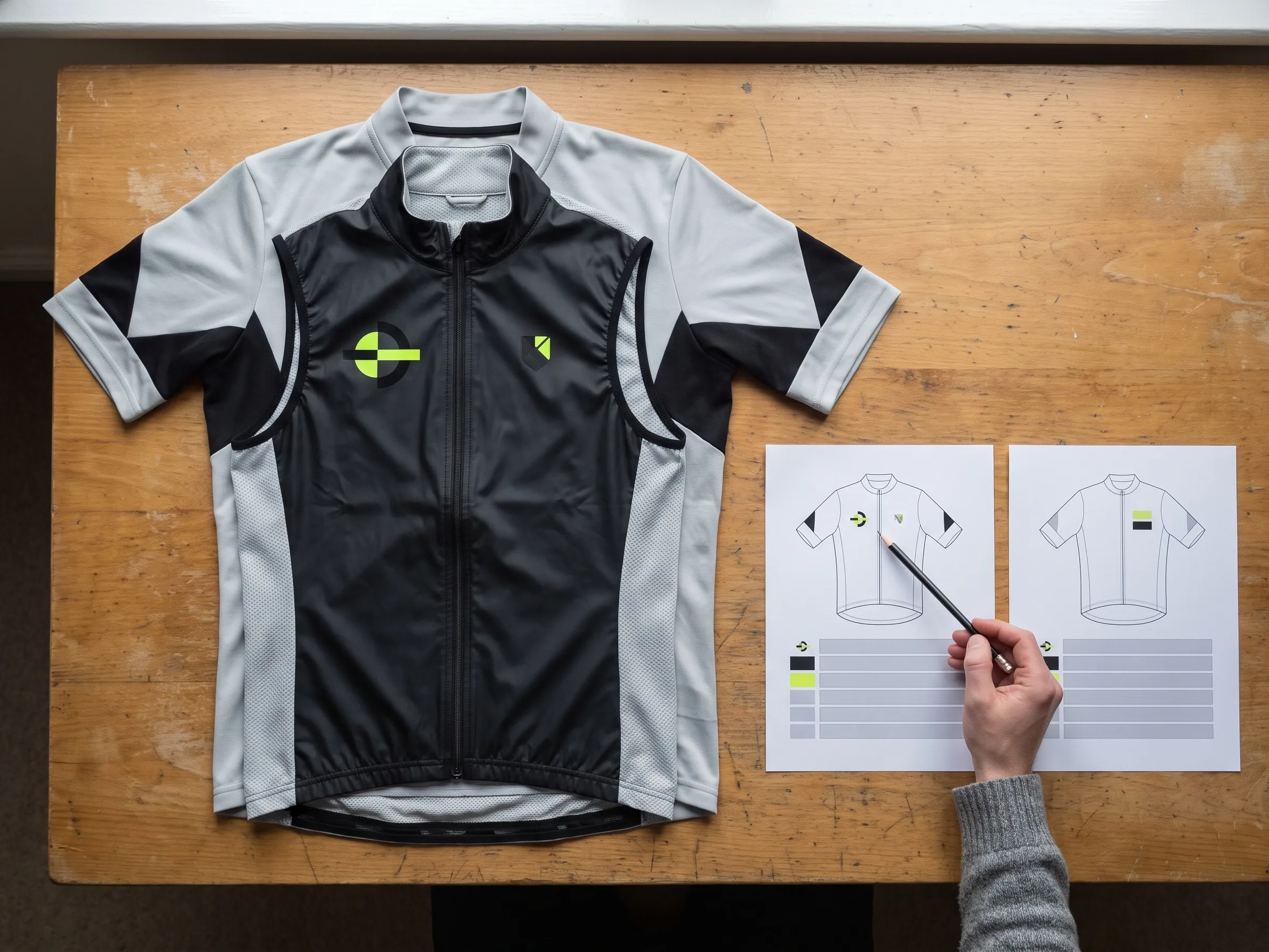
The gilet's placement sheet is drawn with the jersey's sheet beside it. You go through the jersey's sponsor positions and team crest one at a time and decide for each:
- Whether it is carried onto the gilet.
- Where it sits on the gilet front or back.
- Which method is used, from full sublimation, heat transfer, reflective print or strip and silicone embossing.
Every carried position on the gilet sheet names the jersey position it comes from. A logo on the gilet's left front, for example, is marked as the chest logo from the jersey. Nothing is carried over by default. A jersey position you do not confirm for the gilet stays off the gilet.
How you check it: put the decorated gilet sample on over the decorated jersey sample, then read each mark from the front and the back against the two placement sheets.


Send Your Artwork and Sponsor Files for a Decoration Review
Send your artwork, sponsor logo files and the garments they go on. The technician's list of every mark that needs a fix comes back before any strike-off is printed.
Artwork, Colour Standard and Care Instructions to Send Us
The 48-hour clock starts when three items are in:

Your garment list.
Your size chart and size range.
Your race format or temperature band.
The development manager answers within 24 hours on working days, and if a starting item is missing, that answer lists everything missing at once.
For the decoration work, the person who prepares your artwork can add:
- Artwork files for every garment, with sponsor logos and the team or federation crest.
- Sponsor brand guidelines, where a sponsor sets position, proportion or colour.
- Your colour standard, the one you will sign colour against.
- The care instructions you plan to print on the label, if you already have them.
- A reference garment, posted to our studio, or photos and its current specification first.
- Your spec pack, if we developed the garments before.
Fixes to Your Artwork Listed Before Sampling Starts
When your artwork arrives, the colour and print technician reads it against the garment list and the fabric-by-panel sheet before any strike-off is printed. Every mark that cannot be made as drawn goes onto one list, each with a proposed fix. The limits are the conditions in the decoration table above.
How the list is handled:
- The technician sends the full list through the development manager in one go, with a fix beside each item.
- The person who prepares your artwork revises the files to the fixes, or proposes another.
- Your technical lead confirms each fix.
- Each confirmed fix is written onto the placement sheet row for that mark: the new size, position or method.
The list goes to both people on your side.
Fine lines and small text on mesh go through the same list, checked mark by mark on the mesh strike-off.

Decoration Files and Samples Delivered to You
The decoration work moves through one sequence:
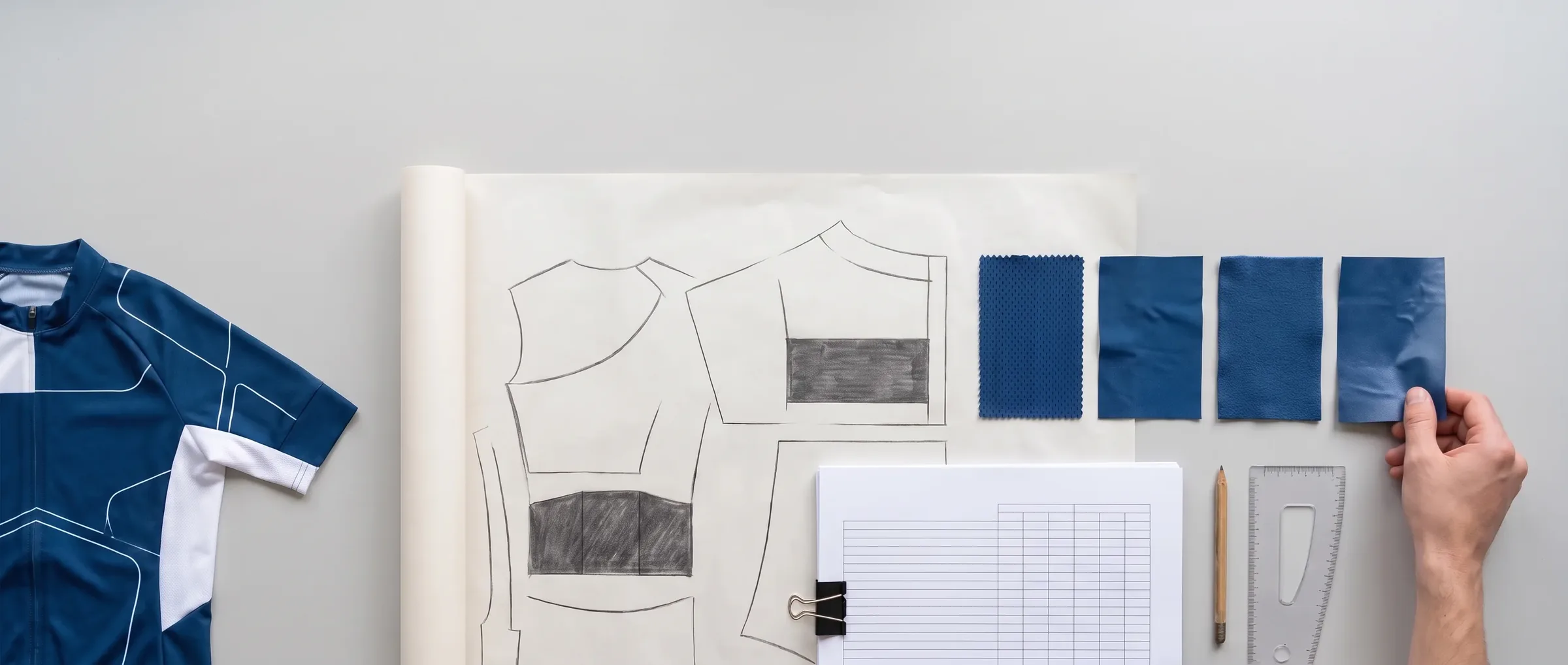
- Artwork review and the list of fixes, confirmed by you.
- Method assigned to every mark, written on each garment's placement sheet.
- Decoration applied to each base fabric's strike-off, then pull-checked and wash-rechecked.
- Colour card signed for each base fabric once its checks pass.
- Samples made with every decoration applied, and sent to you.
- Placement sheets issued with the spec pack.
What you receive:
- A placement sheet for every garment in the set.
- One signed colour card for each base fabric, with its colour parameters.
- A decorated sample of every garment.
- The rest of the eight-file spec pack: cutting diagrams, graded patterns, fabric by panel, size chart, seam description and the sample set.
The Placement Sheet Row, the Signatures and the Decorated Sample
Every decoration on every garment has one row on the placement sheet. A row carries seven entries:
- GarmentThe garment the decoration sits on
- PositionWhere on the garment, such as chest, left sleeve, gilet back or brim underside
- Panel and base fabricThe cut panel it falls on and the base fabric of that panel
- Method Full sublimation, heat transfer, embroidery, reflective print or strip, or silicone embossing
- Colour cardThe signed card the decoration is matched to
- Check resultThe pull check and wash recheck result, signed by the technician
- Care noteThe care instructions the decoration was washed to
Three signatures sit on the sheet:
- The colour and print technician signs the check result of every decoration.
- The development manager issues the placement sheet with the spec pack.
- You confirm the placement sheet.
To check a sample yourself, pick any logo on it and find its row: the garment, position, panel, method and colour card on the sheet match what is in your hands. Then wash it to the care note and pull it along the race-position stretch directions.
A change you ask for after seeing the sample goes through the pull check and wash recheck before its row is updated, and you confirm the sheet again.
Your production line decorates from the sheet you confirmed, whether that is your own line or cyclingapparelfactory.com, where the same factory runs bulk production.
Decoration Handled In-House, by a Print Factory or With Us
| Your own team specifies decoration | A general print factory | Pro Cycling Apparel | |
|---|---|---|---|
| Method chosen | By your designer, per graphic | Set from the artwork file | Per mark, by garment, panel and base fabric, confirmed by you |
| Stretch check | Left to the first wear | Flat print approval | Pull check on each base fabric's strike-off |
| Wash check | Left to the first washes in use | Not linked to your care label | Washed to your care instructions, then pull-checked again |
| Colour card | Separate from decoration | Signed on colour alone | Signed only after the decoration on that fabric passes both checks |
| Marks across garments | Tracked by your team between files | Each garment handled as its own job | Each sheet drawn against the jersey's, carried positions confirmed one by one |
| File for production | Your artwork files | Mock-ups and artwork | One row per decoration on a placement sheet in your spec pack |
Common Expectations About Kit Decoration, and Our Practice
Sublimation is checked fabric by fabric.
Each base fabric in your set gets its own strike-off and its own colour card, and mesh adds a stretch check and a fine-line check.The same artwork can need a fix on a mesh back panel that the main body front does not need.A gilet carries only the jersey positions you confirm.
Each position is chosen one by one on the gilet's placement sheet, with the jersey position it comes from written beside it.Reflective detail is a decoration option placed on the placement sheet.
We place reflective print or strip where you confirm it and check it like every other decoration.We do not state a visibility distance or a certification class for it.

Send Your Kit Artwork for a Decoration Review
Send the artwork for your race kit decoration, the garment list it goes on and the care instructions you plan to print. Your decorated strike-offs are washed to those instructions. Request a decoration review.