Cycling Arm and Leg Warmers Manufacturer: Sized to Your Jersey Cuff, Cut for a Bent Knee
We develop and sample cycling arm, knee and leg warmers as part of your race kit. Arm warmers are sized to the cuff of your race jersey. Knee and leg warmers are graded to your size chart and cut for a bent knee. Each one is made in brushed-back thermal or mid-weight stretch main body, with silicone grip inside the top opening.
We develop them for product leads at performance cycling brands adding warmers to a race line, so a rider who buys the jersey finds the arm warmer graded to that jersey's cuff. We also develop them for technical directors at national and regional federations and technical leads at race teams and club race squads, who carry a summer race set into spring and autumn racing in the same colours.
Send the jersey's size chart, the warmers on your list and the temperature bands you race in. Once the brief is complete, the development manager has 48 hours to send you the feasibility review. It covers which warmers we can develop to your specification, the base fabric and grip we propose for each, and how sampling will run.
Facts behind every warmer we develop:
- Each arm warmer size paired with one jersey size, its top opening measured beside that jersey's cuff.
- Checked on the bike in its own fit sign-off column, signed by the pattern maker.
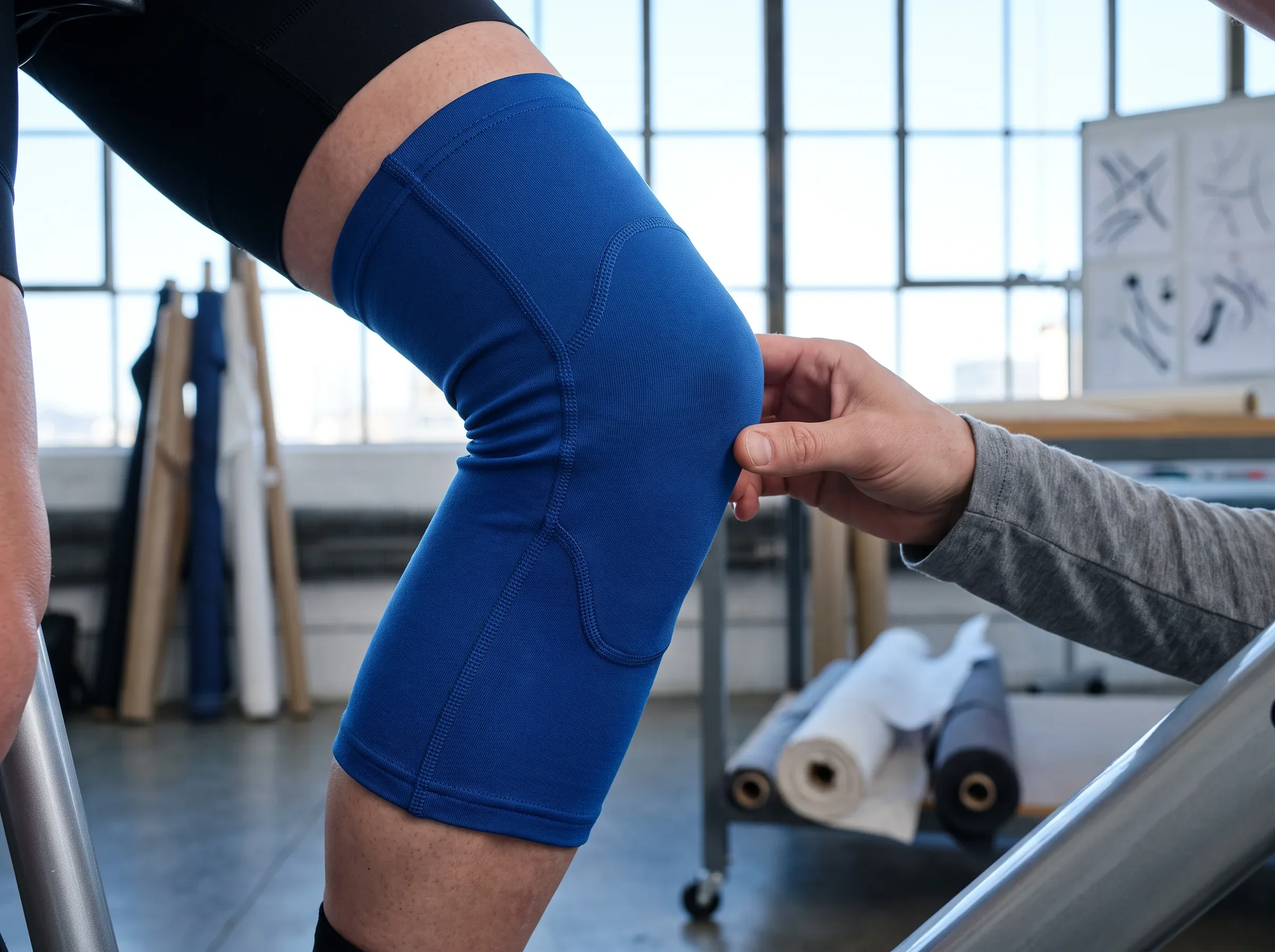
- Knee and leg warmers drafted with the knee bent, with a separate knee-front panel.
- A first warmer sample in 5–7 days; revision rounds 1 and 2 at no extra sampling fee.
- OEKO-TEX® STANDARD 100 base fabrics, and development work under ISO 9001:2015.
Arm Warmers, Knee Warmers and Leg Warmers for Three Temperature Bands
We develop three warmers, and each one carries a race jersey into a cooler band:
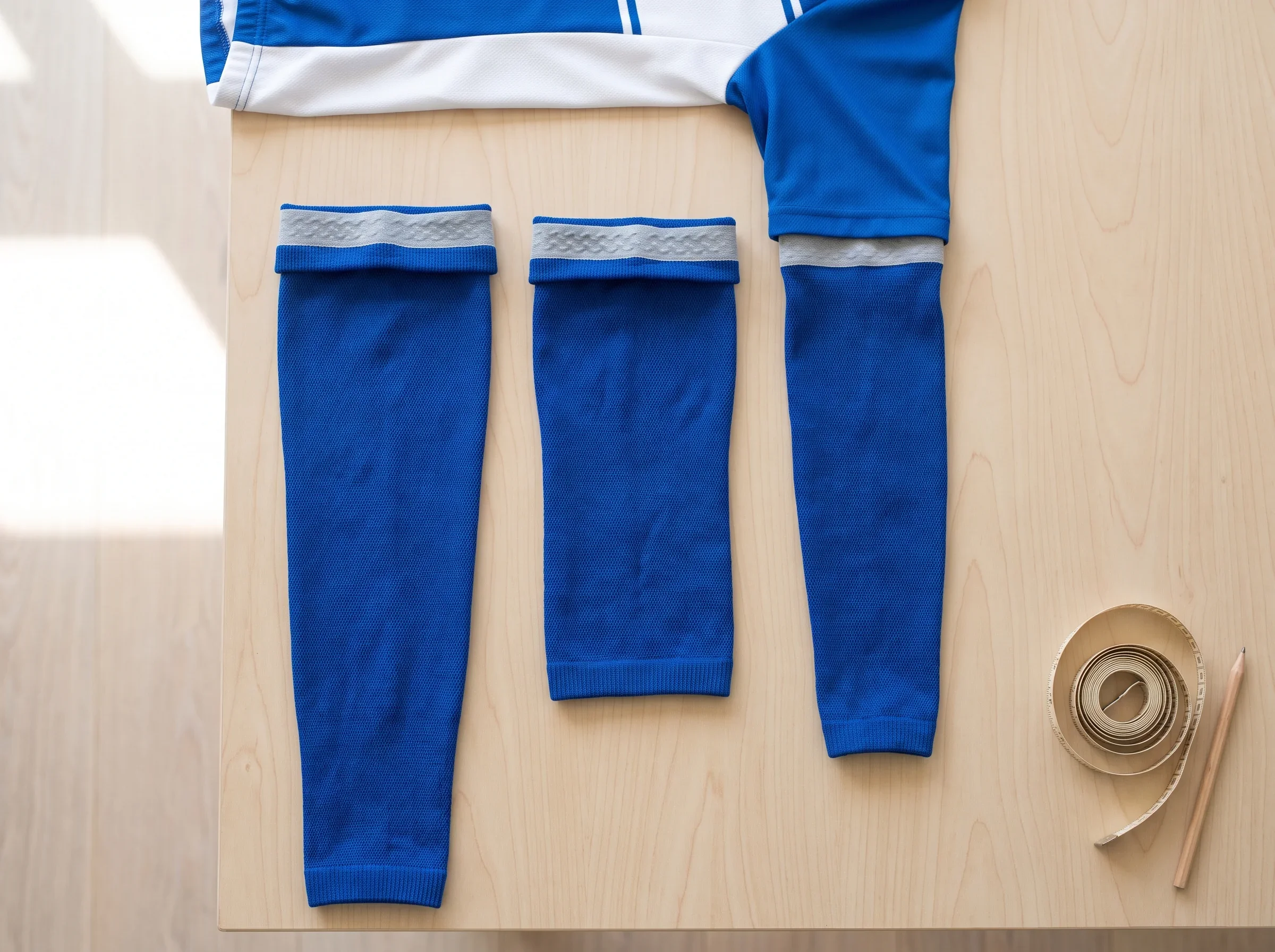
- Arm warmers run from under the jersey sleeve to the wrist.
- Knee warmers start on the thigh and end on the upper calf.
- Leg warmers start on the thigh and run to the ankle.
Knee warmers are the shorter version of our leg warmers, built on the same knee construction.
Where each one sits in your race kit:
16–22 °C
Arm warmersWith the short sleeve race jersey: carried in the rear pocket, put on for descents
Knee warmers or leg warmers—
10–16 °C
Arm warmersWith the short sleeve race jersey
Knee warmers or leg warmersKnee warmers or leg warmers, per your brief
5–10 °C
Arm warmersWorn under the windproof jacket
Knee warmers or leg warmersKnee warmers or leg warmers, per your brief
Knee warmers or leg warmers. Both cover the 10–16 °C and 5–10 °C bands. Which one your riders wear is set in your brief, and we develop either one, or both, on the same knee-front panel and the same size chart.
How brands use them.
A product lead adds arm warmers and leg warmers to a race line next to the short sleeve jersey, graded to the same size range.
How federations and teams use them.
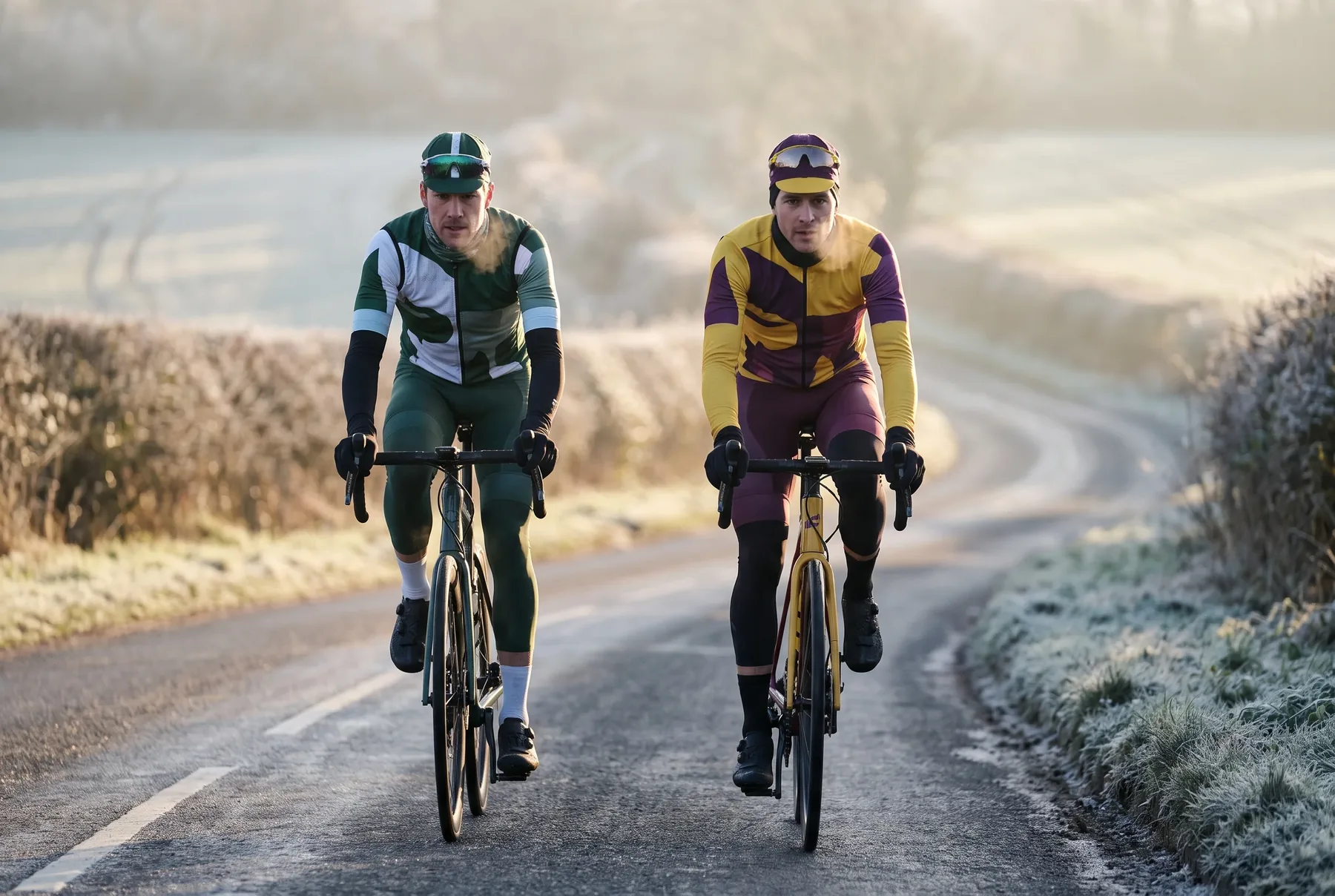
A technical lead keeps the summer short sleeve jersey in the 10–16 °C set by adding arm warmers and knee or leg warmers.
Cycling Arm Warmers Sized to Your Jersey Cuff, Measured Beside It
Every arm warmer we develop is sized from the jersey it is worn under.
Size pairing.
Each arm warmer size is paired with one jersey size in your project. The graded pattern names, for every arm warmer size, the jersey size it goes with.
The top opening.
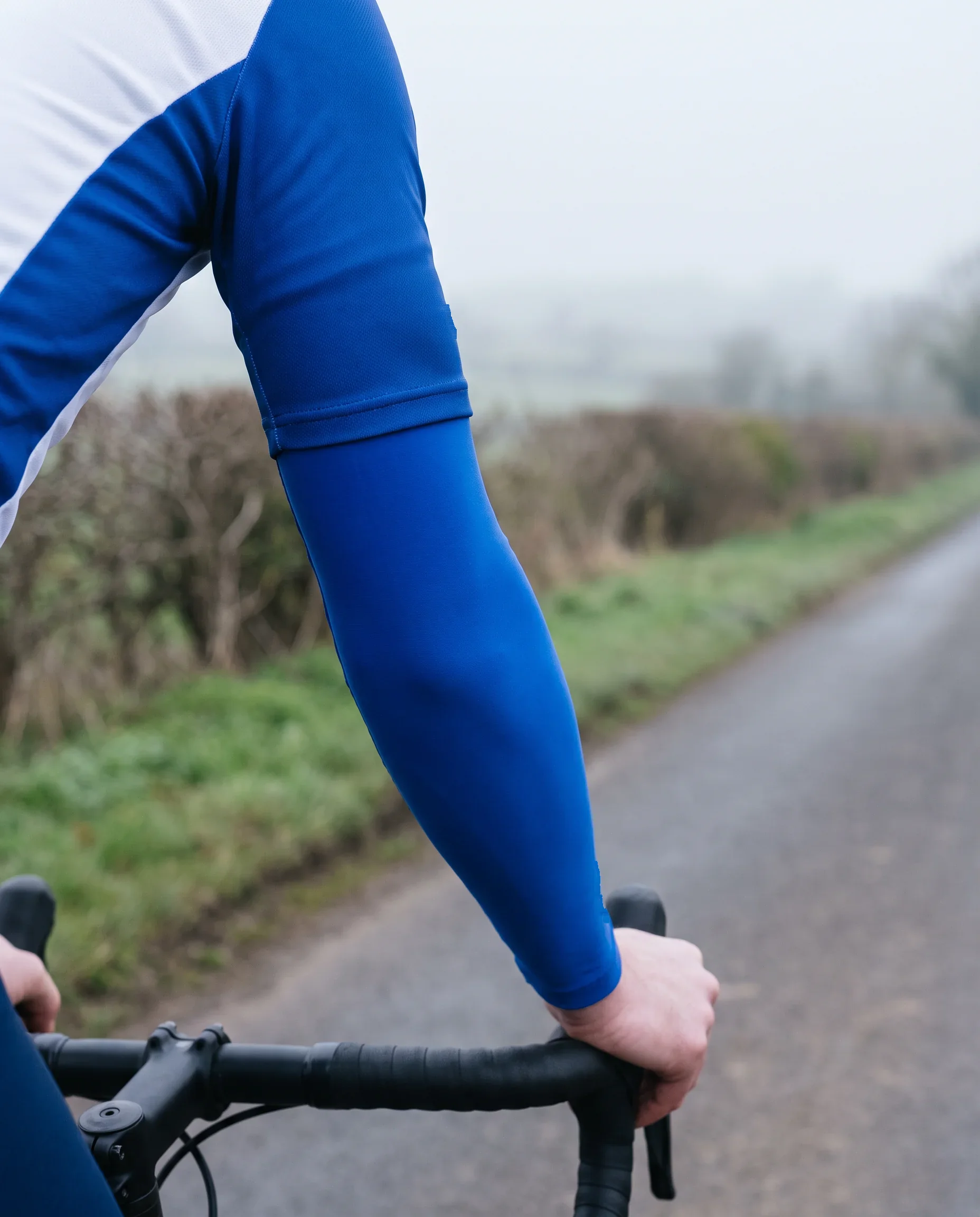
For each size, the pattern maker sets the arm warmer's top opening to the sleeve cuff of the paired jersey size, so the top of the warmer sits under the end of the jersey sleeve.
Sample size and graded sizes.
The side-by-side measurement is taken on the sample size. The other sizes follow the pairing written in the graded pattern.
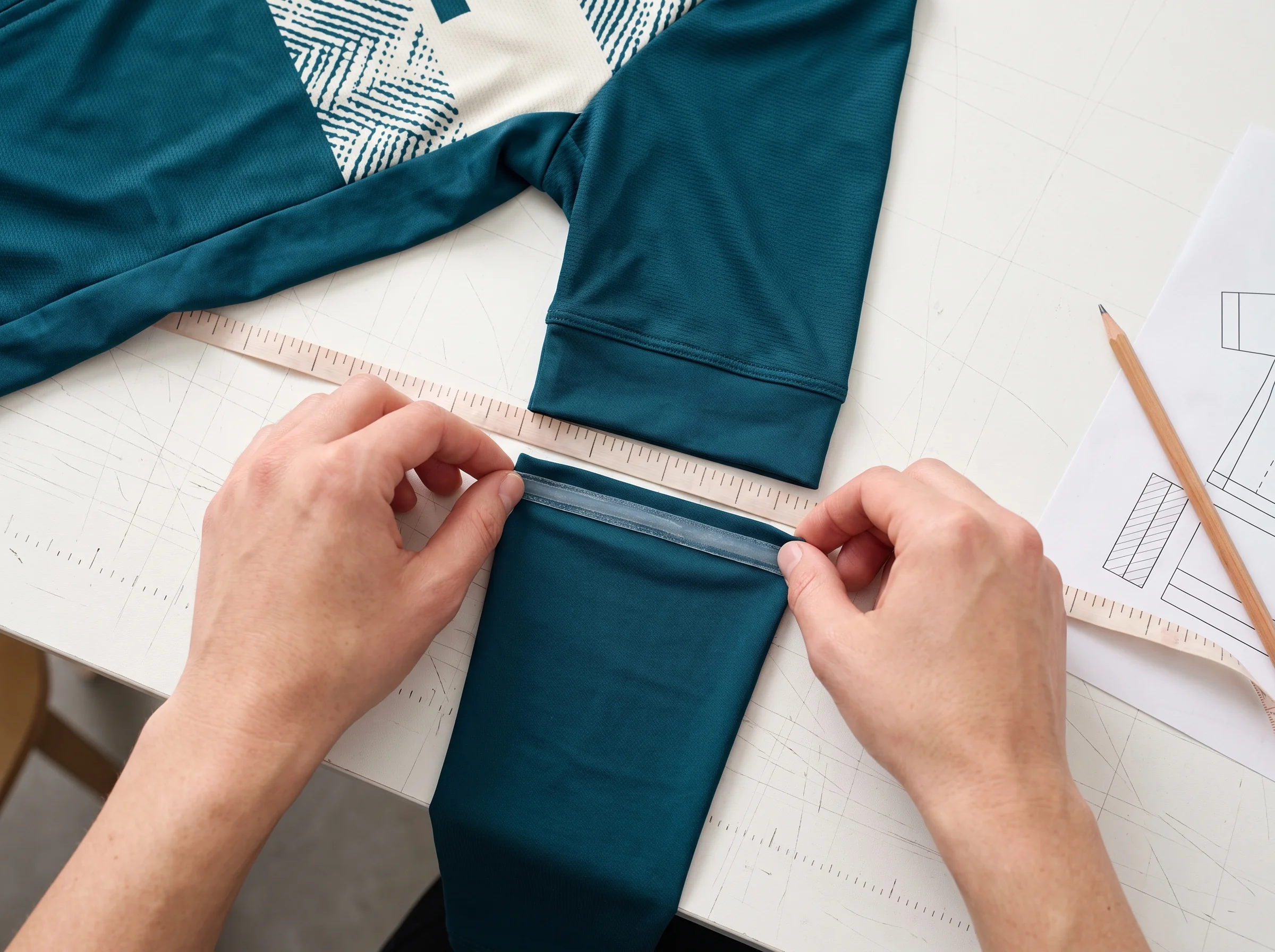
The measurement report.
The sample technician measures the arm warmer sample point by point against your size chart:
- Top opening circumference, listed beside the cuff measurement of the paired jersey size.
- Wrist opening circumference.
- Full length.
The sample technician signs size. If the report does not pass, the arm warmer sample stays at the studio and goes back to the pattern maker. The revision log records which warmer, which panel and why, and the next sample is measured again.
Where the cuff measurement comes from. The report names its source:
A jersey we develop with you:
the cuff measurement comes from that jersey's size chart and its sample in your project.
A jersey you already produce elsewhere:
the cuff measurement comes from your size chart and is checked by measuring the reference jersey you post to our studio. The on-bike check is then made with the arm warmer worn under that reference jersey.
Our gilet and windproof jacket are drafted on a jersey's riding-position block. When that jersey was made elsewhere, we first draft and sample it here.
An arm warmer meets the jersey at one point, the cuff. It is developed straight from your size chart and reference jersey, and your jersey stays as it is.
How you check it:
- Read the top opening and the jersey cuff side by side in the report.
- Check the size pairing in the graded pattern against your jersey's size range.
- Put the arm warmer sample on under the same jersey and repeat the race position check described below.
Warmers Compared With the Gilet, Long Sleeve Jersey and Thermal Jersey
Each band has more than one way to dress a rider. These are the combinations we develop, and where each garment is covered.
| Combination | Band | What it covers | Set by | Page |
|---|---|---|---|---|
| Arm warmers, or a gilet, for descents | 16–22 °C | Arm warmers cover the arms below the short sleeve; the gilet adds a windproof laminate front over the jersey | One or the other, per your brief | Cycling gilet |
| Short sleeve jersey with arm warmers, or a long sleeve race jersey | 10–16 °C | Arm warmers sized to the short sleeve cuff; the long sleeve jersey covers the arm in one garment, its sleeve length checked at the wrist on the bike | Per your brief | Race fit cycling jersey |
| Thermal jersey with leg warmers | 10–16 °C | Brushed-back long sleeve jersey, layered with a gilet and leg warmers | Per your brief | Thermal cycling jersey |
| Knee warmers, or leg warmers | 10–16 °C and 5–10 °C | Knee warmers end on the upper calf; leg warmers run to the ankle; same knee-front panel | Per your brief | This page |
| Windproof jacket over the jersey, with arm and leg warmers | 5–10 °C | Brushed-back jacket with laminate front, warmers worn underneath | Part of the 5–10 °C set | Windproof cycling jacket |
Whichever combination your brief takes, each warmer in it gets its own fit sign-off column. When a gilet or jacket in your set is worn over the warmers, that garment's sign-off also names the warmers worn during its check.
Top-Opening Grip: Silicone Band or Embossing, Checked on the Bike
Grip at the top opening comes in two methods, and you choose one per warmer:
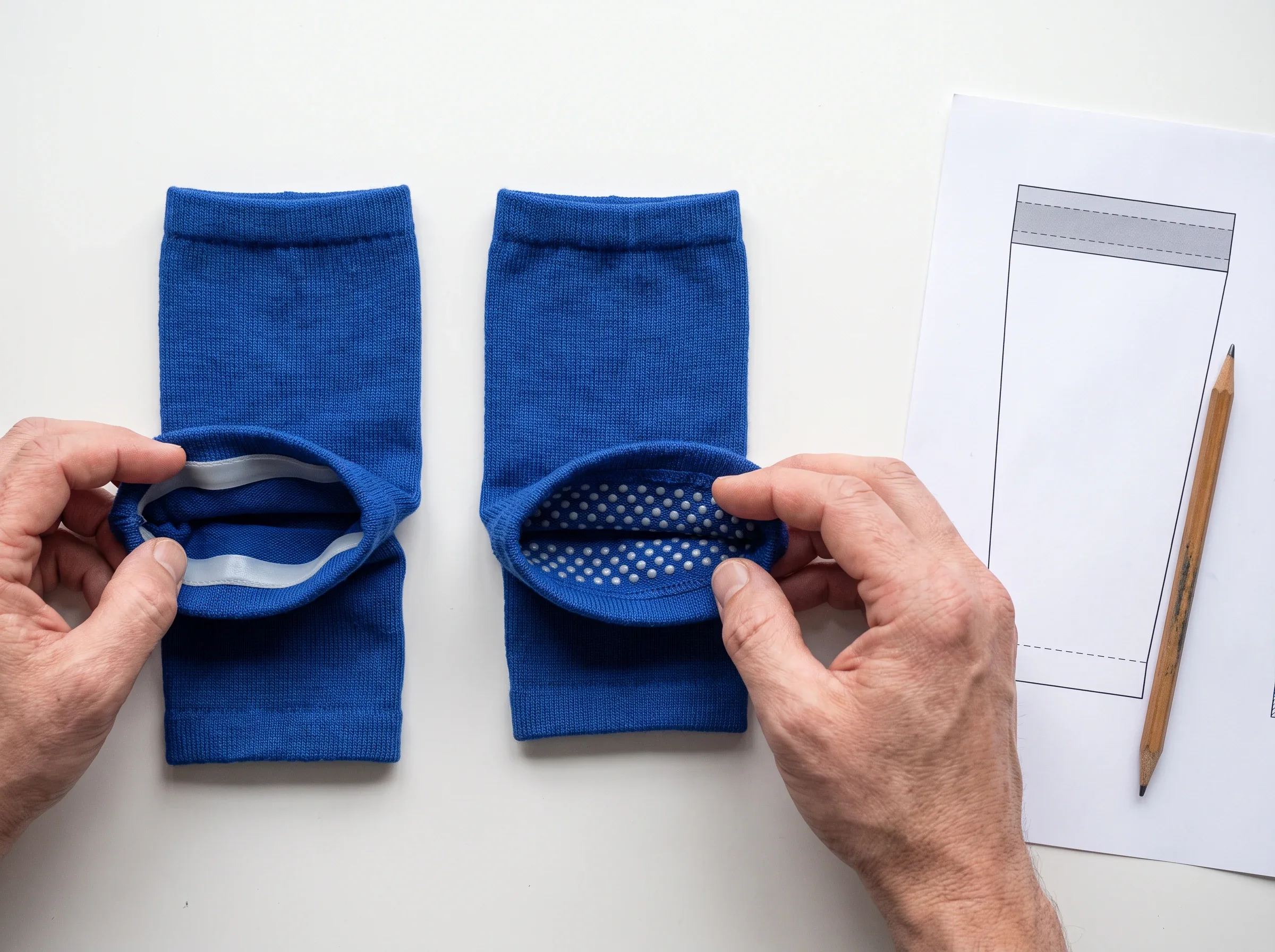
A silicone gripper band sewn inside the top opening.
Silicone embossing applied to the inside of the top opening.
The method, its position and its width are drawn on the cutting diagram. Your production line reads the grip position from that diagram.
The on-bike check.
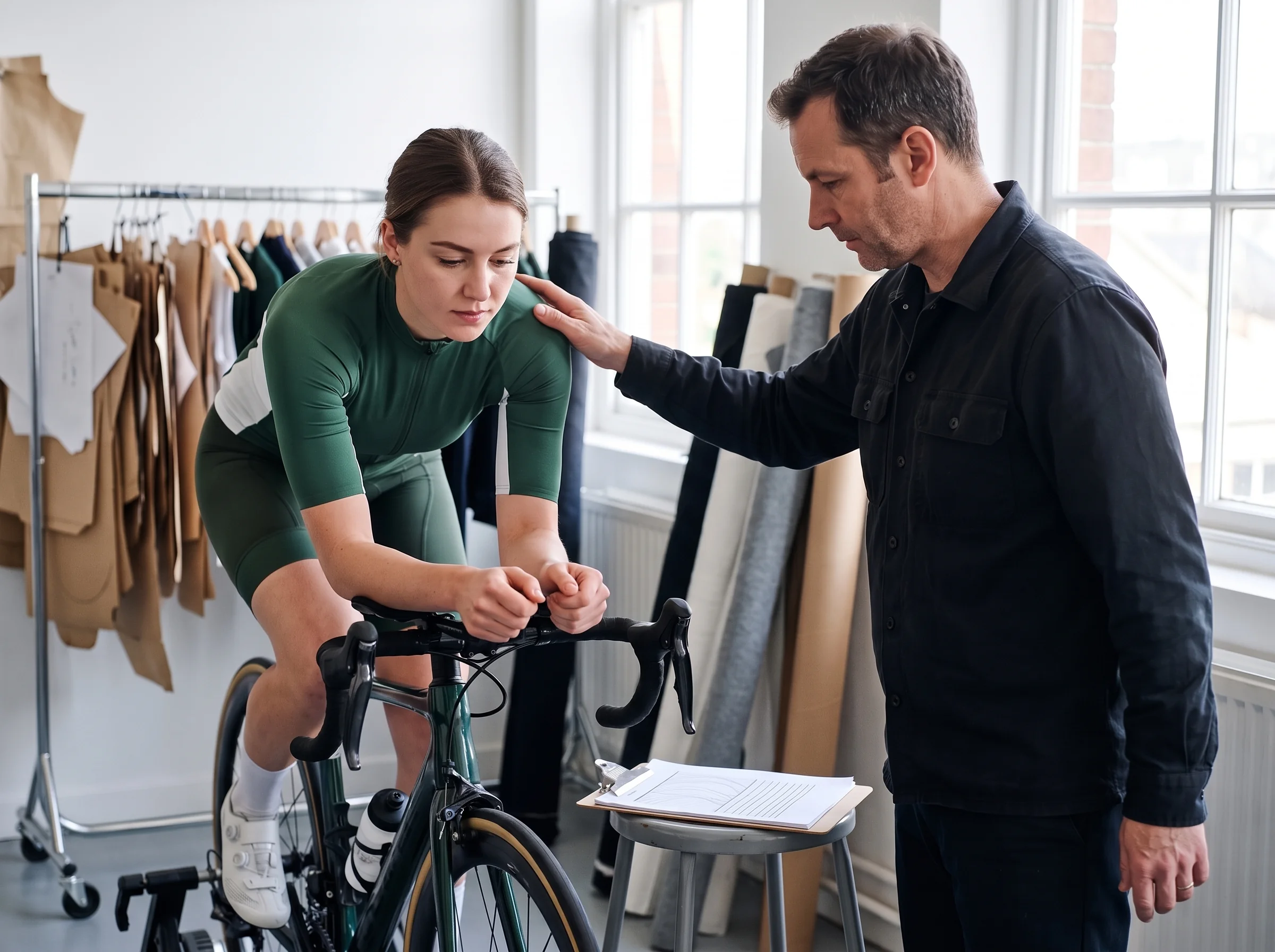
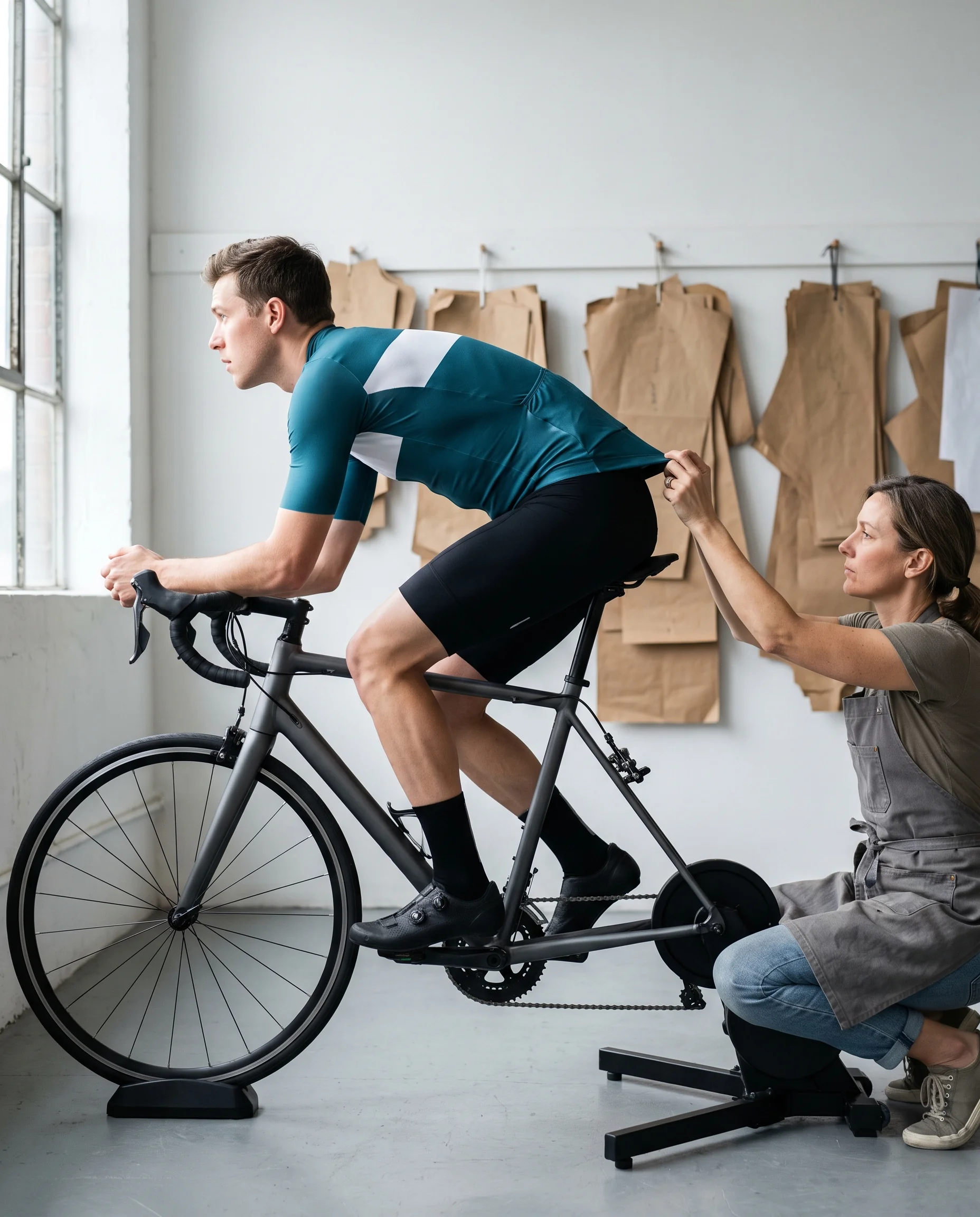
Before a warmer sample is sent to you, the pattern maker checks it on the bike in race position.
Arm warmers are worn under the jersey sample from your project in the paired size, or under the reference jersey you sent. The rider takes race position with arms extended and hands on the bars. The pattern maker checks three items:
- 1The top of the arm warmer stays inside the jersey cuff.
- 2No skin shows between the jersey cuff and the arm warmer.
- 3The top opening has not moved from the position marked on the cutting diagram.
Knee warmers and leg warmers are checked while the rider pedals in riding position:
- 1The top opening has not moved from the position marked on the cutting diagram.
- 2With the knee bent, the front of the knee lies without bunching.
- 3With the knee bent, nothing pinches behind the knee.
The fit sign-off column.
Arm, knee and leg warmers each have their own column in their own measurement report. The head of the column names what the rider wore: the jersey sample by style and size, or your reference jersey.
The pattern maker marks every item pass or return. For a return, the column states where the work goes back to:
- A panel on the cutting diagram, such as the top opening or the knee-front panel.
- The grip, moved to a new position or switched from gripper band to embossing, or from embossing to gripper band.
The revision log records which warmer, what changed on the panel or grip, and why. The next sample runs the same items again. The pattern maker signs the column.
What comes back to you: the warmer sample, its measurement report with the signed fit column, and the jersey it was checked under named at the top. Your riders put on the same jersey and warmer and repeat each item in race position.
Arm, Knee and Leg Warmer Specification
- Garments
- Arm warmers; knee warmers, thigh to upper calf; leg warmers, thigh to ankle
- Bands
- Arm warmers 16–22 °C, 10–16 °C and 5–10 °C; knee or leg warmers 10–16 °C and 5–10 °C
- Base fabric
- Brushed-back thermal main body or mid-weight stretch main body, per warmer, confirmed on the fabric-by-panel sheet
- Fibre
- Nylon-spandex in a binary blend: 88/12, 90/10 or 91/9. OEKO-TEX® STANDARD 100 certified
- Sizing
- Arm warmers paired one-to-one with jersey sizes; knee and leg warmers graded to your size chart
- Grip
- Silicone gripper band or silicone embossing inside the top opening; position and width on the cutting diagram
- Knee
- Drafted with the knee bent; separate knee-front panel, split proposed by the pattern maker and confirmed by you
- Lower end
- Laser-cut flat edge or folded hem, your choice, at the wrist, ankle or upper calf
- Seams
- Flatlock on the length seam
- Decoration
- Sublimation, reflective print or reflective strip, silicone embossing; positions on the placement sheet
- Fit check
- Own fit sign-off column per warmer, checked on the bike, signed by the pattern maker
- Measurement
- Arm: top opening beside the jersey cuff, wrist opening, full length.Leg: top, knee, ankle opening, full length.Knee: top, knee, lower end, full length
- Colour
- On the signed card of its base fabric
Cycling Knee Warmers and Leg Warmers Drafted With the Knee Bent
The pattern maker drafts the knee area of our knee warmers and leg warmers in riding position, with the knee bent.
The knee-front panel.
The front of the knee is cut as a separate panel. The pattern maker proposes the panel split from your brief, and you confirm it before cutting. The split is drawn on the cutting diagram, and your production line cuts the same panel.
One construction for two lengths.
Knee warmers and leg warmers share the knee-front panel. The knee warmer ends on the upper calf; the leg warmer runs to the ankle.
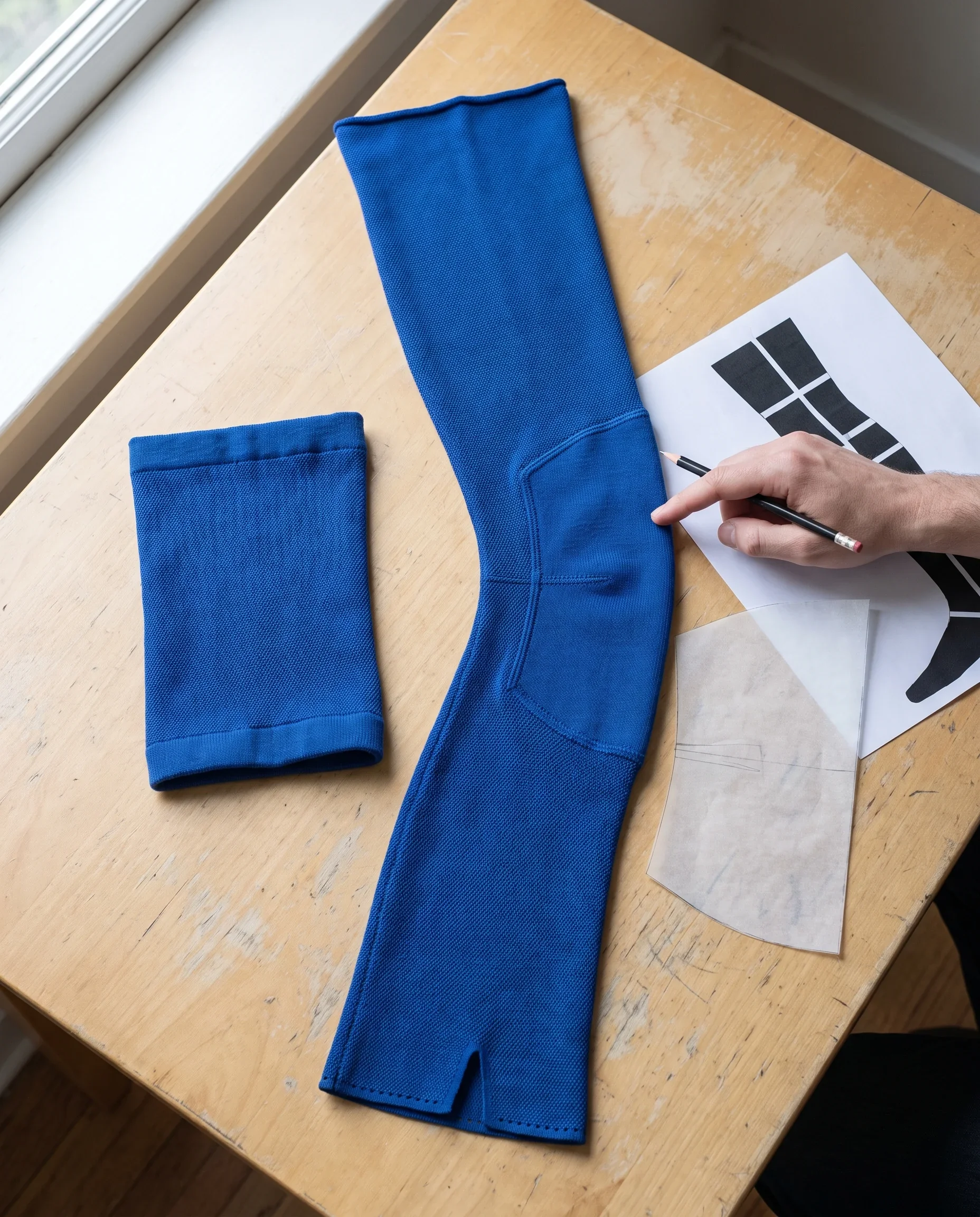
The lower end.
You choose the finish at the upper calf or the ankle:
- Laser-cut flat edge.
- Folded hem.
The finish is drawn on the cutting diagram. The length seam is flatlock.
Sizing.
Knee and leg warmer sizes follow your size chart on their own, with no pairing to jersey sizes.
Measurement points.
The sample technician measures each sample against your size chart and signs size:
- Leg warmers: top circumference, knee circumference, ankle opening circumference, full length.
- Knee warmers: top circumference, knee circumference, lower end circumference, full length.
The knee on the bike.
The two knee items in the on-bike check above are read on this panel. With the knee bent while the rider pedals, the front of the knee lies without bunching, and nothing pinches behind the knee.
A return on either item goes back to the knee-front panel or the knee area of the pattern. A return on the top position goes back to the top opening or the grip. Each return is logged before the next sample.
Before production you have: the cutting diagram with the knee-front panel drawn, the measurement report with knee circumference, and a fit column with both knee items marked pass.
Warmer Samples Sent With Their Measurement Report and Fit Sign-Off Column
Send your jersey size chart and the warmers on your list. Each warmer sample reaches you with its measurement report and its signed fit column, so your riders can repeat the check.
Request a feasibility reviewWarmer Colour Matched to Your Jersey Standard, One Card per Base Fabric
Warmers are printed on the same colour standard as the jersey they go with, and colour cards are counted by base fabric.
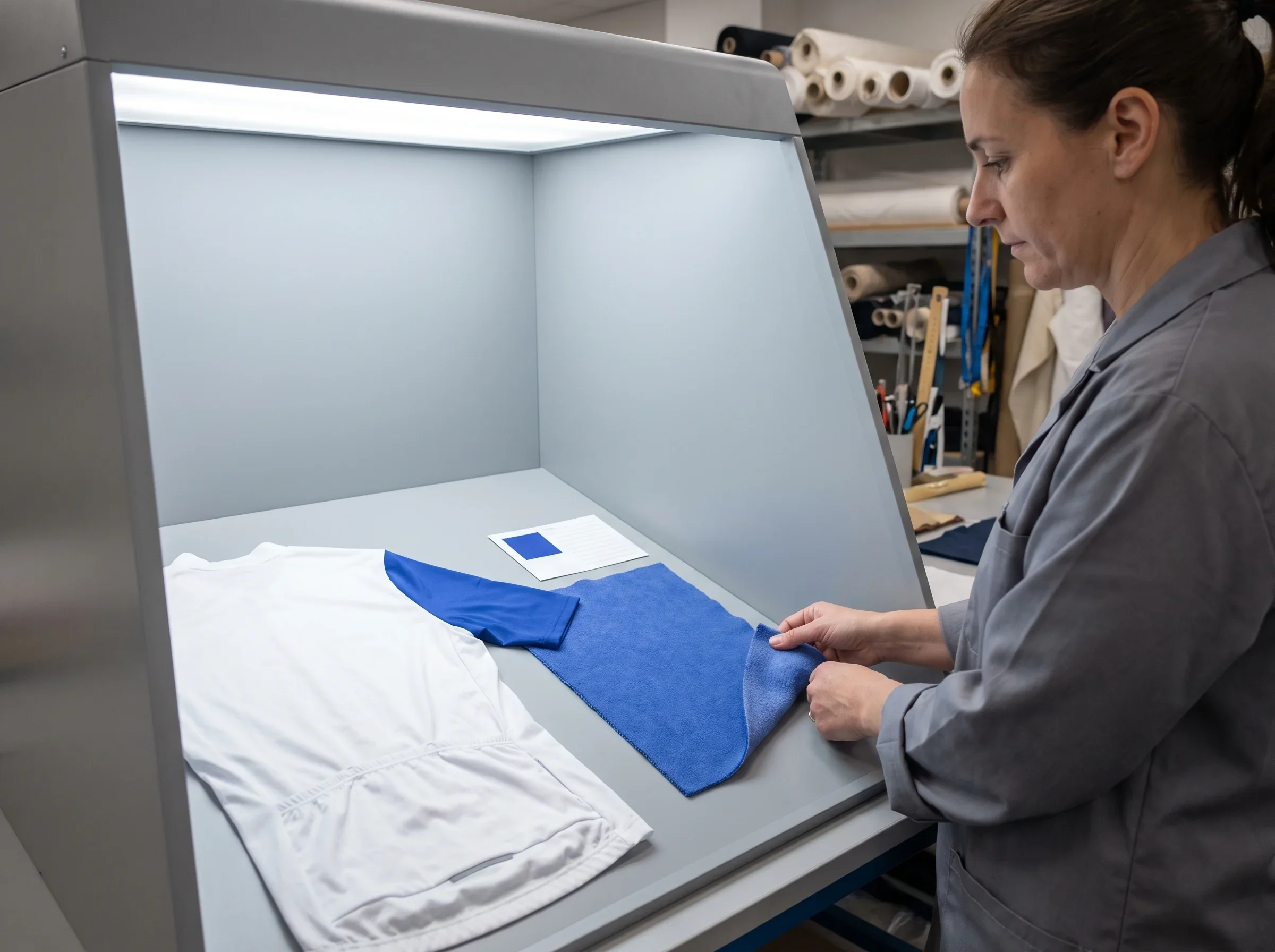
No warmer sample is cut until its card is signed. The colour parameters go into your spec pack.
A jersey we develop with you.
A warmer uses the card already signed for its base fabric:
- Main body warmers use the main body card, if your jersey already has one.
- Brushed-back warmers use the brushed-back card if your set already has a thermal jersey or windproof jacket.
When the warmers bring a base fabric new to your set, such as brushed-back warmers next to a summer jersey in mesh and main body, the colour and print technician prints one strike-off on that base fabric.
The technician compares it with your colour standard under D65, and the card for that base fabric goes to you for signature.
A jersey you produce elsewhere.
We match to the colour standard you sign. You can also post the reference jersey, and the strike-off is laid beside it under D65. Each base fabric the warmers use gets its own strike-off and its own signed card. The reference jersey's fabric and print process sit with its maker, so your signed colour standard is the reference every card is held to.
What this gives a brand or federation: arm warmers, knee warmers and leg warmers that match the jersey on the same colour standard, with one card per base fabric that your production line prints to.
Binary Nylon-Spandex Base Fabrics Certified to OEKO-TEX® STANDARD 100
Each warmer is made in one of two base fabrics, chosen per garment:
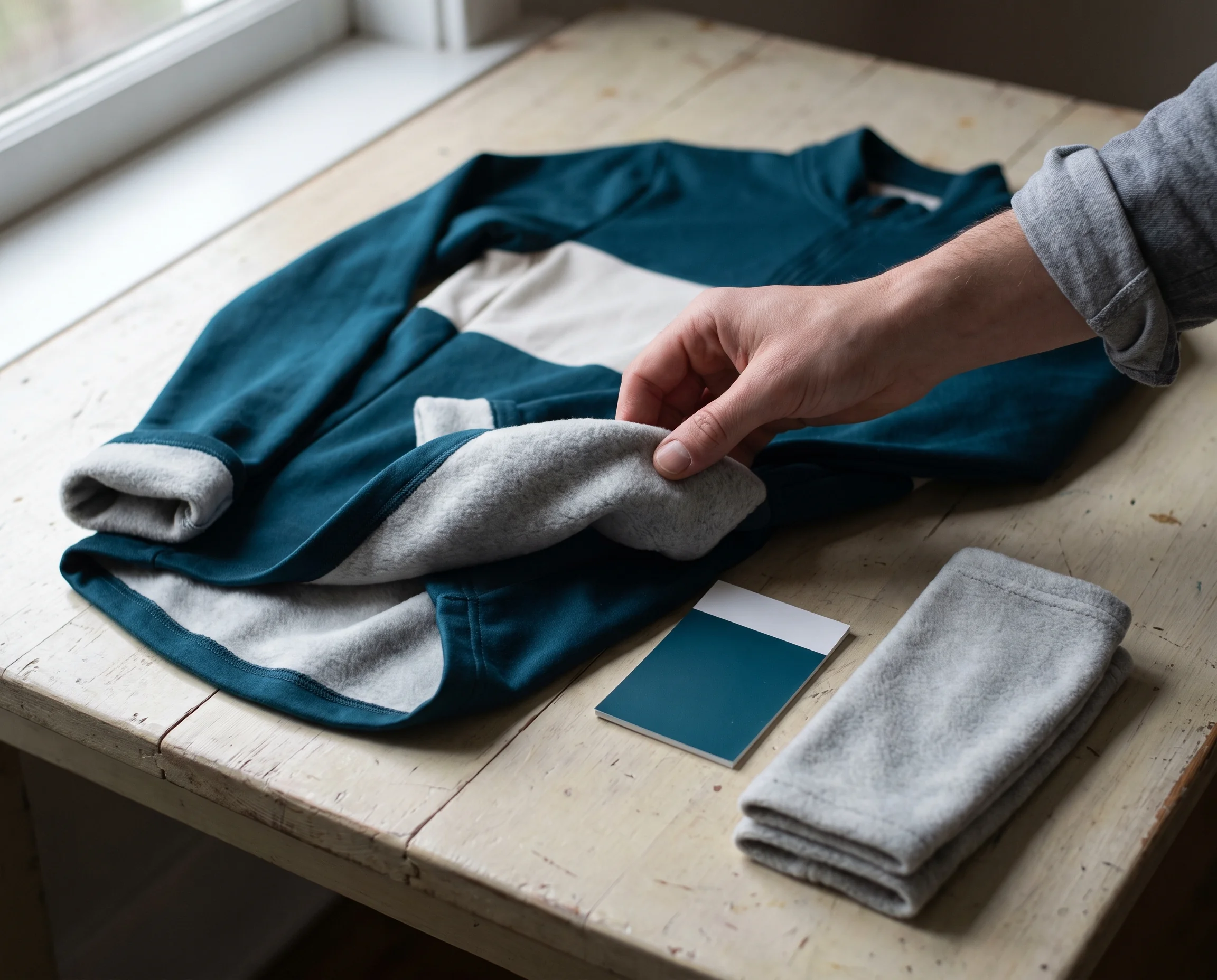
Brushed-back thermal main body.
Mid-weight stretch main body.
The pattern maker proposes the base fabric for each warmer, and you confirm it on the fabric-by-panel sheet. Arm warmers and leg warmers in the same set can use different base fabrics.
Both are nylon-spandex with two fibres only, blended 88/12, 90/10 or 91/9. The same fibre family takes sublimation colour the same way, so one colour standard matches across the warmers and the jerseys in your set.
OEKO-TEX® STANDARD 100 certification covers these base fabrics at fabric level, and our development work runs under an ISO 9001:2015 quality management system.
Warmer Files in Your Spec Pack, Cuff Measurement Source Included
Each warmer adds its own files to your spec pack:
- Cutting diagram, with the grip method, position and width, the knee-front panel and the lower-end finish drawn.
- Graded pattern; for arm warmers, each size paired with its jersey size.
- Fabric-by-panel sheet.
- Placement sheet, with sublimation, reflective and silicone positions.
- Size chart.
- Seam description.
- Measurement report, with the fit sign-off column.
- The warmer sample in the sample set.
Colour cards grow only when a warmer brings in a base fabric your set has not used yet.
- For arm warmers made for a jersey produced elsewhere, the measurement report records the cuff measurement and where it came from: your size chart, checked on your reference jersey. Your production line reads the cuff figure the arm warmers were graded to.
- Revision log entries name the warmer and the panel changed, so arm, knee and leg warmer changes stay separate from jersey changes in one log.
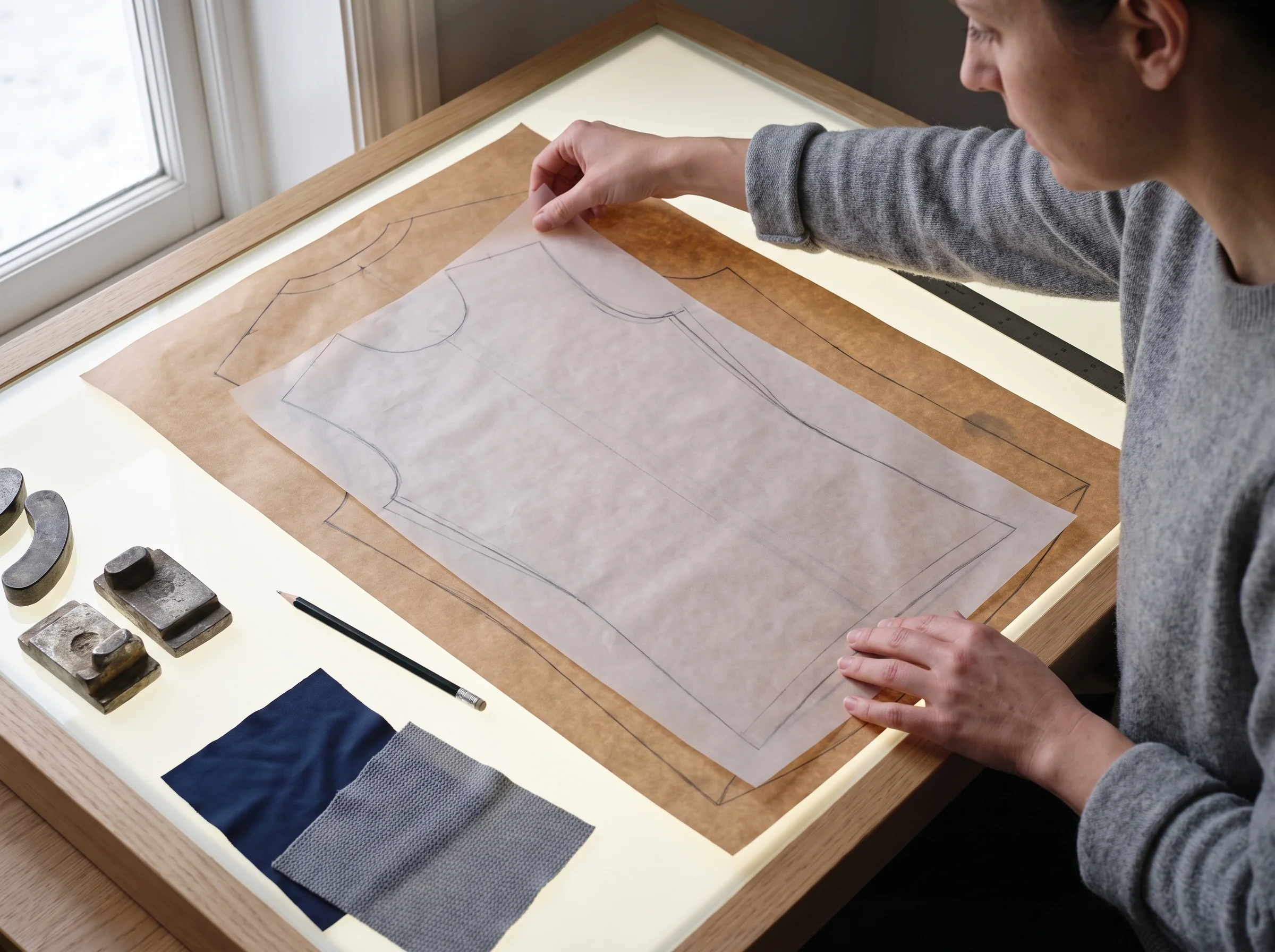
The full pack and revision log are handed over to you. Your own production line works from it, or, if you approve, the development manager sends it to cyclingapparelfactory.com for bulk production.
Warmer Development From Feasibility Review to Signed Sample
Feasibility review.
The development manager confirms the warmers, the cuff measurement source, the base fabric and grip proposal, and the sampling plan.
Colour.
A strike-off is printed for any base fabric new to your set, and you sign its card.
Pattern.
Arm warmers are graded to your jersey sizes; knee and leg warmers to your size chart, with the knee-front panel.
First sample in 5–7 days.
Each sample is measured, checked on the bike and signed before it leaves the studio.
Revisions.
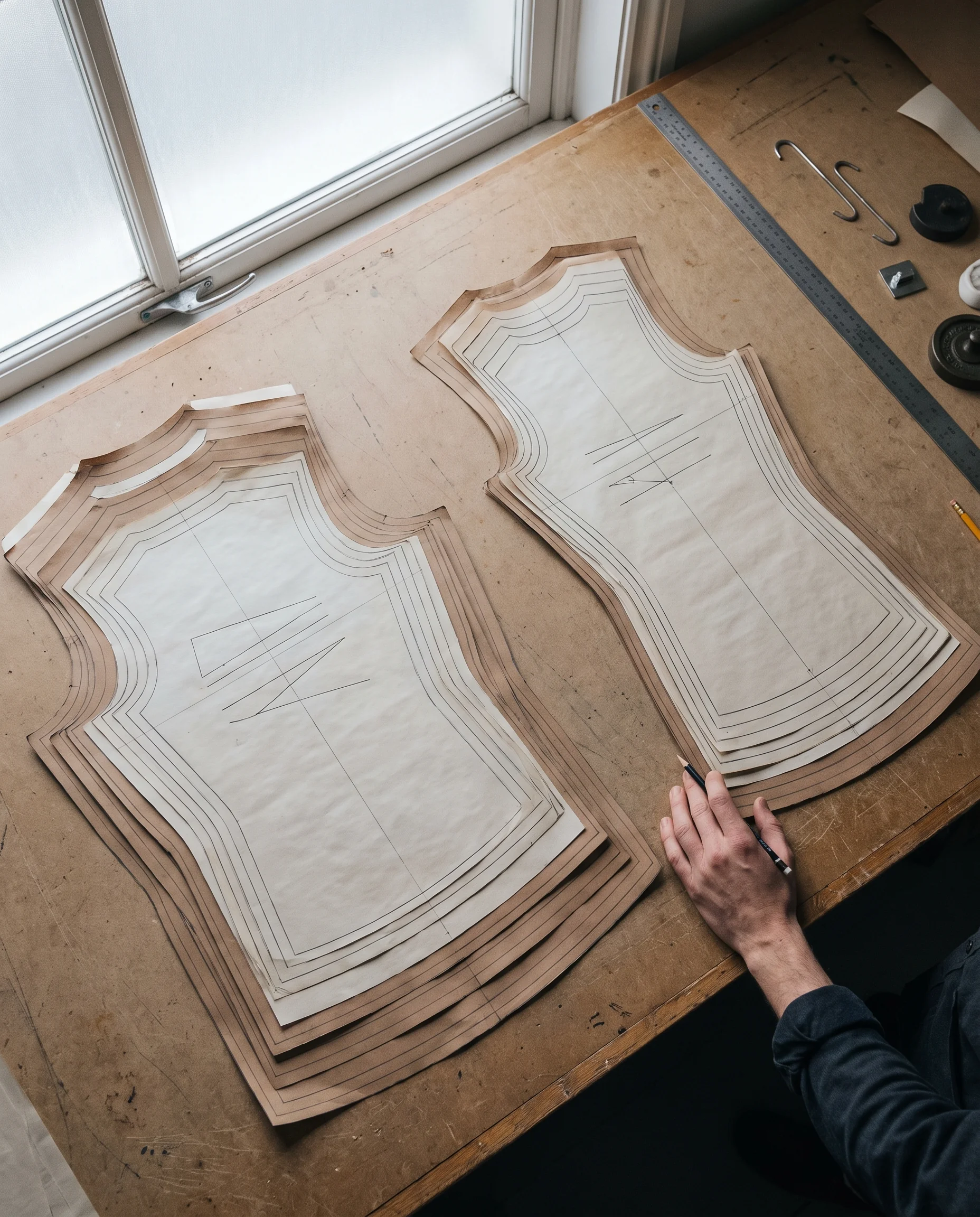
Every round goes into the revision log. Rounds 1 and 2 add no sampling fee. Changing a specification after you confirm it starts a fresh sampling round.
Handoff.
The approved samples and the spec pack go to you.
Warmer Brief: What to Send for a Feasibility Review
The 48-hour feasibility review starts once three items are in:
- Garment list: the arm, knee or leg warmers, and the jersey each arm warmer goes under.
- Your size chart, with the sizes you need.
- The temperature bands or race formats the warmers are for.
Add what you have:
- The jersey's spec pack, if we developed it; otherwise its size chart and a reference jersey.
- Grip method: silicone gripper band or silicone embossing.
- Lower-end finish: laser-cut flat edge or folded hem.
- Base fabric per warmer, or leave the proposal to the pattern maker.
- Colour standard, artwork and decoration positions.
- An NDA to sign before development starts, if you want one.
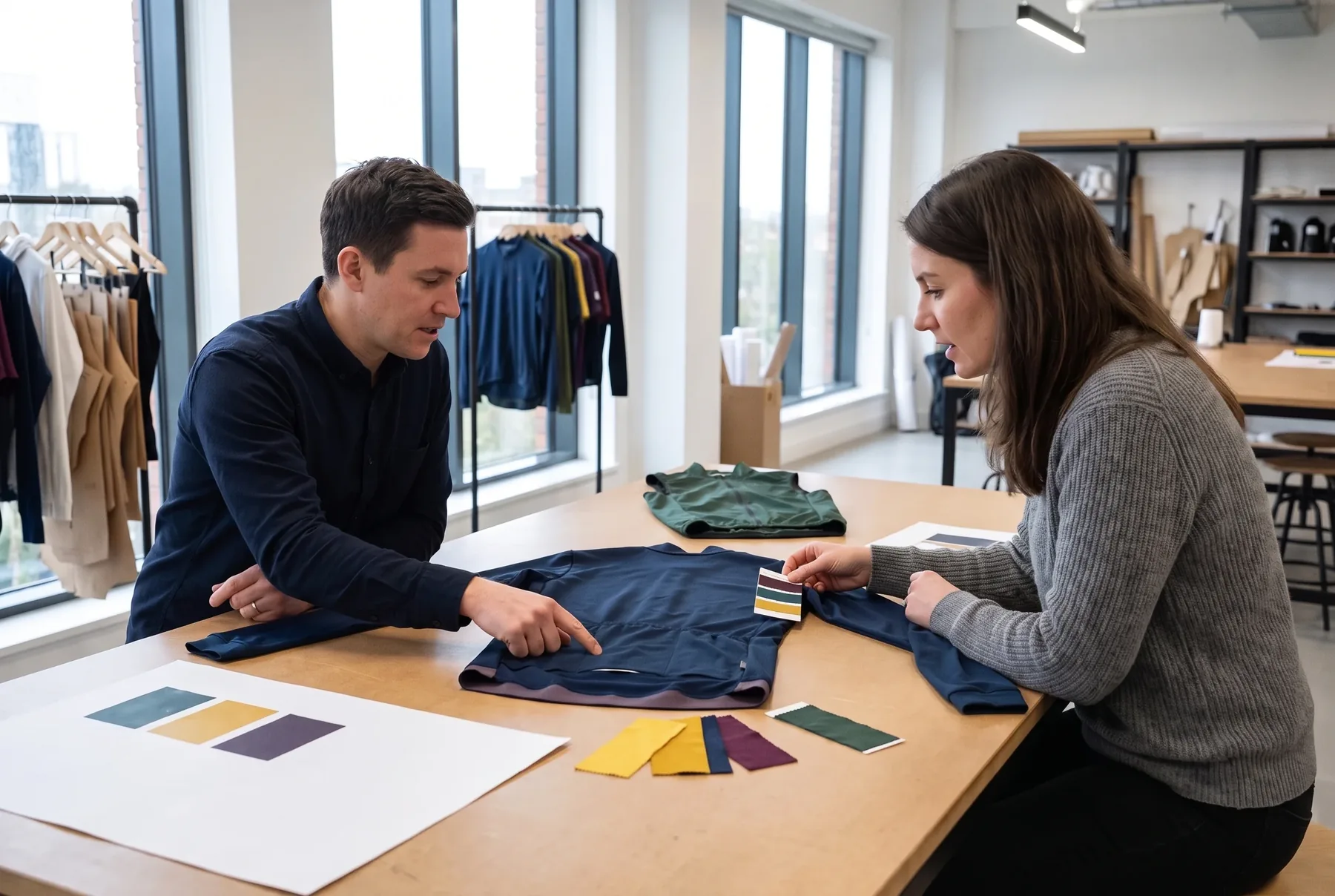
On working days the development manager answers within 24 hours. A brief with a starting item missing gets one reply that names every missing item.
Jerseys, Outer Layers and Sister Sites That Go With Your Warmers
Race fit cycling jersey
the short sleeve jersey whose cuff the arm warmers are sized to.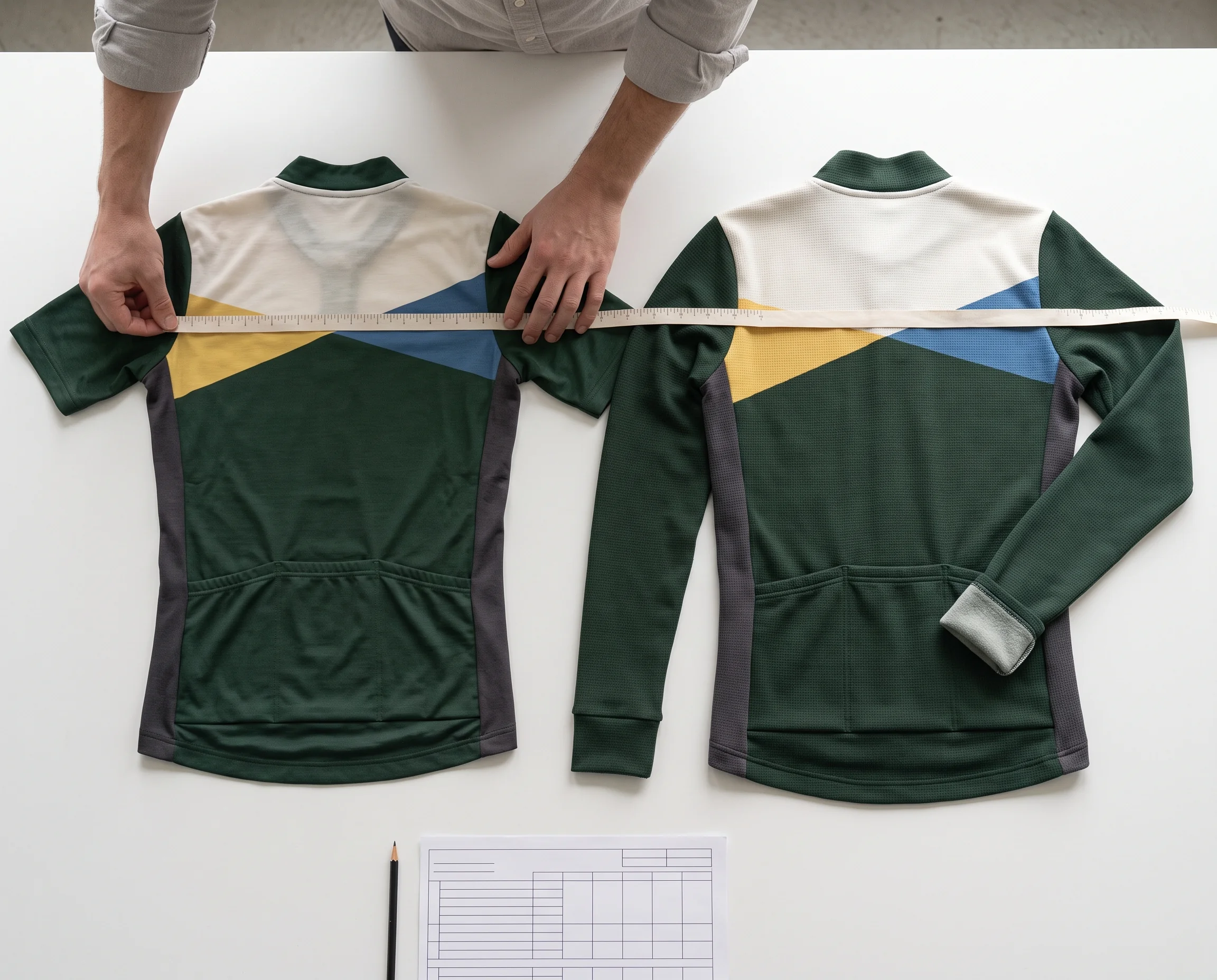
Thermal cycling jersey
leg warmers go with it at 10–16 °C.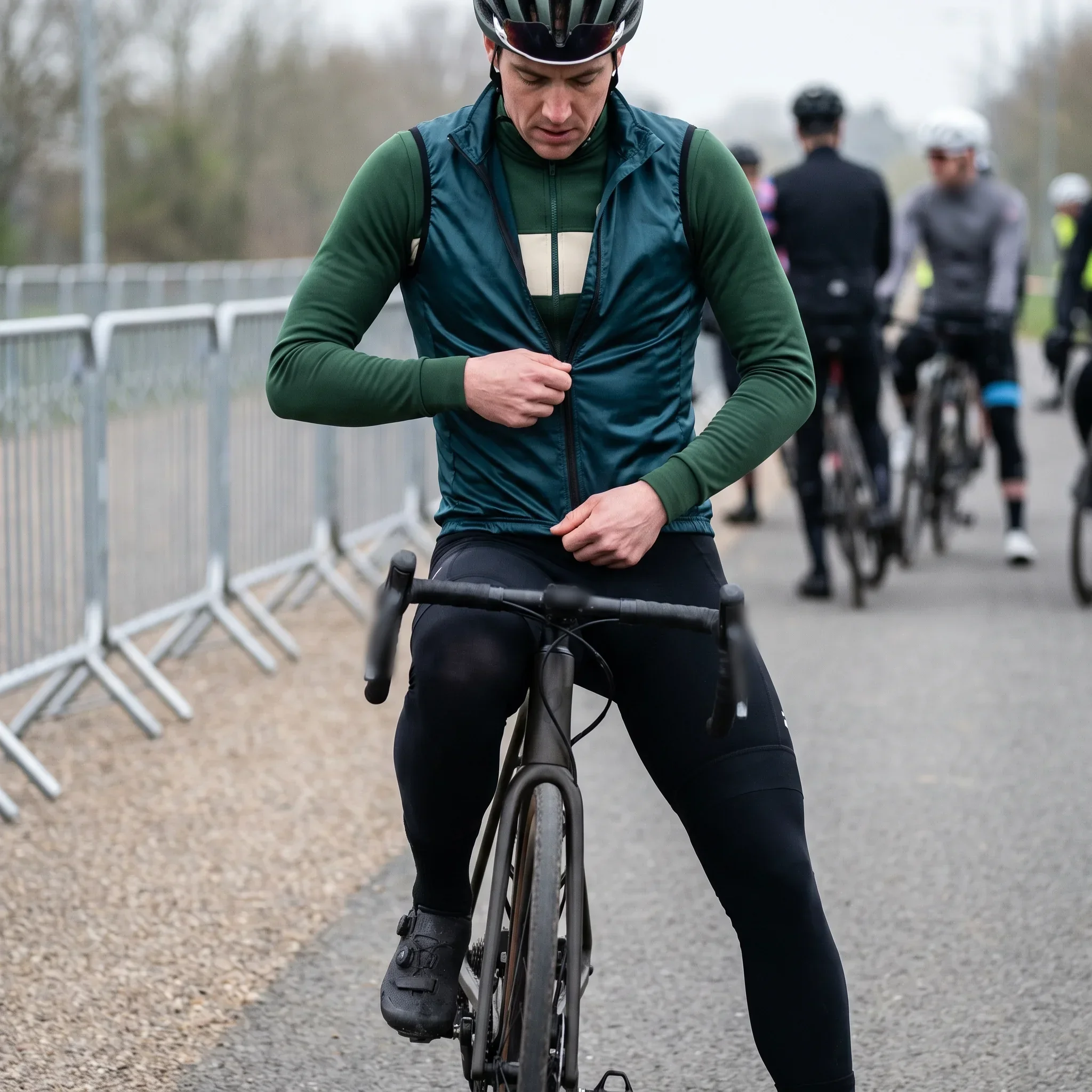
Cycling gilet
the windproof-front layer for descents and the 10–16 °C set, checked with any warmers worn underneath.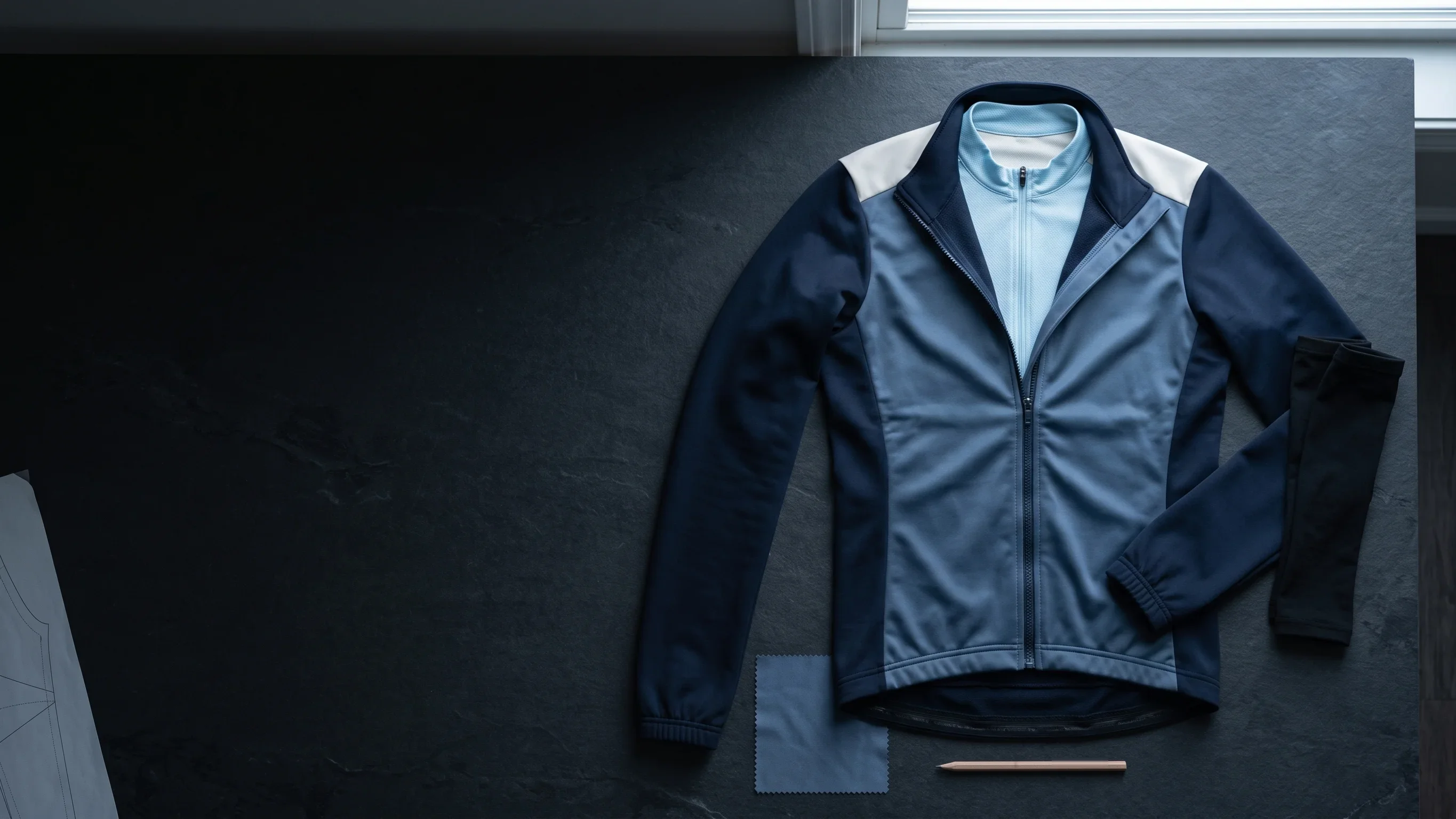
Windproof cycling jacket
the 5–10 °C outer layer worn over the jersey and warmers.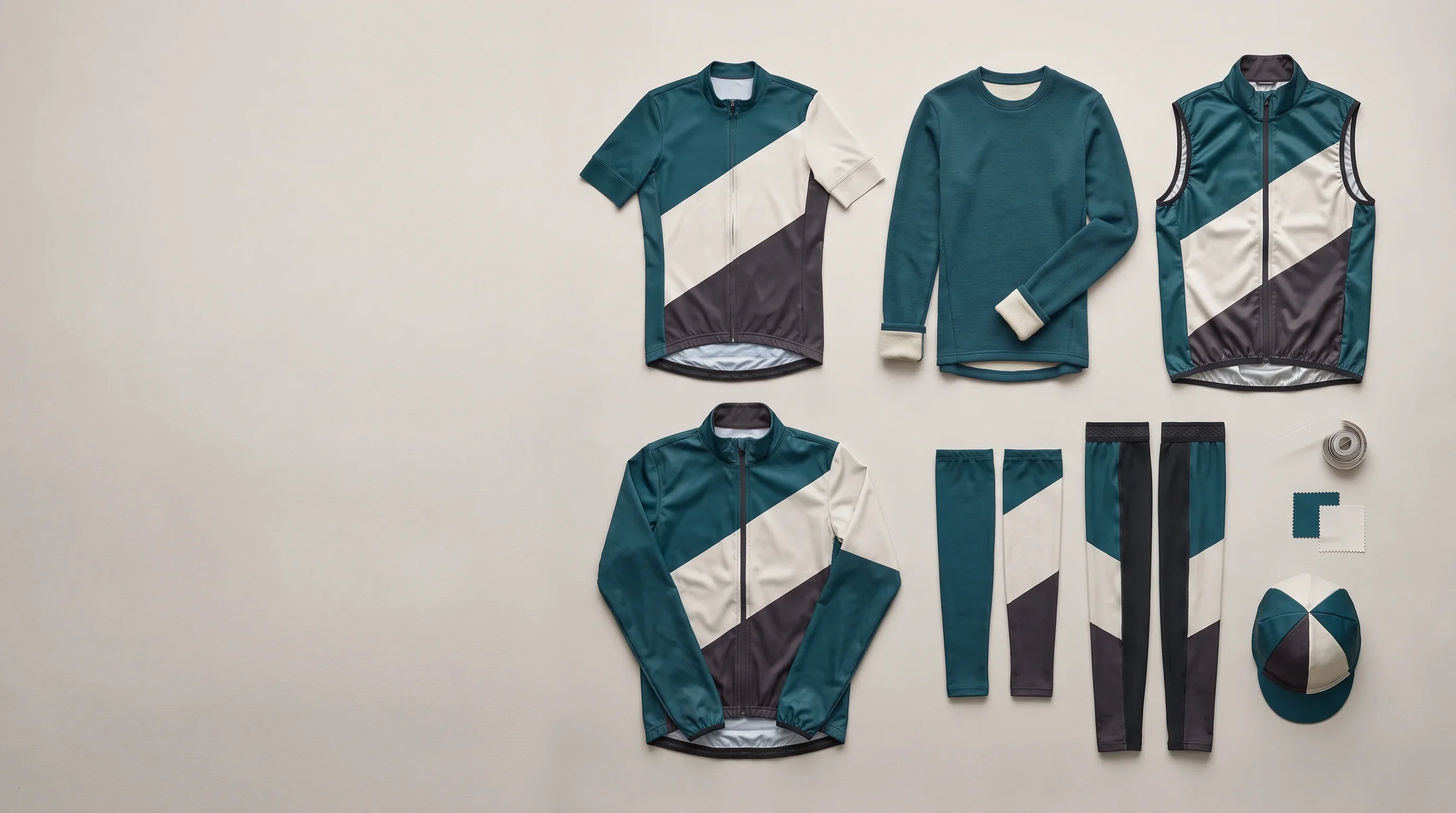
Race cycling apparel range
the full set of garments, band by band.Bulk production of a signed spec pack runs at cyclingapparelfactory.com.
Team kit ordering for clubs and teams runs at teamcyclingkits.com.
Request an Arm and Leg Warmer Feasibility Review
Tell us the jersey your arm warmers go under and the warmers your riders race in. The development manager comes back with where the cuff measurement will come from, the grip method and knee-front panel we propose, and how many colour cards the warmers add. Request a feasibility review.